Table of contents
Key takeaways
- According to Anthropic, Claude Opus 5.5 is the best Claude model for complex, multi-step coding and the default model in Claude Code on Pro, Max, Team, Enterprise, and API accounts.
- Claude Sonnet 5.5 is the best pick for everyday work like features, bug fixes, and tests, at $2 per million input tokens.
- Claude Haiku 5.5 is the best fit for high volume work like sub-agents, classification, and summarization.
- Claude Fable 5.1 suits demanding reasoning and long-horizon work when Opus 5.5 falls short, at the highest price of any current Claude model.
- Matching each task to a tier, testing on your own repo, and tracking spend per developer keeps your model choice grounded in data.
Best Claude models for coding compared
Which Claude model is best for coding depends on the work, according to Anthropic's positioning. Claude Opus fits complex and long-running engineering work, Claude Sonnet fits everyday development, Claude Haiku fits fast and cheap sub-steps, and Claude Fable fits demanding reasoning and very long autonomous sessions. Every "best" claim here comes from Anthropic's own posts or vendor-reported benchmarks.
The table below compares the best coding fit, API price, and relative speed of each current model.
Claude model | Best fit for coding | API price (input/output per 1M tokens) | Relative speed |
|---|---|---|---|
Opus 5.5 | Complex, multi-step engineering | $4 / $20 | Moderate |
Sonnet 5.5 | Everyday fixes, tests, features | $2 / $10 | Fast |
Haiku 5.5 | Background jobs, sub-agents, review | $0.10 / $0.50 (prompts up to 100K tokens) | Fastest |
Fable 5.1 | Demanding reasoning, very long autonomous sessions | $10 / $50 | Slower |
The best Claude model for coding is Opus 5.5 for most serious engineering work, according to Anthropic. Sonnet 5.5 is the best value for everyday development, and Haiku 5.5 covers high-volume sub-tasks. For most developers, the best balance of cost and quality is Sonnet 5.5 with Opus 5.5 held back for hard work.
How each Claude model handles coding work
Claude Opus, Sonnet, Haiku, and Fable all write, debug, and refactor code, and they also handle knowledge work like documents and analysis. They differ in reasoning depth, speed, and cost. The 5.5 models and Fable 5.1 support a 1M-token context window in the API, while the previous-generation Haiku 4.5 has a 200K context window. A smaller context window limits how much of a repo Haiku 4.5 can read at once. Model selection comes down to the work in front of you, and no single model wins every task.
The sections below follow model family, so they stay useful when version numbers change.
Claude Opus 5.5: for complex, multi-step coding
Claude Opus 5.5 is Anthropic's recommended starting point for most workloads. Claude Opus is the tier to try first on knowledge work and agentic coding. It's the default in Claude Code on Pro, Max, Team, Enterprise, and Anthropic API accounts from v2.1.280, subject to user selections, organization defaults, and restrictions.
Anthropic says Opus 5.5 leads on agentic coding and knowledge work in its own benchmarks, and costs 40% less to run than Opus 5 on typical workloads at default settings. Adaptive thinking lets Opus 5.5 spend less time on easy steps and reason longer on hard ones. Claude Opus 5.5 earns its price on these tasks.
- Large refactors. Changes that span many files need a model that holds the whole picture.
- Tricky debugging. The cause isn't obvious, so deeper reasoning pays off.
- Architecture planning. Long coding agent sessions and long-range trade-offs reward careful judgment.
Move down a tier when the work is routine, because Claude Opus is overkill for jobs like renames and formatting. A small scoped fix rarely needs a frontier model.
Opus 5 is still available as a legacy model. Opus 5 costs $5 input and $25 output per million tokens, pricier than Opus 5.5 at $4 and $20. Claude Opus 4.8 is older still, and Anthropic's safeguards re-route some cybersecurity tasks to Opus 4.8. Teams pinned to Claude Opus 4.8 should plan a move to Claude Opus 5.5 and review Opus 4.8 pins after each release. Audit your configs for Opus 4.8 first.
Claude Sonnet 5.5: for everyday development
Claude Sonnet 5.5 is the everyday default for most daily coding, with a strong balance of speed and cost. In a Claude Sonnet vs Opus comparison, Sonnet is the cheaper pick when Opus isn't needed. Anthropic describes Claude Sonnet as strongest at well-scoped everyday tasks and bug fixing, and it also handles knowledge work like slides and documents.
- Feature work with a clear scope. You get strong quality without paying for a frontier tier.
- Tests and small bugs. Fast turnaround keeps you in flow.
- Code explanations and pull request summaries. Sonnet reads a codebase quickly and explains it clearly.
Move up a tier for complex agentic coding, such as when a refactor stalls, repeated attempts fail, or a long session requires more sustained reasoning or careful judgment. Both Sonnet 5.5 and Opus 5.5 support a 1M context window, so the context window isn't a reason to switch. A bigger context window only helps if the task needs it.
PRO TIP: Treat Sonnet as a sensible starting point for each new task, and consider escalating to Opus if it fails twice on the same problem. That's a rule of thumb you can test on your own repo.
Claude Haiku 5.5: for high-volume sub-tasks
Claude Haiku 5.5 is the fast, low-cost tier, best for high volume work like background jobs, sub-agents, classification, quick code review passes, and cheap sub-steps in agentic pipelines. Anthropic says Claude Haiku pairs well with Opus 5.5 and Sonnet 5.5 as a subagent inside a coding agent, where it can handle cheap tool calls while a larger model plans. Each step can run on a different underlying model. It's also worth testing for PR review passes.
Claude Haiku has limits, and Haiku 4.5 has more of them. Anthropic says Sonnet 5.5 and Opus 5.5 remain better choices for complex agentic coding, and Haiku 5.5 suits narrowly scoped tasks like compaction, summarization, and sub-agent work.
Some sources still list Haiku 4.5 as the current model. Anthropic lists Haiku 5.5, launched October 7, 2026, and Haiku 4.5 is the previous generation. Haiku 5.5 costs $0.10 input and $0.50 output per million tokens for prompts up to 100,000 tokens, and $0.50 and $2.50 above that threshold. Haiku 4.5 costs $1 and $5, so moving off Haiku 4.5 usually lowers cost on prompts under 100,000 tokens.
Claude Fable 5.1: for demanding reasoning and long autonomous sessions
Claude Fable 5.1 is the premium option for demanding reasoning and long-horizon agentic work, including very long, ambitious autonomous coding runs. Anthropic recommends Claude Fable 5.1 as its frontier model when Opus 5.5 falls short on capability-sensitive tasks.
Claude Fable 5.1 has the highest per-token price at $10 input and $50 output. Anthropic's benchmarks don't show Claude Fable ahead of Opus 5.5 on coding, so test Claude Fable where Opus 5.5 stalls. Treat it as a frontier model upgrade for hard problems.
Fable 5.1 cache reads cost $0.25 per million tokens, versus $0.20 on Opus 5.5 and $0.10 on Sonnet 5.5. Long runs that reuse a large context window therefore carry a higher cache bill on Fable than on those models.
Claude coding benchmarks compared
Coding benchmarks measure terminal tasks, real-world code changes, and IDE-style edits. Terminal-Bench 4.0 tests multi-step command-line work, FrontierCode tests agentic code changes, and CursorBench draws on real Cursor sessions. All scores below are vendor-reported by Anthropic.
The table below compares each model's scores on Terminal-Bench 4.0, FrontierCode v1.1 (Main), and CursorBench 4.0, as reported in Anthropic's launch tables.
Model | Terminal-Bench 4.0 | FrontierCode v1.1 (Main) | CursorBench 4.0 |
|---|---|---|---|
Opus 5.5 | 66.4% | 54.4% | 57.8% |
Fable 5.1 | 55.8% | 50.3% | 51.8% |
Opus 5 | 52.3% | 48.0% | 46.6% |
Sonnet 5.5 | 70.6% | 46.2% | 55.5% |
Haiku 5.5 | 39.2% | 46.4% | Not reported |
Opus 5.5's results generally use max effort, except Terminal-Bench 4.0 at xhigh, with production safeguards and fallback models enabled. Sonnet 5.5's FrontierCode score is at Max effort, and Haiku 5.5's FrontierCode v1.1 (Main) score is vendor-reported from Anthropic's Haiku 5.5 launch table. Rows come from different launch tables and configurations, so the table doesn't isolate raw model capability under identical conditions.
Sonnet 5.5 posts the highest Terminal-Bench 4.0 score in Anthropic's own tables, while Opus 5.5 leads on FrontierCode and CursorBench. Anthropic still calls Opus 5.5 the stronger model for complex, open-ended work and knowledge work.
Benchmark scores leave out three things your team needs, especially because complex reasoning tasks and complex agentic coding behave differently from everyday coding.
- Gaps vary. Benchmark gaps vary by task and evaluation setup, and vendor posts can overstate them. Haiku 5.5's Terminal-Bench score sits well below Sonnet 5.5's.
- Your repo is different. Benchmarks don't reflect your codebase, languages, or conventions.
- Cost per task wins. Cost per completed task matters more than raw score when you pick the best model.
Public LLM benchmarks work as a first filter. A short LLM evaluation of two or three models on the same real task from your own repo gives you the numbers that matter before you standardize.
PRO TIP: Run the same bug-fix prompt through Sonnet and Opus side by side and compare the diffs. If you can't tell them apart, you may not need the pricier model for that kind of work.
How to match Claude models to coding tasks
Matching models to jobs means sending hard work to Claude Opus, everyday work to Claude Sonnet, and routine high-volume work to Claude Haiku. Not every coding request needs a frontier model, and routing simple work to the right model, usually a cheaper tier, keeps quality high and cuts spend.
The table below maps eight common jobs to the Claude tier that fits each one. Treat it as a starting recommendation.
Coding task | Suggested tier | Why |
|---|---|---|
Multi-file refactoring | Opus | Needs deep reasoning across files |
Tricky debugging | Opus | Root cause isn't obvious |
Architecture planning | Opus | Long-range trade-offs |
Feature work with clear scope | Sonnet | Strong quality at lower cost |
Boilerplate code | Sonnet or Haiku | Pattern-based, low risk |
Unit tests | Sonnet or Haiku | Repetitive, easy to check |
Docs and comments | Haiku | Simple, high volume |
Code review sub-steps | Haiku | Fast, cheap passes |
Spend the expensive model on refactoring and hard debugging, and let cheaper tiers handle boilerplate, tests, and docs.
A hybrid workflow puts each model where it earns its keep.
- 1.Plan with Opus. Use the flagship to map the change, the files involved, and the edge cases.
- 2.Implement with Sonnet. Hand the plan to Sonnet for the bulk of the code edits.
- 3.Fan out with Haiku. Use Haiku sub-agents inside your coding agent for tests, docs, and lint-level checks.
Claude Code's opusplan alias applies the plan-with-Opus, build-with-Sonnet pattern automatically. Doing this by hand gets tedious across a team, and choosing a tier per request is a routing problem that LLM routing can solve with similar rules.
What Claude models cost for coding teams
Coding teams pay for Claude in two ways: API usage billed per token and per-seat subscription plans.
The table below compares the per-token API prices and cache read rates for each model. Haiku 5.5's lower rates apply only to prompts up to 100,000 tokens.
Model | Input (per 1M tokens) | Output (per 1M tokens) | Cache reads (share of input price) |
|---|---|---|---|
Fable 5.1 | $10 | $50 | 2.5% ($0.25) |
Opus 5.5 | $4 | $20 | 5% ($0.20) |
Opus 5 | $5 | $25 | 10% ($0.50) |
Sonnet 5.5 | $2 | $10 | 5% ($0.10) |
Haiku 5.5 | $0.10 up to 100K tokens, $0.50 above | $0.50 up to 100K tokens, $2.50 above | 10% ($0.01 up to 100K tokens, $0.05 above) |
Haiku 5.5's low rates end at 100,000 tokens, so Haiku 5.5's input price rises fivefold, from $0.10 to $0.50 per million tokens, once a prompt passes 100,000 tokens. The cache-read rate changes separately, from $0.01 to $0.05.
Four levers move your bill as much as model selection does, and they anchor any AI cost management plan.
- Prompt caching. Cache reads cost a fraction of normal input tokens, which helps when a coding agent reuses context.
- Batch processing. Batch discounts cut the price of work that doesn't need an instant answer.
- Effort setting. Medium effort is Sonnet 5.5's default in Claude Code, and maximum effort reasons longer but costs more, so save maximum effort for the hard problems. Third-party guides say effort often matters more than the model tier.
- LLM caching. Reusing answers across your team with LLM caching trims repeat spend and pairs well with prompt caching.
Long generated outputs can materially increase coding costs. Agentic loops can produce a lot of output, so a 5x price gap compounds fast. Say a coding agent task generates 200,000 output tokens across multiple calls. That spread is normal, because the standard per-response maximum is 128K tokens on Opus 5.5, Sonnet 5.5, Haiku 5.5, and Fable 5.1. Haiku 4.5 caps at 64K, and some models support larger output through a Batch API beta.
Counting output-token charges only, and excluding input, caching, and other charges, that costs $4 on Opus 5.5, $2 on Sonnet 5.5, and $10 on Fable 5.1. Run that task 50 times a day, and Opus 5.5 costs $200 versus $100 on Sonnet 5.5.
Why per-developer spend visibility matters
Per-developer spend visibility matters because the model works well, but nobody knows what it costs until the invoice lands. The person signing the bill, usually the CTO or engineering lead, needs spend broken down per developer and per team for each model. That view shows heavy usage, justifies the budget, and reveals where a cheaper tier would do. A good LLM observability view shows these four things:
- Spend per model. See which models drive the bill.
- Spend per developer. Spot heavy usage early.
- Spend per team. Justify budgets with real numbers.
- Spend over time. Catch trends before the invoice does.
nexos.ai shows teams spend by model, developer, team, and time period. With that breakdown, you can set a budget per team and shift routine work to a lower-cost model before the next invoice lands.
Why you shouldn't lock your team into one Claude model
You shouldn't lock your team into one Claude model because the best model for coding changes often. Anthropic has moved from Claude 4 models like Claude Opus 4.8 to the 5.x generation, older models get retired, and aliases move to newer releases. Betting on a single model means every release forces a rethink.
Keep the same setup while you swap models underneath. Your tools, prompts, and workflows stay put, so a new release mostly means a config change plus a round of testing. A shared interface cuts integration work, but you still need to test prompts, parameters, and outputs on each new model. A model-agnostic approach makes that possible, and an LLM gateway sits between your tools and every model you use.
Fallbacks are normal operational planning. Providers occasionally have outages or rate limits, and a backup model keeps work moving when the underlying model is down. Claude Code's native fallback chains cover overload, unavailability, and certain server errors, but not rate-limit errors, and a separately configured gateway can behave differently. Many teams also test Claude alternatives for specific tasks, and a model-agnostic setup lets you do that without rebuilding anything.

Run every AI model in one Gateway
One secure, lightweight layer to access, route, and manage 200+ models.
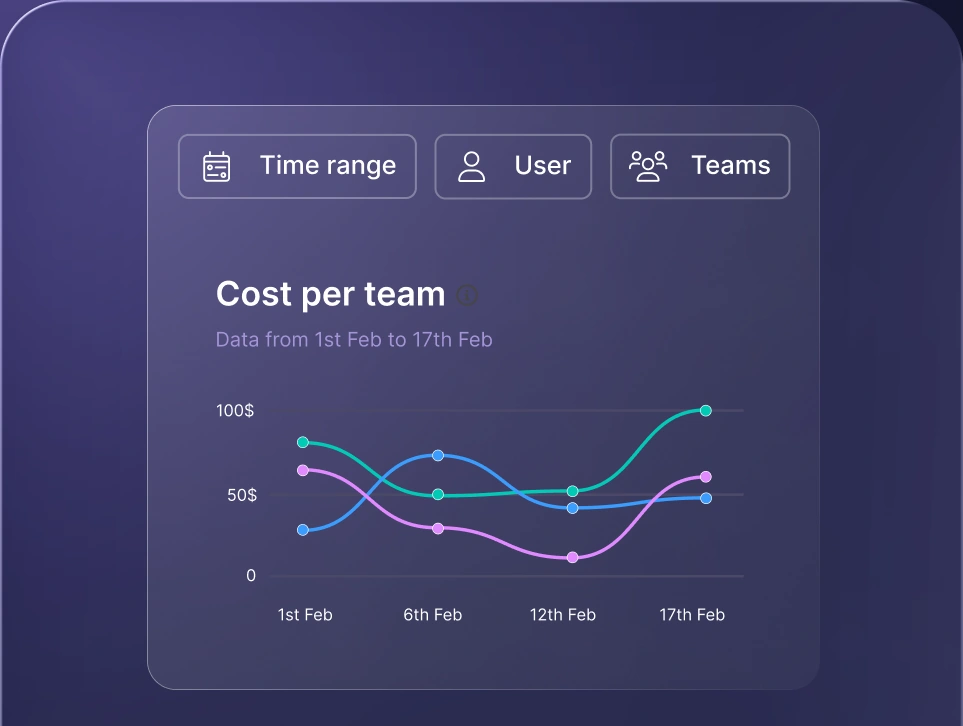
Monitor AI usage
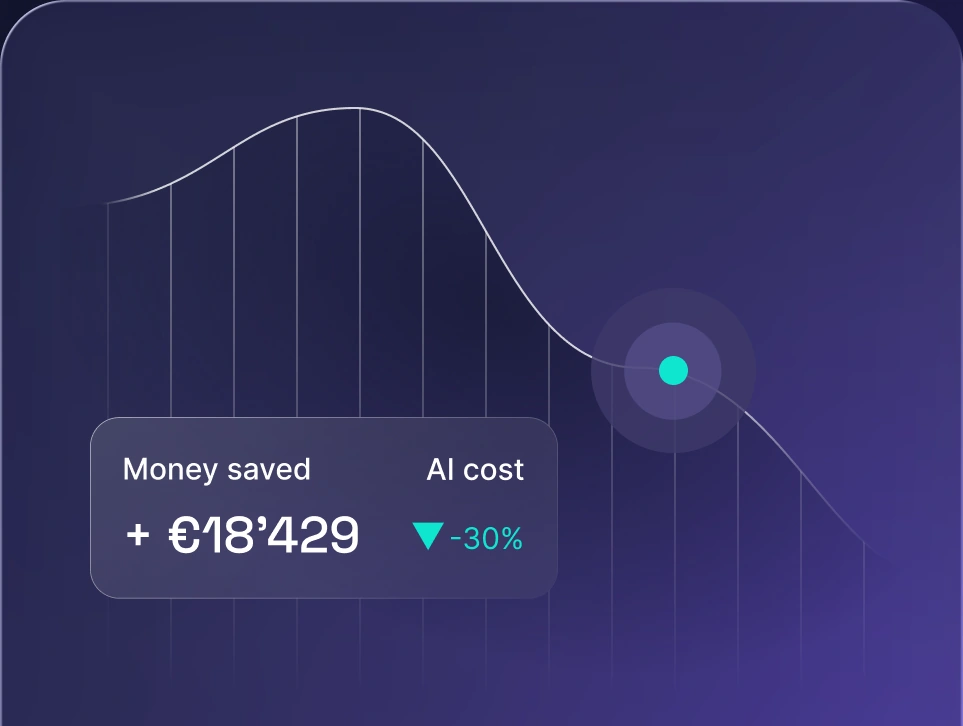
Control AI spend
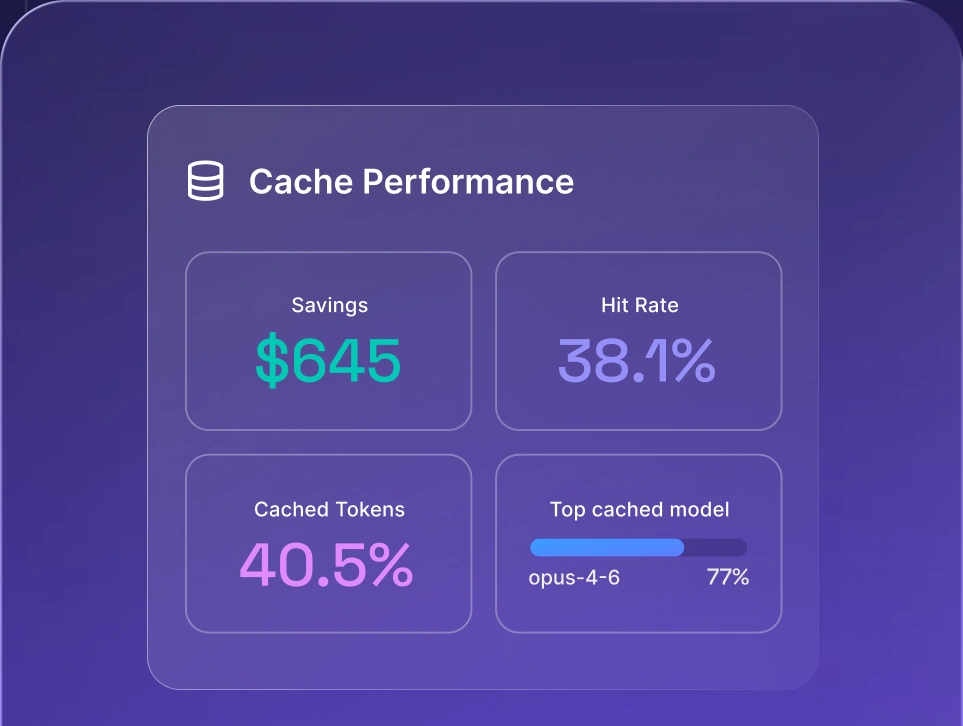
Optimize AI costs

Which Claude model you get on each plan
Claude Code defaults to Opus 5.5 on Pro, Max, Team, Enterprise, and Anthropic API accounts, subject to user selections, organization defaults, and restrictions. The Free plan gives you Claude chat for coding questions, but Claude Code isn't part of it. Anyone searching for a free Claude model for coding gets chat only, and Anthropic's current docs don't confirm a fixed default model there.
The table below compares Claude Code access and Fable 5.1 access on each Claude plan, according to Anthropic's support documentation.
Plan | Claude Code | Fable 5.1 access | Monthly price |
|---|---|---|---|
Free | Not included, chat only | Not stated | $0 |
Pro | Opus 5.5 default | Runs on usage credits from the start | $20 |
Max | Opus 5.5 default | Up to 50% of the existing weekly allowance available for Fable usage | From $100 |
Claude Fable on Max is a ceiling within the shared weekly allowance, not a separate or additional one. Max also includes $100 in monthly Claude Platform API credits, according to Anthropic. Those credits can't pay for Claude Code or extra usage in the Claude apps.
How to switch models in Claude Code
Claude Code lets you change models per session, per launch, or permanently.
- 1.Mid-session with /model. Type the command to switch models without restarting.
- 2.At launch with the --model flag. Start a session on a specific model.
- 3.With an environment variable. Set a default model for your shell.
- 4.In the settings file. Pin a model in ~/.claude/settings.json for every session.
- 5.With the effort setting. Raise or lower how much reasoning the model applies to each task.
Claude Code supports the aliases opus, sonnet, haiku, fable, and opusplan, and default resets to your account's default model. Update Claude Code after each release, because aliases move to newer models. Teams comparing Claude Code vs Cursor should run the same model test in each tool, since the tool can change results.
PRO TIP: Pin a full model name, such as claude-opus-5-5, in your settings file for team-wide consistency, and only move the pin after you've tested the new release on real tasks.
Claude vs GPT for coding
Claude and GPT are both strong at coding, and the best LLM for coding depends on the task, your tooling, and cost. On Anthropic's own Opus 5.5 benchmark table, Opus 5.5 scores 54.4% on FrontierCode v1.1 (Main), against 53.3% for GPT-6 Astra and 47.5% for GPT-5.6 Sol. These numbers are vendor-reported, so verify them on your own work.
Beyond coding, Claude vs ChatGPT differences show up in writing, research, and tool support.
How nexos.ai helps developer teams use Claude models
nexos.ai gives your team access to Claude alongside other leading models in one platform, so you pick the right model for each task without juggling separate accounts. With 200+ leading AI models in one place, you stay in control of the whole stack. nexos.ai maps to the three jobs that matter most.
- Task fit. Smart LLM routing sends each request to a suitable model using rules you set, so nobody switches by hand.
- Cost visibility. LLM observability shows spend per developer, per team, and per model.
- No lock-in. nexos.ai works as an AI gateway, so you keep the same setup and swap or add models as new releases arrive, with fallbacks in place.
Start on Sonnet 5.5, escalate to Opus 5.5 for hard problems, and keep Haiku 5.5 on high-volume sub-steps. Picking the right Claude model per task is the habit that keeps spend predictable.


Run every AI model in one Gateway
One secure, lightweight layer to access, route, and manage 200+ models.
