Table of contents
Key takeaways
- The best AI gateway gives you one secure control layer for model access, routing, governance, usage tracking, and reliability.
- nexos.ai is strongest for organizations that want an AI gateway, AI Workspace, governance, and no-code Agents in one platform.
- LiteLLM is the best open source AI gateway for teams that want self hosted control and OpenAI compatible access.
- Pick the gateway based on who needs access, how much control you need, and whether it serves developers only or the whole organization.
What is an AI gateway?
An AI gateway is a secure layer between your applications, teams, and AI providers that manages model access, routing behavior, reliability, governance, and cost control.
AI gateways solve the inevitable problems that show up when AI moves from experimentation into production. Without one, teams usually end up with API keys scattered everywhere, unpredictable token use, limited audit logs, weak budget limits, no automatic failover, and foggy visibility across AI traffic. You lose sight of which models your teams use, who’s making each request, what your costs are, and whether prompts follow company rules.
The category started as the developer-focused LLM gateway. Early tools mostly helped platform teams route requests to a large language model through a single LLM API. As AI spread beyond engineering, the category matured into the wider AI gateway: a single checkpoint for every model prompt, policy, workload, and team using AI across the business.
A strong AI gateway now does more than route requests – it helps teams standardize model access, manage API key sprawl, set access controls, enforce rate limiting, track usage, apply security filters, and keep request logging clear enough for real governance. If your team is still asking what an LLM is in the wider AI stack, think of the gateway as the front door that decides how each request reaches the right AI model safely.
The simple truth: if multiple teams use OpenAI, Anthropic, Google, or self-hosted models, you need one place to control all that traffic before you descend into AI chaos.

Run every AI model in one Gateway
One secure, lightweight layer to access, route, and manage 200+ models.
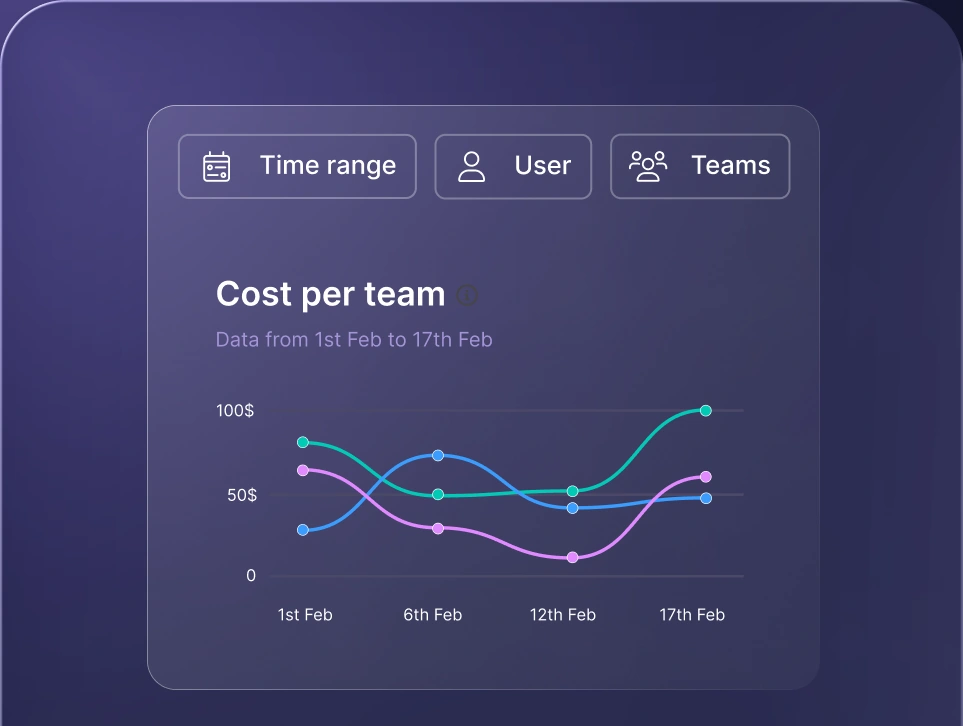
Monitor AI usage
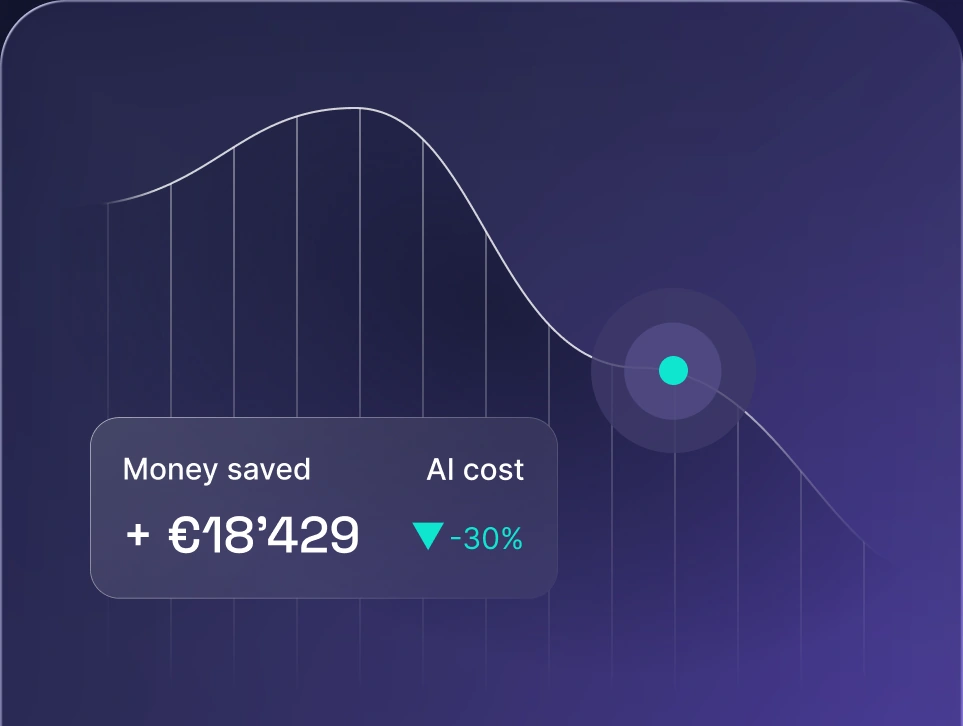
Control AI spend
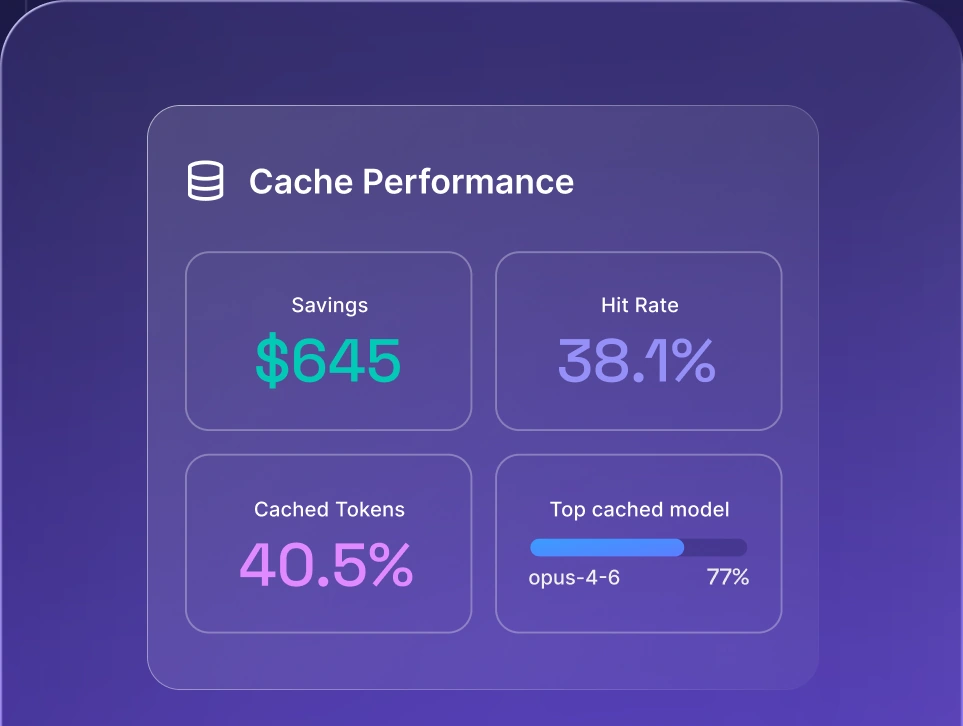
Optimize AI costs

The 6 best AI gateways in 2026
The best AI gateway depends on your stack, security needs, deployment model, and who needs access. We compared these tools by model coverage, routing reliability, cost control, observability, governance, security, deployment options, and usability beyond engineering teams.
The 6 best AI gateways in 2026 are:
- 1.nexos.ai: best AI gateway for enterprise AI control
- 2.Portkey: best AI gateway for production AI routing
- 3.LiteLLM: best AI gateway for secure data routing (self-hosted)
- 4.Kong AI Gateway: best AI gateway for real-time traffic management
- 5.Helicone: best AI gateway for request observability
- 6.TrueFoundry: best AI gateway for model deployment workflows
Below is a broader review of each AI gateway, where they shine, and a gateway might hold you back.
1. nexos.ai
All-in-one AI platform with AI Gateway and AI Workspace, designed for both engineers and non-technical teams.
Custom pricing for AI Gateway and Chat & Agents
Managed cloud
-
Secure access to 200+ AI models through one gateway
-
Smart Routing, caching, and automatic failover
-
Shared AI Workspace and no-code Agent Builder
-
SOC 2 Type 2, ISO 27001, and GDPR compliant
-
Broader than teams that only need a basic API proxy
-
No self-hosting
nexos.ai is an all-in-one AI platform that combines the best enterprise AI gateway with an AI Workspace for the whole organization. It’s built for both technical and non-technical teams that need secure access to many models without turning AI into a shadow stack.
Architecture: nexos.ai is a SaaS platform where the AI Gateway sits between your organization and 200+ AI models. That gateway is paired with an AI Workspace for multiple LLMs, so teams can use approved AI models through a controlled workspace while platform teams keep the AI infrastructure governed.
Core capabilities: nexos.ai includes an AI Gateway with automatic failover, response caching, model routing, input and output security filters, LLM observability, AI governance, and a no-code Agent Builder. The platform also supports security filters for safer requests and clearer control over production traffic.
Key benefits: nexos.ai stands out because its capabilities don't stop at the gateway. Your engineering teams get centralized model access, routing, request logging, budget controls, and observability. Your wider organization gets a usable workspace, approved models, no-code Agents, access controls, and enterprise grade security, including SOC 2 Type 1, ISO 27001, and GDPR alignment. That governance layer makes nexos.ai the best AI gateway for secure data routing when sensitive prompts and data can't leave your control.
Limitations: nexos.ai isn't an open source AI gateway and doesn’t focus on self hosted deployment. Teams that want to run every gateway component inside their own infrastructure may prefer LiteLLM or another self hosted option.
Best for: enterprises that want AI access, governance, adoption, and AI gateway control managed across the whole organization.
2. Portkey
Developer-focused AI gateway for routing, monitoring, and managing production LLM traffic.
Freemium + usage-based
Hosted + self-hosted
-
Failover, load balancing, and circuit breaking
-
Unified API for multiple LLM providers
-
Shared AI Workspace and no-code Agent Builder
-
Strong observability and debugging tools
-
No plug-and-play workspace for business teams
-
Primarily designed for technical users
Portkey is the best AI gateway for production AI routing, combined with observability, guardrails, governance, and routing tools. Portkey is primarily designed for teams moving AI applications from experiments into production traffic.
Architecture: Portkey sits between your application and multiple LLM providers, giving developers a unified API, routing controls, retries, fallbacks, and logs across various models and providers.
Core capabilities: Portkey supports provider routing, load balancing, automatic failover, circuit breaking, caching, guardrails, request logging, prompt management, cost tracking, and access controls. It's useful when platform teams need to manage API traffic across OpenAI, Anthropic, Google, and other AI providers.
Key benefits: Portkey gives engineering teams a strong production layer for routing behavior, evaluation workflows, cost attribution, and reliability. Portkey is more complete than a typical API gateway because it understands model usage, token usage, and provider routing.
Limitations: Portkey is still more developer-centered than organization-wide. Non-technical users may need another workspace layer if the goal is broad AI adoption across departments.
Best for: AI engineering and platform teams that want a production-ready LLM gateway with deep developer controls.
For a deeper breakdown, read the nexos.ai vs Portkey comparison.
3. LiteLLM
Open-source LLM proxy for teams that want full control over model routing and deployment.
Free + infrastructure costs
Self-hosted
-
Open-source and highly customizable
-
Runs inside your own infrastructure
-
Strong observability and debugging tools
-
Requires ongoing DevOps resources
-
Your team manages scaling, security, and maintenance
LiteLLM is the best AI gateway for secure routing – a popular open source AI gateway for teams that want flexible model access through an OpenAI compatible interface. It's especially useful for engineering teams that want self hosted control over routing, keys, spend, and provider access.
Architecture: LiteLLM can run as a proxy server between applications and multiple LLM providers. Teams use LiteLLM to standardize requests through one LLM API while keeping deployment and configuration under their control.
Core capabilities: LiteLLM supports an OpenAI-compatible interface, virtual keys, provider routing, fallback rules, load balancing, rate limiting, budget limits, model access controls, cost tracking, and request logging. Teams can route requests across multiple providers and self-hosted models.
Key benefits: LiteLLM is one of the best open-source AI gateway options for technical teams that want direct control. Platform teams can manage API requests, key access, supported models, token-based rate limiting, and budget controls inside their own stack.
Limitations: LiteLLM needs technical ownership. Teams are responsible for hosting, setup, scaling, security hardening, and any wider workspace experience around the gateway.
Best for: engineering teams that want a self-hosted, open-source solution that also offers the best AI gateway for secure routing.
4. Kong AI Gateway
Custom
Hosted + self-managed
-
Manages AI and API traffic in one environment
-
Runs inside your own infrastructure
-
Virtual keys, budgets, and rate limits
-
Requires ongoing DevOps resources
-
Your team manages scaling, security, and maintenance
Kong AI Gateway brings AI traffic control into the Kong ecosystem, making it the best AI gateway for real-time traffic management if Kong already runs your stack. It's a strong fit for teams using Kong for API management, where AI routing can become part of existing gateway operations.
Architecture: Kong AI Gateway extends Kong Gateway through AI-focused plugins, letting teams route AI requests, apply traffic rules, and manage AI services using familiar API gateway patterns.
Core capabilities: Kong AI Gateway supports model routing, universal API access, rate limiting, semantic caching, request transformation, and provider traffic control. Its wider Kong ecosystem also supports enterprise deployments, access controls, and policy enforcement.
Key benefits: Kong is a good choice for platform teams that already trust Kong for traditional API gateways and want AI management inside that same operational model. It's useful for managing API traffic, rate limiting, and semantic caching at the infrastructure layer, so it doubles as the best AI gateway for real-time traffic management at scale.
Limitations: Kong AI Gateway is strongest for platform and infrastructure teams. Kong might feel heavy if your main need is quick multi provider access, prompt management, or a workspace for non-technical AI users.
Best for: platform teams that already use Kong and want AI traffic control inside their existing API management stack.
5. Helicone
AI gateway and observability platform for monitoring, debugging, and optimizing LLM requests.
Freemium + usage-based
Hosted + self-hosted
-
Detailed request, latency, and cost tracking
-
Fast proxy-based integration
-
Routing, fallbacks, caching, and rate limits
-
Limited organization-wide governance
-
Less suited to enterprise adoption across business teams
Helicone is an AI gateway and LLM observability platform built for developers who want fast insight into requests, costs, latency, and production behavior. It's especially useful when teams care about debugging, analytics, and visibility across AI applications.
Architecture: Helicone sits between your application and AI providers through an OpenAI compatible interface, focused on logging, analytics, routing, fallbacks, and unified observability for requests.
Core capabilities: Helicone supports request logging, cost tracking, prompt management, caching, rate limiting, intelligent routing, automatic fallbacks, model usage tracking, and analytics. Helicone helps teams better understand API traffic and track usage across models.
Key benefits: Helicone makes production behavior easier to see. Developers can inspect requests, review latency, understand model usage, and trace issues without stitching together custom logs.
Limitations: Helicone is strongest as an observability and developer gateway layer. Teams that need broad enterprise governance, no-code Agent Builder access, or company-wide AI workspace adoption might need another platform around it.
Best for: developers and AI teams that want observability depth, request logging, and fast debugging for AI applications.
6. TrueFoundry
LLMOps platform for deploying, fine-tuning, scaling, and monitoring AI models and applications.
Custom
Cloud + private cloud + self-hosted
-
Supports private and self-hosted deployments
-
Fine-tuning and model lifecycle management
-
GPU scaling and infrastructure optimization
-
Higher operational complexity
-
May be excessive for teams that only need third-party API routing
TrueFoundry offers infrastructure for AI deployment and production model operations, including gateway capabilities for routing, monitoring, and managing AI workloads. It's built for teams that need more than a lightweight proxy.
Architecture: TrueFoundry fits into a wider AI platform stack where teams deploy, route, evaluate, and monitor models and applications. Its gateway capabilities support production model access and platform-level control.
Core capabilities: TrueFoundry supports model deployment, routing, observability, evaluation workflows, cost tracking, access control, and infrastructure management. It's more platform-oriented than a simple LLM gateway.
Key benefits: TrueFoundry is useful when ML platform teams want gateway capabilities connected to broader deployment and evaluation workflows, serving teams managing AI infrastructure, not just AI API traffic.
Limitations: TrueFoundry can be more than some teams need if they only want a fast gateway for multiple LLM providers. It's best when your team wants a broader AI platform layer.
Best for: ML platform teams that want AI gateway control connected to deployment, evaluation, and production infrastructure.
For a detailed comparison, read nexos.ai vs TrueFoundry.
The best AI gateways compared
This comparison table gives you a scannable view of the top AI gateways and where each one fits best.
AI Gateway | Best for | Models supported | Failover & caching | Security & compliance |
|---|---|---|---|---|
nexos.ai | Enterprise AI adoption | 200+ AI models | Automatic failover, caching | SOC 2, ISO 27001, GDPR |
Portkey | Production AI apps | Broad provider access | Fallbacks, caching, circuit breaking | Guardrails, governance |
LiteLLM | Self hosted control | 100+ LLMs | Fallbacks, load balancing, caching | Team keys, budgets |
Kong | API platform teams | Major AI providers | Rate limiting, semantic caching | Kong policy controls |
Helicone | Observability-first teams | 100+ AI models | Fallbacks, caching | Logs, access controls |
TrueFoundry | ML platform teams | Multi provider access | Routing, reliability controls | Platform governance |
The table makes the choice clearer: pick nexos.ai for organization-wide control, LiteLLM for self hosted flexibility, and specialist tools when one narrow workflow matters most.
What to look for in the best AI gateway
Not all gateways are built the same. The right choice depends on who needs to use AI, how sensitive the data is, and whether your team is managing experiments or production traffic.
Use these criteria to judge the best AI gateway solutions for startups, platform teams, and enterprise deployments:
- Model and provider coverage. Your gateway should support multiple providers, including OpenAI, Anthropic, Google, and self hosted models, so you are not locked into one primary model.
- Reliability. Look for automatic failover, load balancing, circuit breaking, and clear routing behavior so production traffic doesn't collapse when one provider fails.
- Cost controls and caching. Strong gateways include budget limits, cost attribution, semantic caching, token usage tracking, and response caching so teams can keep AI spend visible.
- Security and compliance certifications. Enterprise grade AI infrastructure should protect sensitive data with access controls, audit logs, request logging, and clear governance.
- Observability depth. Look for LLM observability that shows latency, cost, model usage, errors, API traffic, and production behavior across teams.
- Governance and access controls. The gateway should simplify deciding who can use which appropriate model, for what purpose, and under which rules.
- Deployment options. Some teams need a free tier, SaaS speed, or self hosted deployment. The best enterprise AI gateway is the one that matches your security model.
- Usability beyond engineering teams. If AI is spreading across the business, choose a platform that gives enterprise teams a safe way to use AI without asking engineers for every request.
A traditional API gateway controls normal API requests. The best AI gateway controls model requests, token usage, routing decisions, and AI-specific risks.
How to choose the best AI gateway for your team
The best AI gateway depends on your team size, stack, risk profile, and who needs access to AI. Start with the work you need to unlock, then choose the platform that gives you control without slowing people down.
Use this scenario-based guide:
- Startups. Choose a gateway that gives you fast model access, a free tier if needed, useful logs, simple budget controls, and enough flexibility to switch AI providers without rebuilding your app.
- Enterprises. Choose nexos.ai if you need the best enterprise AI gateway for governance, access controls, audit logs, security certifications, workspace adoption, and multi provider access across the organization.
- Teams wanting self-hosting. Choose LiteLLM if your top priority is a self hosted, open source AI gateway with virtual keys, rate limiting, budget limits, and direct control over your AI infrastructure.
- Teams standardizing multi-model access. Choose nexos.ai, Portkey, or LiteLLM if you need multi provider access and a unified API across multiple LLM providers.
- Platform teams already using API management. Choose Kong if your team wants AI traffic managed through existing API gateway patterns.
- Teams focused on observability. Choose Helicone if request logging, model usage analytics, latency, cost tracking, and debugging matter more than a company-wide AI workspace.
- Teams comparing model quality. Compare AI models before standardizing routing, so your team can choose the right AI model for each workload.
If you are still asking what is the best AI gateway platform, the answer is simple: choose the one that matches your users. Developers need control. Business teams need safe access. Leaders need visibility. The strongest platforms serve all three.
Why teams choose nexos.ai as their AI gateway
Teams choose nexos.ai because it treats AI gateway work as part of a bigger mission: helping every person use AI safely, confidently, and with real leverage.
The nexos.ai AI Gateway gives technical teams automatic failover, response caching, model routing, budget controls, access controls, request logging, and visibility across 200+ models. AI usage tracking through LLM observability helps teams monitor token consumption, costs, latency, model usage, and production behavior in one place. Security filters and AI governance help protect sensitive data, enforce rules, and keep AI traffic aligned with company standards.
But the bigger difference is the workspace. nexos.ai combines gateway control with an AI Workspace and no-code Agent Builder, so AI doesn't stay trapped inside platform teams. Engineering teams get the control they need. Enterprise teams get approved access to AI models. Non-technical users get Agents that help them move faster without touching API keys or model settings.
That is why nexos.ai is a best AI gateway choice for organizations that want more than API management. You get one platform for gateway, workspace, and Agents across the whole organization. Less sprawl. More control. A clearer path to a Limitless You.


Run every AI model in one Gateway
One secure, lightweight layer to access, route, and manage 200+ models.
