Table of contents
Key takeaways
- Claude fits long-context reasoning and structured writing, and Grok fits live X and web data.
- Grok 4.7 has lower standard token rates than Opus 5.5 and Fable 5.1.
- Vendors report their own CursorBench 4.0 and Terminal-Bench 4.0 scores under different settings, so test both models on your own code.
- Plan type matters more than brand for data privacy, so check training, retention, and admin controls first.
- Teams that stay model-agnostic can use each model where it performs best.
Grok vs Claude at a glance
Grok and Claude differ most in live data access, context window, and tone, and the table below compares the two on eight core features.
Feature | Grok | Claude |
|---|---|---|
Developer | SpaceXSI (xAI) | Anthropic |
Flagship model | Grok 4.7 | Fable 5.1 and Opus 5.5 |
Max context window | 500K tokens (Grok 4.7), 1M on Grok 4.3 | Up to 1M tokens |
Real-time data | Native X and web search | Search tool |
Image and video generation | Yes (Grok Imagine) | No native generation |
Coding tool | Grok Build | Claude Code |
Entry paid plan | Plus, $8/mo | Pro, $20/mo |
Default tone | Casual, witty | Measured, structured |
Grok brings live information along with more unvetted material, while Claude is more measured but less connected to real-time feeds.
What is Grok?
Grok is an AI assistant and model family from xAI, now identified on its website and docs as SpaceXSI. You can use it in the standalone app, inside X, and through an API. It runs on a large language model trained to answer questions, write, reason, and code. Its recent reasoning model is Grok 4.7.
xAI designs Grok around a casual, humorous tone, with native access to live X posts and the open web.
Grok's main features include:
- Real-time search. Grok reads live X posts and the web in a single answer.
- Grok Imagine. You generate images and video without leaving the app.
- DeepSearch. A deep research mode builds longer, source-backed answers.
- Grok Build. xAI's terminal coding agent handles coding tasks, while the separate Grok Bot product offers hosted AI agents that work as teammates.
What is Claude?
Claude is an AI assistant and model family from Anthropic. You can use it in the Claude apps and through an API. Anthropic trains Claude with Constitutional AI to be helpful and careful, which gives it a structured, measured tone.
Claude's main features include:
- Long context. A 1M token context window can hold large documents and substantial codebases.
- Claude Code. Anthropic's terminal-based coding tool works inside your repo.
- Search tool. Claude pulls in fresh information when a question needs it.
- File and document analysis. You can upload reports, contracts, and code for review.
The current Claude models come in four tiers. Fable 5.1 is the flagship for demanding, long-horizon work, Claude Opus 5.5 handles agentic coding and advanced reasoning, Sonnet 5.5 covers everyday work, and Haiku 5.5 is the lightweight tier.
Grok vs Claude: models, pricing, and benchmarks compared
Grok and Claude differ most in API rates, plan prices, and vendor-reported coding scores, and this section lines up models, API pricing, consumer plans, and benchmarks.
Models and API pricing
API pricing matters most to developers and teams building on either model, and rates are quoted per million input tokens and per million output tokens. The table below compares Grok and Claude API rates, matching all the models to their closest tier on the other side. Grok Build 0.1 gets its own row because it's a specialized coding model.
Tier | Grok model | Grok price (in/out) | Claude model | Claude price (in/out) |
|---|---|---|---|---|
Top | Grok 4.7 | $2 / $6 | Fable 5.1 | $10 / $50 |
Flagship alternative | Grok 4.6 | $2 / $6 | Opus 5.5 | $4 / $20 |
Mid | Grok 4.3 | $1.25 / $2.50 | Sonnet 5.5 | $2 / $10 |
Lightweight | No direct match | N/A | Haiku 5.5 | $0.10 / $0.50 (up to 100K prompt tokens), $0.50 / $2.50 above |
Specialized coding | Grok Build 0.1 (early access) | $1 / $2 | No direct match | N/A |
Grok 4.7 and Grok 4.6 carry the same pricing, so the newer model costs nothing extra. Grok 4.7 has lower standard token rates than Opus 5.5 and Fable 5.1, but Haiku 5.5 undercuts every Grok text model at short prompt lengths. List prices leave out several costs:
- Long context. Long-context rates apply to all tokens once a prompt reaches 200K tokens, and for Grok 4.7 that doubles the rates.
- Search tools. Grok's web tool costs $5 per 1,000 calls and X Search costs $5 per 1,000 posts fetched, while Claude's Web search costs $10 per 1,000 searches.
- Output tokens. Output tokens usually drive the bill on long coding or writing tasks.
- Tokenizer. Claude 4.7 and later models produce roughly 30% more tokens for the same text than earlier versions.
Lower per-token rates don't automatically mean a lower bill, because usage patterns and model tier decide the total.
PRO TIP: Before you compare list prices, log a week of your real prompts and estimate the output tokens. Reliable AI usage tracking makes that estimate easy.
Consumer plans and pricing
For individual users, the monthly subscription matters more than token rates. xAI replaced its standalone SuperGrok plans with The X Subscription on October 12, 2026, and existing subscribers can keep their old plans. The table below compares consumer plans from Grok and Claude by usage level, from free tiers to team plans.
Plan level | Grok | Claude |
|---|---|---|
Free | Yes, with limits | Yes, with limits |
Entry | Plus, $8/mo | Pro, $20/mo ($17 billed annually) |
Mid | Premium, $30/mo | Max, from $100/mo |
Power user | Super, $100/mo; Ultra, $200/mo | Max, 5x or 20x more usage than Pro |
Bundled option | Grok, Grok Bot, Cursor, and X Premium in one plan | None |
Team/business | Premium, Super, and Ultra at the same per-seat prices | Team plan, per seat plus usage |
Grok is cheaper at entry level, but its popular Premium plan at $30 costs more than Claude Pro at $20. Neither option is cheaper overall, because the same usage lands on a different tier for each user.
Benchmarks
Benchmarks give a useful but partial picture of Grok and Claude, and results change with every model release. The table below compares Grok 4.7 and Claude Opus 5.5, a named current pair, on the key benchmarking results both vendors report, mostly coding benchmarks.
Benchmark | What it measures | Grok 4.7 (xAI-reported) | Claude Opus 5.5 (Anthropic-reported) |
|---|---|---|---|
CursorBench 4.0 | Longer-running coding tasks | 46.3% | 57.8% |
Terminal-Bench 4.0 | Multi-step command-line tasks | 37.6% | 66.4% |
Humanity's Last Exam | Expert-level knowledge | Not in xAI's launch table | 67.7% (with tools) |
Each vendor reports its own results with different effort settings and safeguards, so the table isn't a controlled head-to-head test and no model achieves a verified win. CursorBench and Terminal-Bench check long coding and command-line jobs, while Humanity's Last Exam probes expert-level knowledge, and only Anthropic reports it. Independent trackers list Grok 4.7 scores for SWE-bench, GPQA Diamond, and AIME, but BenchGap labels those as estimates, so this article doesn't use them. The original Grok 4 benchmarks show how far the family has moved since launch.
Many searchers compare Grok 4 vs Claude 4, but Grok 4.7 and the Claude 5.5 family have replaced both, so older benchmarks no longer describe the current flagships.
Run a real task from your own backlog through both models before choosing, because a model performs differently on your codebase than on a leaderboard.
Grok vs Claude: compared by use case
Grok suits live research and fast drafts, and Claude suits complex coding and long-form writing, so the better model depends on the job. Coding specifically gets the deepest look here, covering complex codebases, rapid prototyping, and Grok Build vs Claude Code.
Grok vs Claude for coding
Grok and Claude both handle everyday coding tasks well. The best model for coding depends on the job, and both explain computer science concepts clearly. The differences show up with codebase size, iteration speed, and tooling. Many developers who weigh the best LLM for coding end up using more than one model.
Complex codebases
Claude is the first model many teams test for complex tasks like multi-file refactors, architecture work, and production-ready logic. Anthropic positions Claude Opus 5.5 for long and sprawling jobs, and a 1M token context window can accommodate substantial repository context, depending on codebase size and tokenization. Anthropic reports that Opus 5.5 and Fable 5.1 both passed nearly all of HAProxy's regression tests when translating it from C into Rust, though that's a vendor result.
Even Claude Opus costs noticeably more per token than Grok 4.7, so the extra quality has to be worth it for the task.
Rapid prototyping
Grok fits quick scripts, UI styling, throwaway prototypes, and fast iteration where cost per run matters more than polish. xAI says Grok 4.7 is at the frontier in price-performance on CursorBench 4.0, which suits drafts you plan to refine by hand. Good prototyping tasks include:
- Quick scripts. Small utilities and one-off automations come together in a single file.
- UI mockups. Styling multiple small components iterates fast.
- Proof-of-concept APIs. A rough endpoint proves an idea before you invest in it.
Grok Build vs Claude Code
Grok Build and Claude Code are both coding agents, and they differ in default model, pricing, and hosted-agent options. Claude Code is Anthropic's terminal-based agentic coding tool. Grok Build is xAI's coding agent, which you can use through an interactive terminal interface, headlessly in scripts, or through the Agent Client Protocol (ACP). Grok Bot is a separate hosted product with AI teammates. Both tools support MCP. The table below compares Grok Build and Claude Code on where they run, default model, subagents, hosted agents, and access.
Feature | Grok Build | Claude Code |
|---|---|---|
Where it runs | Terminal interface, headless scripts, and ACP | Your terminal and local repo |
Default model | Grok 4.7 | Claude Opus 5.5 by account type (v2.1.280 and later), subject to provider and configuration overrides |
Subagents | Enabled by default | Built-in subagents registered by default in interactive sessions |
Hosted agent teammates | Grok Bot (separate product) | Not applicable |
Access | Free tier, paid plans, or API key | Included in Pro and Max plans |
Grok Build and Claude Code both work with subagents by default, so the real differences are default model, pricing, and the separate Grok Bot product.
Claude Code isn't on the free Claude plan. The Pro plan at $20 a month and Max from $100 include it, running Claude Opus and Sonnet. Grok Build offers a free tier, and you can also sign in with a paid Grok plan or an API key at Grok's per-token rates. Teams that also weigh editors face the same trade-offs in Claude Code vs Cursor.
Grok vs Claude for writing
Many reviewers prefer Claude for long-form prose, technical reports, and a measured tone, while Grok's casual style suits short social hooks, trend-driven copy, and humorous writing. Treat these as starting points to test on your own content:
- Claude. Whitepapers, documentation, long blog posts, and policy drafts.
- Grok. Social posts, trend-based marketing hooks, and informal copy.
Both models need human fact-checking and editing before anything gets published.
PRO TIP: Ask Grok for five trend-based angles on a topic, then give the strongest one to Claude to expand into a structured long-form draft.
Grok vs Claude for real-time research
Grok is the stronger fit for X-based research because it has native access to live posts on X plus the open web. Real time data access helps with breaking news, sentiment tracking, and trend research. Live social data includes unvetted material, so Grok's answers need source checks. Claude's search tool draws on the open web, so check how current its sources are for fast-moving topics.
Check sources for both, since either one can produce confident but wrong answers, a failure known as AI hallucination.
Grok vs Claude for data privacy
Grok and Claude publish different data defaults, and plan type changes them more than brand does. Anthropic's consumer plans let you choose whether chats help train future models, while API, Team, and Enterprise plans don't train on your content by default. xAI's privacy policy says Grok conversations can be used to improve models, though consumers can opt out and API accounts can enable zero data retention. Neither provider is "safer" on this evidence alone.
Personal Grok or Claude accounts used for work create shadow AI that IT can't see or manage. Before rolling out either model, ask these questions:
- Training. Is our data used for training?
- Retention. How long is it kept?
- Control. Can admins control access?
Grok vs ChatGPT vs Claude vs Gemini
Each model excels at a different job, so none of Grok, Claude, ChatGPT, or Gemini earns an overall ranking here. The table below compares the four on developer, known strengths, real-time data, and entry paid plan.
Feature | Grok | Claude | ChatGPT | Gemini |
|---|---|---|---|---|
Developer | SpaceXSI (xAI) | Anthropic | OpenAI | |
Known for | Live X data | Long context, coding | General-purpose use | Google Workspace use |
Real-time data | X and web | Search tool | Search tool | Google Search |
Entry paid plan | $8/mo | $20/mo | $20/mo | $19.99/mo |
Grok leads on live data, Claude on long context and coding, ChatGPT on general use, and Gemini inside Google Workspace.
Searchers also compare generations, like Grok 4 vs Claude 4 vs GPT-5 vs Gemini 2.5. The benchmarks section above has current scores, and the GPT-5 benchmarks show where OpenAI's models land on similar tests. ChatGPT remains Claude's most direct rival, and Claude vs ChatGPT results shift by task. Other Claude alternatives offer a few options for narrower roles.
Grok or Claude: which should you choose?
Neither Grok nor Claude wins overall, and the significant question is your main workload. The table below maps common workloads to the better starting point between Grok and Claude, and you should test each on your own work.
If your work is mostly… | Choose |
|---|---|
Breaking news and trends | Grok |
Long documents and reports | Claude |
Image and video generation | Grok |
Multi-file coding | Claude |
Quick prototypes | Grok |
Regulated or formal writing | Claude |
Lower standard token rates than Opus 5.5 and Fable 5.1 | Grok 4.7 |
Claude is a good starting point for polished, structured work, and Grok is a good starting point for fast, connected, lower-rate work.
Use this short version to decide:
- Choose Claude. If you work in large repositories or write long, structured documents.
- Choose Grok. If you need live X and web data, fast prototypes, or quick social content.
- Use both. If your work spans research and polished output.
Claude is an excellent model for polished, high-stakes output, and Grok is a strong option for live information and rough drafts.

Run every AI model in one Gateway
One secure, lightweight layer to access, route, and manage 200+ models.
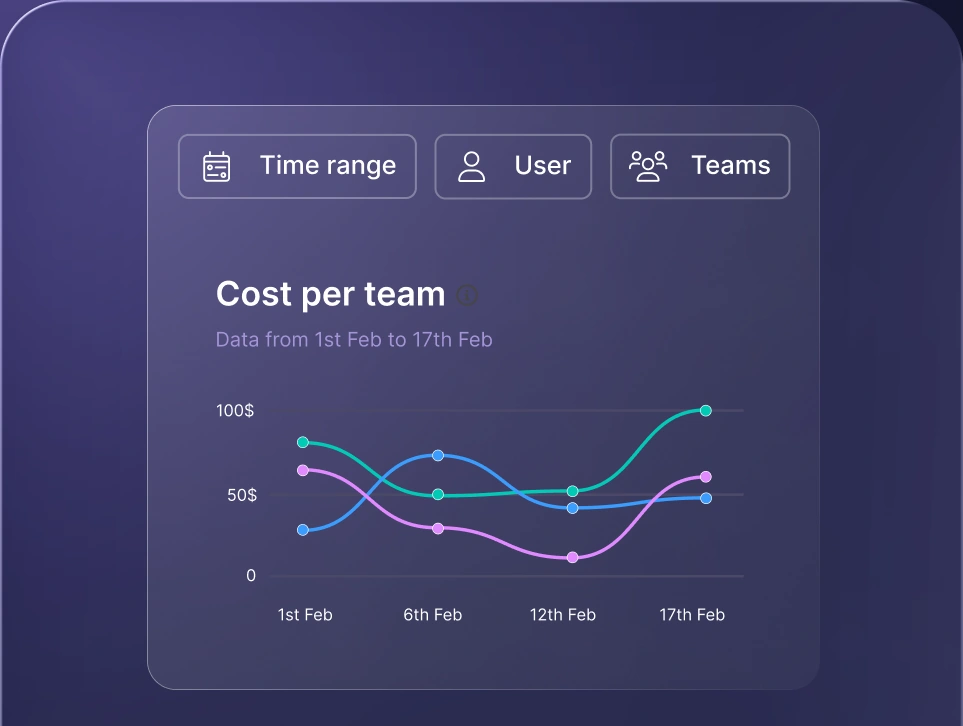
Monitor AI usage
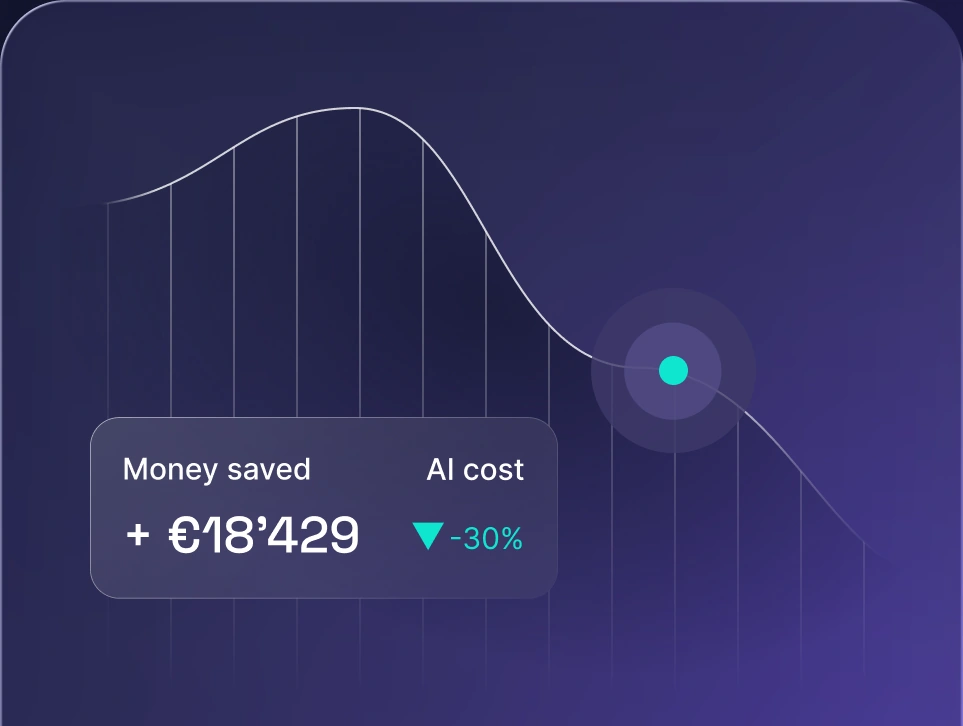
Control AI spend
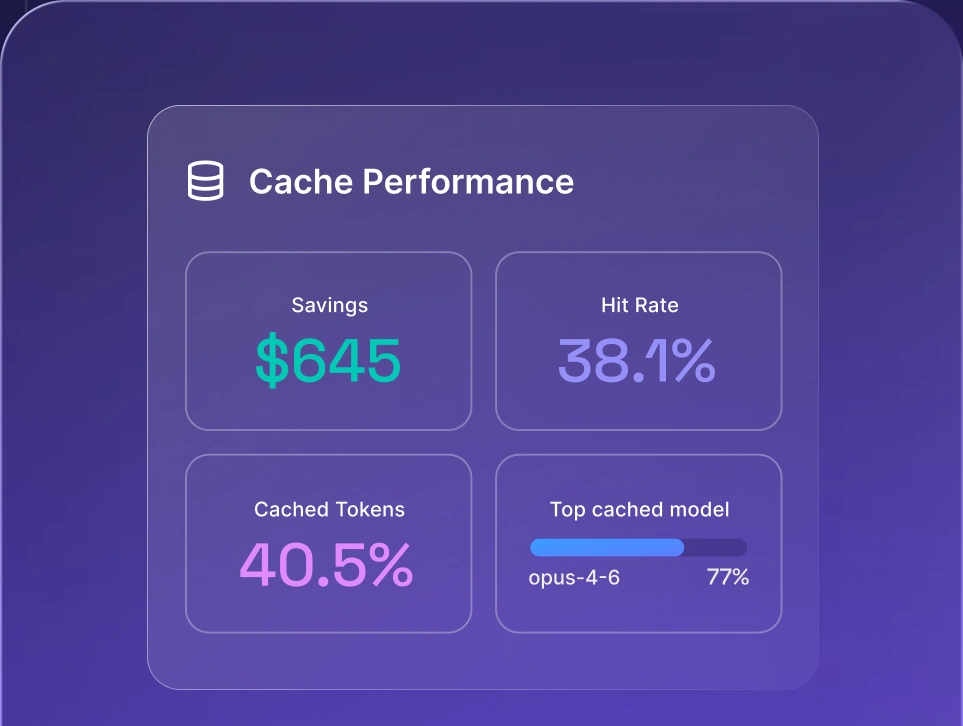
Optimize AI costs

How nexos.ai helps engineering teams manage AI model choice
nexos.ai is an all-in-one AI platform that helps engineering teams manage model choice through one AI gateway. The gateway gives your team a single unified API endpoint to 200+ leading AI models, so coding tools can switch models without a rewrite.
Engineering leaders and CTOs choosing coding models for a team face three problems: cost, lock-in, and task fit.
Cost visibility. Every coding request passes through the gateway, so LLM observability shows per-developer and per-team spend on Claude and other AI models. The CTO signing the bill sees where tokens go and can optimize AI spend before the invoice arrives.
No lock-in. The model that leads today might not lead in six months. A model-agnostic AI setup behind one gateway endpoint keeps your coding workflow the same while you swap in different models underneath.
Task fit. Not every coding request needs a frontier model. Refactoring and tricky debugging are the coding tasks that justify an expensive model like Claude Opus, while boilerplate, tests, and docs often run fine on a cheaper model. The nexos.ai Smart Router, built on smart LLM routing, lets you direct requests across models based on how you configure it.
Teams that match models to tasks and see what each one costs can change course whenever the field does.


Run every AI model in one Gateway
One secure, lightweight layer to access, route, and manage 200+ models.
