Table of contents
Key takeaways
- Claude Sonnet costs half what Claude Opus does on input and output tokens.
- Claude Opus earns its premium on refactors, hard debugging, and long agent runs.
- Sonnet 5.5 beats Opus 5.5 on Terminal-Bench, so the quality gap isn't absolute.
- A team of 25 developers sees a $1,000 monthly swing between the two tiers.
- Routing per task beats picking one tier, and keeps you free to swap models.
Claude Sonnet vs Opus at a glance
Claude Sonnet 5.5 and Claude Opus 5.5 compare like this on positioning, pricing, speed, and typical role:
Feature | Claude Sonnet 5.5 | Claude Opus 5.5 |
|---|---|---|
Positioning | Balanced speed and capability | Top-tier reasoning, agentic task execution |
Standard pricing (per 1M tokens) | $2 input / $10 output | $4 input / $20 output |
Cache read price (per 1M tokens) | $0.10 | $0.20 |
Output generation speed | 30%+ faster than Sonnet 5 | More than 30% faster than Opus 5 |
Typical role | Default model | Escalation model |
Claude Sonnet is the model you run by default on well-scoped work, and Claude Opus is the one you reach for when a task sprawls across files, services, or hours.
PRO TIP: Treat Sonnet as your default and Opus as an escalation path. Set the convention once, then review how often your team escalates.
What are the differences between Claude Sonnet and Opus?
The differences between Claude Sonnet and Opus come down to reasoning depth, speed, and price, in that order. Haiku is the fast, low-cost tier for high-volume work, Claude Sonnet balances capability against speed, and Claude Opus sits at the top for the hardest tasks. Tier names stay constant while version numbers move, so check which version pair any comparison covers. Vendor choice is a separate decision from tier choice, and Claude vs ChatGPT settles that one first.
Reasoning depth
Claude Opus is trained for long, multi-step reasoning and careful judgment, which is why Anthropic points it at complex, open-ended work. Claude Sonnet handles well-scoped problems with less deliberation, and it's strongest on everyday coding, bug fixes, and polished documents.
Both AI models use adaptive reasoning, where Claude decides per step whether to think and how much. Five effort levels run from low through max, defaulting to medium in Claude Code.
Speed and latency
Throughput and time to first token are two separate measurements, and conflating them leads to bad model choices. High thinking effort raises time to first token on any model, because the model reasons before it streams. For interactive work where a person waits on the response, Claude Sonnet at a lower effort setting keeps latency low without giving up much on well-scoped tasks.
Context window and output limits
Claude Sonnet 5.5 and Claude Opus 5.5 both carry a 1M-token context window with 128K maximum output tokens. The full window is generally available rather than gated behind a beta flag, and on the API it uses standard pricing with no premium above 200K tokens.
Long context earns its keep on a large codebase, long logs, and sprawling specs. In Claude Code, Opus 4.6 and Sonnet 4.6 require the [1m] variant instead, so check what you're getting if your team runs an older generation.
Claude Opus vs Sonnet vs Haiku: how the three tiers compare
Claude Opus vs Sonnet vs Haiku maps cleanly onto task difficulty: Haiku for simple high-volume work, Claude Sonnet for the everyday middle, and Claude Opus for hard problems. Haiku 5.5 is priced for throughput, which makes it the right call on classification, extraction, and routing.
Tier | Haiku 5.5 | Claude Sonnet 5.5 | Claude Opus 5.5 |
|---|---|---|---|
Standard pricing (per 1M tokens) | $0.10 / $0.50 | $2 / $10 | $4 / $20 |
Speed | Fastest | Fast | Slower |
Reasoning depth | Basic to solid | Strong | Highest |
Good coding fit | Docs, simple tests, classification | Features, bug fixes, reviews | Refactors, architecture, tricky debugging |
The price spread across the three tiers is wide enough that matching tasks to tiers moves your bill more than any single model choice does. Teams that need capability outside the Claude lineup can weigh the Claude alternatives on the market.
How much Claude Opus costs compared to Sonnet
Claude Opus costs twice as much as Claude Sonnet per token at standard pricing. Older Opus generations were far pricier: Claude Opus 4.1 and Claude Opus 4 were both listed at $15 and $75, so the premium tier has come down sharply in a year.
Per-token price is only the start of the bill. Several levers move what your team actually pays:
- Prompt caching. Cache writes cost 1.25x base input for the 5-minute cache and 2x for the 1-hour cache, while a cache hit on the current pair costs 5% of standard input.
- Batch API discount. Asynchronous processing takes 50% off both input and output tokens.
- Thinking tokens. Adaptive reasoning bills thinking as output, so high effort costs more than the same task at medium.
- Fast mode. Claude Opus 5.5 runs at up to 2.5x speed for $8 input and $40 output per million tokens.
A headline price comparison shows none of these levers, and together they move a monthly invoice by a wide margin. Tracking which ones your team uses is the first step toward AI cost management that holds up.
Cost per token vs cost per task
Standard pricing doesn't equal cost per completed task, and that gap decides budgets. A cheaper model that writes longer output or needs two retries closes the price gap entirely. Anthropic reports Claude Opus 5.5 cut token rates by 20% against Opus 5 and delivers 40% lower costs on typical workloads, because the model needs fewer tokens to finish.
Haiku 5.5, Claude Sonnet 5.5, and Claude Opus 5.5 produce these illustrative monthly costs per developer at standard pricing:
Monthly usage per developer | Haiku 5.5 | Claude Sonnet 5.5 | Claude Opus 5.5 |
|---|---|---|---|
10M input tokens | $1 | $20 | $40 |
2M output tokens | $1 | $20 | $40 |
Total per developer | $2 | $40 | $80 |
Team of 25 developers | $50 | $1,000 | $2,000 |
Illustrative estimates from Anthropic standard pricing as listed on October 23, 2026. Assumes all traffic on a single model, no prompt caching, and no batch discount. A team of 25 developers sees a $1,000 monthly swing between Claude Sonnet and Claude Opus, which is why task-level routing beats picking one tier for everything.
Tokenizers and caching both belong in that math. Sonnet 5 uses the newer tokenizer, which produces approximately 30% more tokens for the same text. Caching moves the number the other way, and since cache reads dominate agentic and coding workloads, LLM caching is often the single biggest lever on a dev team's bill.
Why the CTO needs per-developer spend visibility
Per-developer spend visibility is what turns an AI bill from a surprise into a managed line item. Dozens of users generate spend through hundreds of individual model choices, and the running total usually isn't visible to any of them.
A useful cost view breaks spend down four ways:
- Spend per developer. Shows who runs Claude Opus on everything and who already routes by task.
- Spend per team or project. Tells you which initiative consumes the budget.
- Spend per model. Separates the premium-tier bill from everything else, so the escalation rate shows up in dollars.
- Share of requests that go to Claude Opus. A leading indicator worth watching.
The person signing the bill needs this view before the month closes, because a spike you spot on Tuesday is still a routing change rather than an invoice.
nexos.ai gives teams usage and cost tracking across AI models and users. AI usage tracking per team and LLM observability are where that view gets its depth.
How Sonnet and Opus score on coding benchmarks
Claude Opus 5.5 leads Claude Sonnet 5.5 on most published coding benchmarks, with one notable exception. The accuracy gap between the two is often smaller than the price gap.
Benchmark (what it tests) | Claude Sonnet 5.5 | Claude Opus 5.5 | Lead |
|---|---|---|---|
Terminal-Bench 4.0 (multi-step CLI work) | 70.6% | 66.4% | Sonnet +4.2 |
FrontierCode 1.1 Main (agentic coding) | 46.2% | 54.4% | Opus +8.2 |
CursorBench 4.0 (real Cursor session tasks) | 55.5% | 57.8% | Opus +2.3 |
GDPval-AA v2.1 (real work, 44 occupations) | 1844 Elo | 1846 Elo | Opus +2 Elo |
OSWorld 2.1 (computer use) | 80.1% partial | 81.8% partial | Opus +1.7 |
Vendor-reported figures from Anthropic's Claude Sonnet 5.5 and Claude Opus 5.5 launch posts, published September 2026. Opus 5.5 Terminal-Bench 4.0 is reported at xhigh effort, while its other results generally use max effort. Sonnet 5.5 figures reflect its highest reported effort settings.
Sonnet 5.5 scores higher on Terminal-Bench 4.0. Opus 5.5 leads on the other four evaluations, although benchmark scores alone don't establish value per completed task.
Benchmarks don't predict performance on your codebase. Your repo's conventions, test suite, and accumulated weirdness aren't in any published data. LLM benchmarks and LLM evaluation are worth weighing before you read too much into any single score.
PRO TIP: Run 10-20 of your own real tickets through both AI models before deciding. Your repo, conventions, and test suite are the benchmark that matters.
Claude Opus vs Sonnet for coding
Claude Opus vs Sonnet for coding comes down to task difficulty and the cost of getting it wrong. A boilerplate CRUD endpoint and a race condition in your payments service sit at opposite ends of that scale, so not every request needs a frontier model. Paying the same rate for both is how budgets leak.
The three groups below cover most of what a dev team ships, and the best LLM for coding widens that comparison across vendors.
Coding tasks that justify Opus
Claude Opus earns its premium on complex tasks involving cross-file reasoning, careful judgment, or autonomous task execution over hours. A wrong answer on these costs more than the price difference.
- Multi-file refactoring. Changes that ripple across modules need the model to hold the whole dependency graph in mind.
- Tricky debugging across services. Intermittent failures reward patient reasoning over fast pattern matching.
- Architecture and system design. Decisions here outlive the sprint, so judgment matters more than throughput.
- Long autonomous agent runs. Anthropic reports one early tester completed a 680,000-line migration in under a day with Claude Opus 5.5.
Coding tasks Sonnet handles well
Claude Sonnet covers the well-scoped middle of your backlog, where the problem is clear and speed matters more than deliberation. Anthropic positions Claude Sonnet 5.5 as strongest at exactly this everyday coding work.
- Well-scoped feature work. A clear spec means the model spends its effort writing rather than investigating.
- Single-file bug fixes. Contained problems don't need cross-file reasoning.
- PR reviews. High volume, moderate depth, and fast turnaround keep reviewers moving.
- CLI and shell scripting. The Terminal-Bench result makes Claude Sonnet worth testing first here.
Tasks a cheaper model handles fine
Plenty of coding work is pattern-based output where the quality difference between tiers barely registers. Sending this work to Haiku or to Claude Sonnet at low effort keeps the premium budget where it matters.
- Boilerplate. Scaffolding follows conventions the model already knows.
- Unit tests. Test generation is pattern work once the function exists.
- Docstrings and README files. Low complexity, high volume, and easy to verify.
- Commit messages. A short summary of a visible diff.
- Code formatting explanations. Rule lookup rather than reasoning.
Routing by task is one of the most direct answers to how to reduce AI costs for work without asking anyone to use a worse model on hard problems.
How Claude Code uses Opus and Sonnet
Claude Code defaults to Claude Opus 5.5 on Pro, Max, Team, Enterprise, and the API from v2.1.280 onward, subject to managed settings and your own overrides. Switching AI models takes one command: run /model to open the picker, or /model sonnet to switch immediately.
The common pattern is Claude Opus for planning and Claude Sonnet for implementation, and the opusplan alias does exactly that.
Claude Opus consumes plan usage limits faster than Claude Sonnet. Running Opus as your default hits your five-hour limit sooner, so teams on Pro or Team seats often pin Sonnet and escalate deliberately.
How Sonnet vs Opus compares across model generations
The capability gap between Claude Sonnet and Claude Opus shifts with every release, and sometimes a new Sonnet matches or beats the previous Opus outright. Anchoring your setup to one version pair means re-litigating the decision every few months.
The lineup has moved through five generations, with API standard pricing per million tokens:
- Claude Opus 4.5. $5 / $25. The release that cut the Opus price by two thirds.
- Claude Sonnet 4.6 and Opus 4.6. $3 / $15 and $5 / $25. First generation with 1M context.
- Claude Opus 4.8. $5 / $25. Still active, and used as a cybersecurity fallback target.
- Claude Sonnet 5 and Opus 5. June 2026, $5 / $25 on Opus. Sonnet 5 brought the newer tokenizer.
- Claude Opus 5.5 and Claude Sonnet 5.5. September 2026, $4 / $20 and $2 / $10. The current pair.
The Opus tier dropped from 15/75 to 4/20 in roughly two years, so any cost assumption older than a couple of generations is probably wrong.
Claude Opus 5.5 vs Sonnet 5.5
Claude Opus 5.5 leads on FrontierCode, CursorBench, and OSWorld, while Claude Sonnet 5.5 takes Terminal-Bench. Both carry 1M context, with retirement no sooner than September 2027.

Run every AI model in one Gateway
One secure, lightweight layer to access, route, and manage 200+ models.
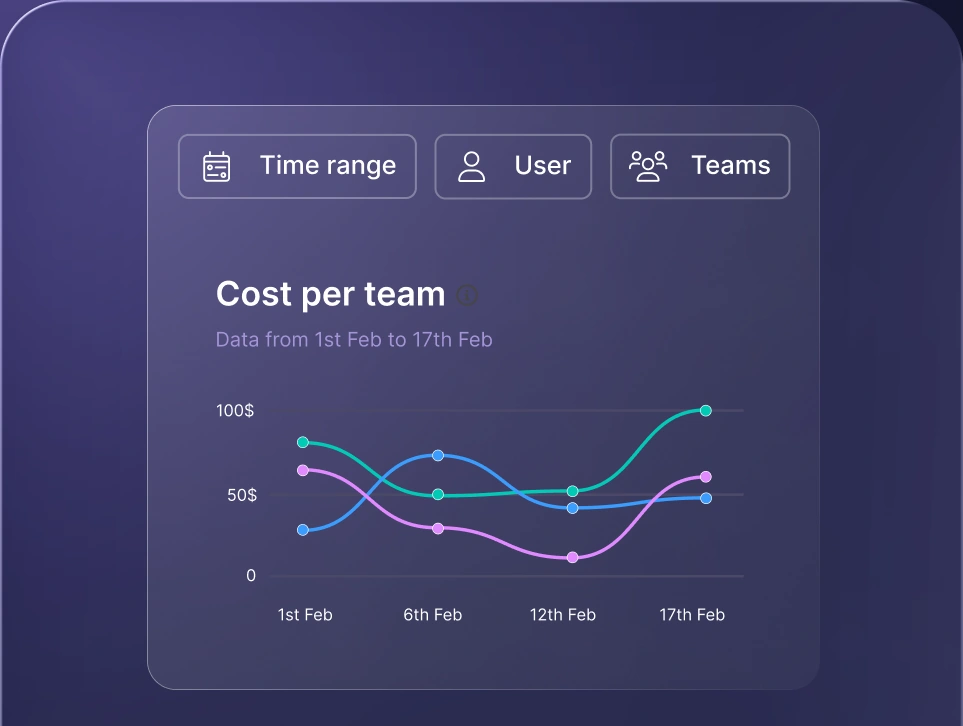
Monitor AI usage
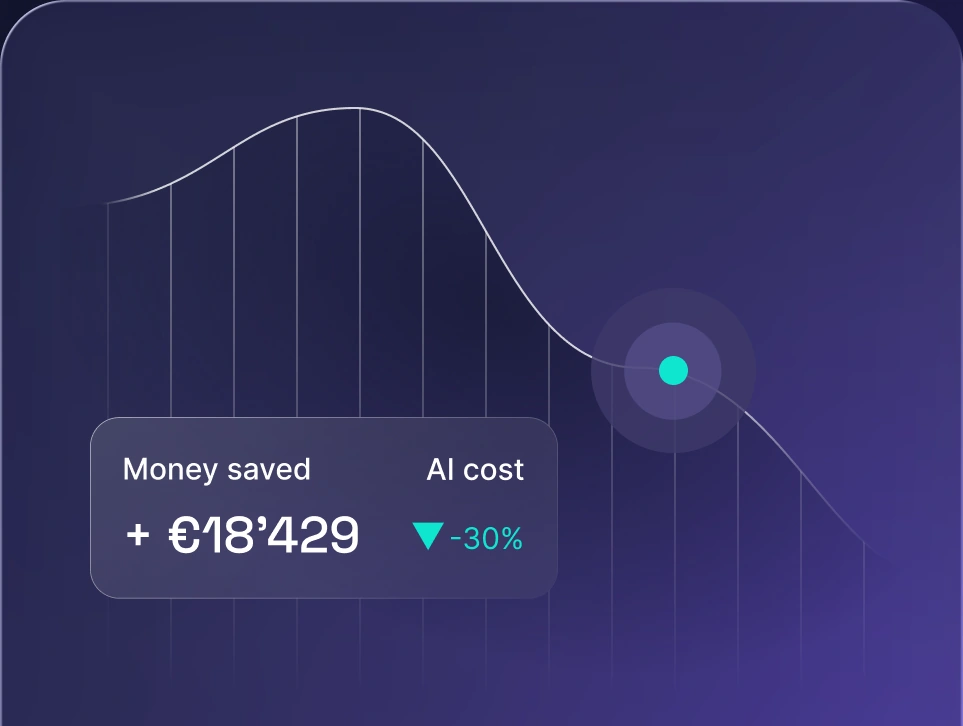
Control AI spend
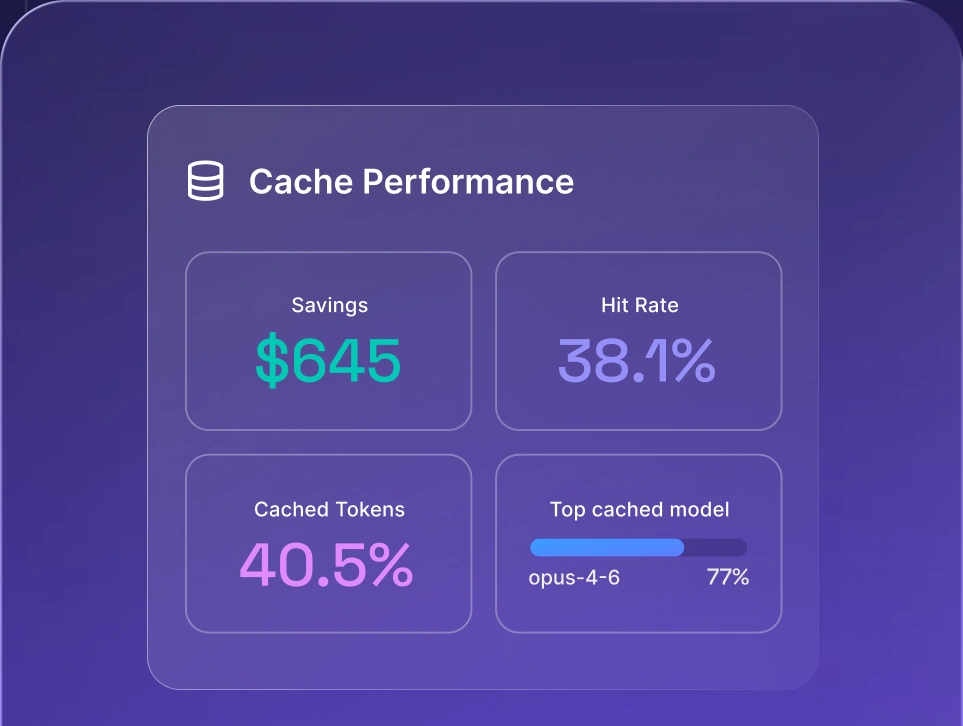
Optimize AI costs

Why dev teams shouldn't lock into one model
The top coding model changes every few months, and any setup built around one specific model inherits that churn as engineering work. A model-agnostic AI setup treats the model as a swappable component rather than a foundation.
Swapping models without rebuilding your setup
Keep one integration, one set of prompts, agents, and permissions, and change the model underneath. Keeping those layers fixed turns a model migration from a rebuild into a scoped change with testing attached.
Four things should stay stable when the model changes:
- API integration. One endpoint and one request format, though a new generation can still introduce breaking parameter changes.
- Agent configurations. Prompts, tools, and scopes carry over as a starting point, but expect to re-test and tune some per model.
- Access controls. Who can use what shouldn't depend on which vendor you're pointed at this quarter.
- Cost reporting. Historical data stays comparable across a migration, so you can tell whether the switch saved money.
Get those four right and swapping AI models becomes a decision you make on evidence rather than on migration cost. LLM routing handles the per-request side of the same idea.
Fallbacks for outages and rate limits
When a model becomes unavailable, requests should fail over rather than stalling the team. Claude Code supports fallback chains for overload, unavailability, and certain server errors, while cross-provider fallbacks and rate-limit routing require a separate routing layer.
A sensible chain escalates downward within the vendor first: Claude Opus to Claude Sonnet to Haiku. Reaching another provider's model is where a gateway sitting above the vendor earns its place. An AI gateway with model fallbacks applies the same pattern across every model your team uses.
How nexos.ai helps teams use Sonnet and Opus together
nexos.ai all-in-one AI platform connects the three threads in this comparison: knowing what you spend, keeping your options open, and matching each task to the right tier.
- Cost visibility. Usage and spend per user, team, and model, available while the month is still running.
- Model flexibility. Claude sits alongside the other AI models available in nexos.ai on one platform, with routing and fallbacks so a single provider issue doesn't stop work.
- Task fit. Send the same coding prompt to Claude Sonnet and Claude Opus side by side and decide per task, with the data in front of you.
Smart LLM routing and the option to compare AI models side by side are what make those capabilities work. If your team weighs Claude Sonnet against Claude Opus at any scale, explore nexos.ai or talk to our sales team.
Which should you choose: Claude Sonnet or Opus?
Most teams need both, so the real question is which one runs as the default model.
Choose Claude Sonnet if:
- Your request volume is high. The 2x price gap compounds fast.
- Latency matters. Claude Sonnet 5.5 is Anthropic's fastest Sonnet yet.
- Your tasks are well-scoped. Clear specs don't reward deliberation.
- Budget is tight. Half the token rates, within a few points on most evaluations.
Choose Claude Opus if:
- You're running complex refactors. Cross-file reasoning is where Claude Opus separates itself.
- Correctness is critical. A wrong fix in production dwarfs the token difference.
- You're running long agent sessions. Sustained judgment over hours is the point.
- Debugging is hard. Intermittent and multi-service bugs reward patience.
Run both, with Claude Sonnet as the default and Claude Opus for the tasks that earn it. Set that convention once, then check the escalation rate monthly.


Run every AI model in one Gateway
One secure, lightweight layer to access, route, and manage 200+ models.
