What is LLM routing?
LLM routing is the decision layer built into your LLM gateway. It evaluates each incoming request against a pool of available large language models, then routes it to whichever model is best suited for the job. The router reads signals like task type, cost, latency, and quality, then applies routing rules or a trained classifier to make the call. That's what LLM model routing comes down to: matching the work to the right model instead of sending everything to one.
Why does this matter now? It’s simple: most teams don’t only run on one LLM provider. They mix a frontier model, mid-tier options, cheaper models, and self-hosted open-weight models, and each carries a different price and performance profile. When you route across multiple large language models like this, model routing turns that sprawl into an advantage, so incoming queries land on the model that gives you the best result for the least spend. It's at the heart of AI orchestration, where model selection is one decision among many.
How does LLM routing work?
LLM routing architecture works as a dispatcher sitting between your app and your pool of models. The router sits in the request path, reads each request, and decides where it should go. Here's the request lifecycle, step by step.
- 1.Request sent. Your application sends a user prompt through a unified API to the routing layer.
- 2.Request analysis. The router evaluates it against routing rules or a classifier, checking signals like task type, query length, and query complexity.
- 3.Model matched. The routing logic maps the request to a model based on task type, task complexity, cost, latency, or inferred intent.
- 4.Request forwarded. The router forwards the request to the selected model and streams the response back.
- 5.Response logged. The response returns to your app, and the router logs it for cost, latency, and quality tracking, alongside token usage for each call.
Routing decisions add negligible overhead. A static rule evaluates in under a millisecond, and semantic routing adds roughly 5 to 20ms for the embedding step. That tiny cost buys you smarter model selection on every call, which is why intelligent request routing has become standard in modern AI applications. This is the same routing layer that later carries your automatic fallback and cost tracking, so one decision point handles optimization and telemetry together.
Key benefits of LLM routing
Good routing changes the economics and reliability of running multiple models. Here are the benefits that matter most when you route requests through a dedicated layer.
- Lower cost per request. Simpler requests go to cheaper models, so you stop paying frontier prices for work a smaller model handles fine. The cost savings compound fast at volume.
- Better latency. Fast requests route to fast models, which cuts inference latency where speed matters and keeps your inference cost in check.
- Better task-model fit. Each task type reaches the model that's genuinely good at it, lifting output quality and guarding against the quality degradation you get from forcing one model to do everything.
- Resilience against outages. When a provider goes down, automatic fallback reroutes to your backup models instead of leaving requests stranded on a single model.
- Flexibility as new models release. Add a new model to your routing table and start sending traffic to it without rewriting your app.
- Stronger cost controls and visibility. Routing gives you cost tracking per model and clear model performance data, so you see exactly where spend and slowdowns come from.
- Centralized policy enforcement. For LLM routing enterprise setups, one routing policy controls which teams reach which models, under what budget, with a full audit trail. That governance layer is where routing earns its keep at scale.
Taken together, these gains are why routing has become core infrastructure for any team running more than one model. Get it right and your AI spending tracks the value you're getting instead of climbing on its own.
LLM routing strategies
While there’s no single best LLM routing strategy, most production setups combine more than one, because a rule that works for clearly separated use cases won't cover every edge case on its own. The LLM routing techniques below range from simple static rules to runtime, cost-aware decisions, and the right mix depends on your traffic. Keep each strategy in mind as a building block, not an either-or choice.
Rule-based (static) routing
Rule-based routing sends requests by predefined conditions, such as task type, prompt length, or user tier, rather than analyzing each request. This kind of static routing is simple, predictable, and fast to implement, but predefined rules don't adapt as request types diversify over time. A typical example: route translation requests to a multilingual model and code requests to a coding-optimized model. Best for teams starting out, or use cases with clearly separated task types.
Cost- and latency-aware (dynamic) routing
Dynamic routing evaluates each request at runtime and picks the cheapest or fastest model that still clears a quality bar. The nuance worth getting right is what "cheapest" means. It should be the total expected request cost (input and output tokens, cache hit rate, and retry probability), not just the per-token sticker price. This kind of cost-based routing shines in multi-provider LLM routing, where models from different vendors have wildly different pricing curves and you want cost efficiency without sacrificing results. Done well, it also keeps expensive models in reserve for the requests that truly need them.
Semantic routing
Semantic routing embeds the incoming request and routes by inferred intent rather than an explicit task label. It's worth the effort only when the caller doesn't already know the task type. If your app can set a task tag itself, that path is simpler and free. The tradeoff: semantic routing adds a small embedding and classification step (roughly 5 to 20ms) and needs maintenance as intents drift, so weigh the accuracy gain against the upkeep.
Model cascades (cascading routing)
A model cascade tries a cheap model first, checks the output with schema validation, a confidence score, or a judge model, and escalates to a more capable model only if the check fails. The appeal is real: when the cheap tier resolves most requests, your blended cost drops sharply. The risk is the escalation rate, a live cost variable. If it drifts up, you pay for the cheap attempt and the expensive fallback on every request. Our deep dive on FrugalGPT unpacks this idea, a well-known research approach built around cascading to cut cost without gutting quality.
LLM routing vs. LLM gateway vs. failover
These three terms get conflated constantly, and mixing them up causes real incidents. Here's the clean split.
- LLM gateway. The broader infrastructure layer that gives you a unified API, authentication, logging, rate limits, and cost controls across every provider. Routing lives inside it.
- LLM routing. One function within a gateway: routing requests to the right model when multiple are available. Routing is about optimization: picking the right model from the ones available.
- Failover. An availability mechanism, not an optimization one. Failover falls back to your fallback models when the chosen model is down, keeping things running when something isn't.
The concrete distinction: routing picks the best model when everything is healthy, while LLM fallback routing keeps traffic flowing when a model or provider breaks. Treat them as one thing and you'll eventually route around a healthy model or fail to recover from an outage. Both are configured together in the AI Gateway, so you get optimization and resilience from the same control plane.

One AI gateway for unified LLM access
and AI spend control
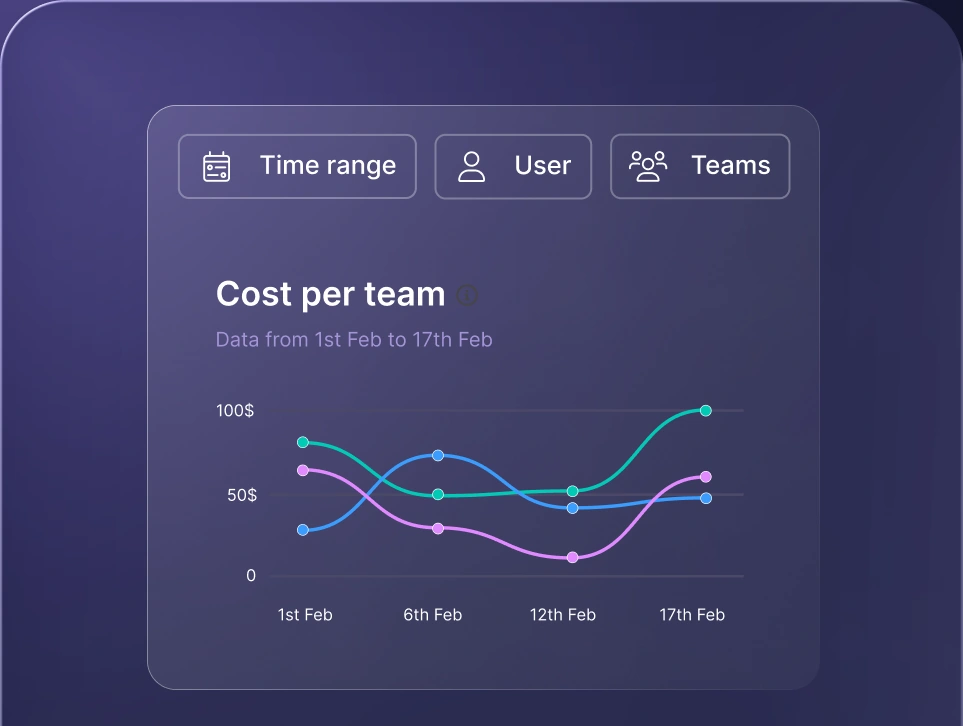
Monitor AI usage
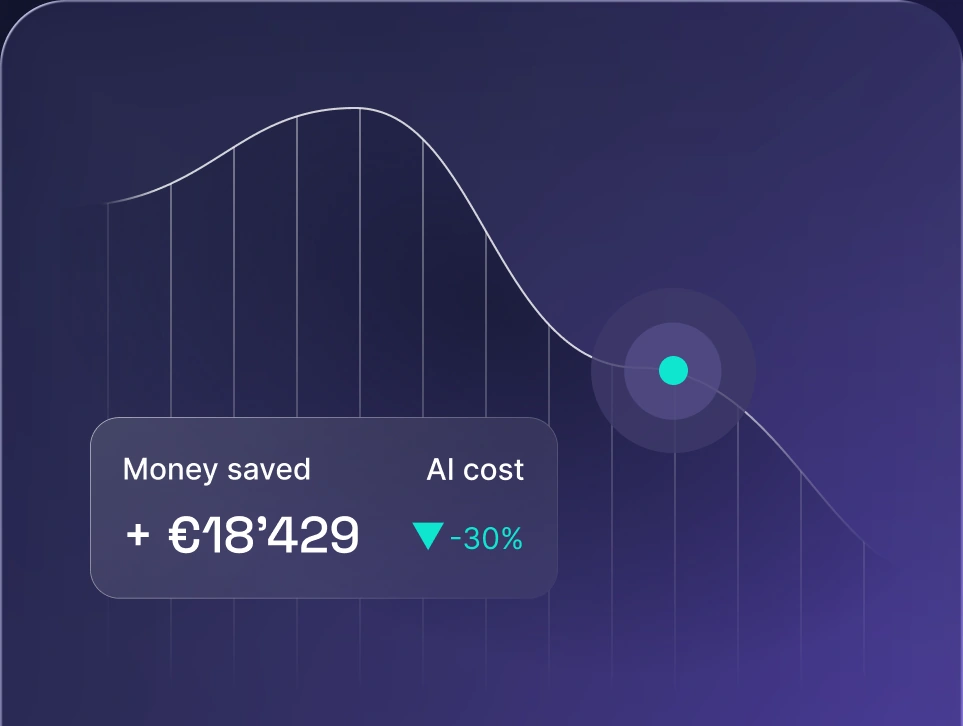
Control AI spend
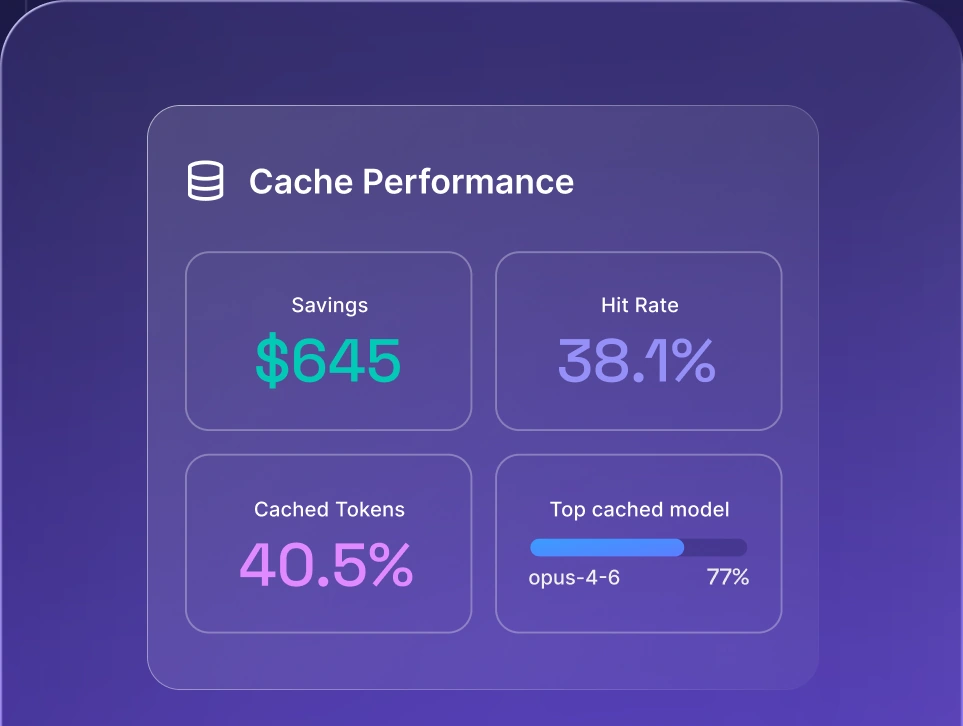
Optimize AI costs

LLM routing platforms: build vs. buy
Choosing an LLM routing platform comes down to build-your-own versus a managed service. Open-source LLM routers give you full control and no license cost, but they come with real DevOps overhead: you own the uptime, the scaling, the observability, and the upgrades. A managed platform gets you to production faster with built-in observability and governance, at the cost of some low-level control. For most teams running multi-provider LLM routing in production, the managed route wins on total cost of ownership once you price in engineering time. The next two sections help you weigh the decision.
How to choose an LLM routing platform for your enterprise
Not every platform handles routing the same way, and the gaps show up fast at scale. Use these criteria to compare your options before you commit.
- Model and provider coverage. The more models and providers a platform supports, the more routing flexibility you get, and the less vendor lock-in you inherit.
- Deployment options. Look for SaaS, self-hosted, and on-prem so you can match deployment to your security and data-residency needs.
- Routing strategy flexibility. The platform should support static routing, dynamic routing, semantic, and cascade routing strategies, not just one hardcoded approach.
- Observability depth. You want per-route cost, latency, and quality visibility, plus model performance data, not just raw logs. Real LLM observability tells you where every dollar goes.
- Governance features. RBAC, access policies, rate limits, and audit trails let you enforce who can use which models, with proof for every decision.
- Security certifications. SOC 2, ISO 27001, and GDPR compliance are table stakes for enterprise data.
Score each platform against these six points and the shortlist gets short fast. The winner is usually the one that pairs deep routing control with governance you can actually defend.
How nexos.ai handles LLM routing
nexos.ai's AI Gateway includes built-in routing across 200+ leading AI models, so each request reaches the right model without you juggling multiple keys or providers. Smart Routing sends every incoming query to the most appropriate LLM for the job, and instead of wiring up separate APIs and dashboards, you get one control plane that routes, monitors, and governs every call. Here's what that gives you.
- Routing and automatic fallback. Requests land on the most appropriate model for the job, and if your primary model stumbles, automatic fallback keeps your traffic moving with no manual intervention.
- Centralized AI Governance. With AI Governance, you set access policies and audit trails so every team, model, and request is accounted for.
- Deep LLM observability. LLM observability gives you per-route cost, latency, token usage, and model performance, so you always know where your spend and your slow calls are coming from.
- Model comparison tooling. Compare AI models side by side on your own prompts, so you choose the most capable models for your routing table with evidence, not guesswork.
If you're routing agent traffic across models, the same layer handles it cleanly, which pairs well with our guide on LLM agents explained. And because everything runs through one AI workspace for multiple LLMs, your team stops cobbling tools together and starts shipping.
Try nexos.ai's all-in-one AI platform to implement enterprise-grade LLM routing with built-in governance and observability.
