Key takeaways
- The best LangSmith alternatives are nexos.ai, Langfuse, and Arize Phoenix.
- Teams switch for stack fit, hosting, pricing, eval depth, or gateway needs.
- Langfuse, Phoenix, Opik, Helicone, and MLflow self-host, trading cost for upkeep.
- Eval-first platforms suit score-driven releases. Gateways suit many models and users.
- Replaying a week of production traces beats any feature list.
What is LangSmith?
LangSmith is LangChain's platform for tracing, debugging, testing, evaluating, and monitoring LLM applications. It works natively with LangChain and LangGraph, and you can also use it with other frameworks through its SDKs.
Its core capabilities cover the full development loop, from first trace to production monitoring:
- Tracing. You see every LLM call, tool call, and agent step as a nested trace, so debugging a broken chain takes minutes instead of an afternoon.
- Datasets and evaluations. You build datasets from real runs and score them with LLM-as-a-judge, custom metrics, or human annotation.
- Prompt playground and prompt management. You test prompts against models side by side, then version and ship the winners.
- Production monitoring dashboards. You track latency, cost, token usage, and feedback across live traffic.
LangSmith offers cloud plans alongside self hosting on higher tiers, with pricing published on LangChain's official pricing page. Broader LLM monitoring practice starts from the same foundations.
Why teams look for LangSmith alternatives
Most teams evaluating LangSmith alternatives have had their requirements move. Here are the fit reasons that come up most often:
- Stack fit. Teams not built on LangChain often prefer framework agnostic or OpenTelemetry-native tooling, since a tight integration with one agent framework matters less when you've standardized elsewhere.
- Hosting and data control. Some teams want self hosting options or open source code they can inspect, especially when production data can't leave their own infrastructure.
- Pricing model. Per-seat pricing and usage-based pricing suit different team shapes, and a free tier that fits a two-person team rarely fits a 40-person one.
- Eval depth versus ops focus. Some teams need experiment-heavy evaluation workflows. Others need cost, usage tracking, and access control across many models and non technical users.
- Gateway needs. Teams routing traffic across GPT, Claude, Gemini, and other models often want observability built into the LLM gateway layer rather than bolted on beside it.
Mapping your requirement to the right category saves a migration later. The wider field of LLM observability tools splits along these same lines, and teams rethinking their framework alongside their tooling will find LangChain alternatives worth weighing in parallel.
How to choose a LangSmith alternative
Choosing a LangSmith alternative means scoring tools against your actual constraints rather than their feature lists. The criteria below separate tools that look similar on a landing page but behave differently once real traffic hits them.
Work through these seven criteria before you shortlist:
- Tracing depth. Check whether you get nested spans, agent steps, and tool call detail, or only top-level request logs.
- Evaluation features. Look for datasets, LLM as a judge, human review, and regression tests you can run on every change.
- Integrations and SDKs. Native integration with your framework, plus OpenTelemetry support, decides how much migration work you're signing up for.
- Hosting options. Cloud, self-hosted, and hybrid each carry different data control and maintenance trade-offs.
- Pricing model. Per seat, per trace, and usage-based pricing scale very differently as your traffic grows.
- Security and access controls. Roles, SSO, and audit logs matter the moment more than one team touches the platform.
- Multi-model support. One view across providers beats four dashboards when you run GPT, Claude, and Gemini side by side.
The table below turns these criteria into specific checks for choosing a LangSmith alternative, and the reason each one matters.
Criterion | What to check | Why it matters |
|---|---|---|
Tracing | Nested spans; agent steps; tool calls | Faster debugging |
Evaluations | Datasets; LLM-as-a-judge; human review | Quality before release |
Integrations | SDKs; OpenTelemetry; framework support | Less migration work |
Hosting | Cloud; self-hosted; hybrid | Data control |
Pricing | Per seat; per trace; usage-based | Predictable costs |
Access control | Roles; SSO; audit logs | Team governance |
Multi-model | One view across providers | Simpler operations |
Tracing and evaluation features decide how fast you ship, while hosting, pricing, and access control decide how comfortably you scale. Score every candidate on both halves before you commit.
Teams that already track spend by model and team will find the migration easier, since AI usage tracking gives you the baseline you'll compare every candidate against.
Best 9 alternatives to LangSmith in 2026
The nine tools below cover every approach worth considering, from gateway platforms to open source tracing to eval-first workflows.
The best LangSmith alternatives in 2026 are:
- 1.
- 2.
- 3.
- 4.
- 5.
- 6.
- 7.
- 8.
- 9.
They're grouped loosely by approach: gateway-based platforms that sit in front of your model traffic, open source tools you can self-host and inspect, and eval-first platforms built around experiments and scoring.
1. nexos.ai
The all-in-one AI platform that puts 200+ models behind one gateway, with observability and governance built in.
Custom Enterprise, billed by invoice
Cloud, EU-hosted
-
One OpenAI-compatible API reaches 200+ models including GPT, Claude, and Gemini
-
Cost, usage, and performance visibility across every team and provider
-
Governance, budgets, SSO, and RBAC ship as part of the platform
-
Not built for dataset-heavy offline eval experiments
-
Enterprise-only pricing means no self-serve entry point
Every model your teams use reaches them through one AI gateway, and every request comes back with cost, usage, and performance attached. That shape suits teams whose main need is visibility, cost control, and governance across many models and users rather than a like-for-like prompt-experiment tool or a dataset-driven evaluation platform.
Key features:
- A single API and gateway for multiple LLM providers. One OpenAI-compatible endpoint reaches 200+ models, so adding a provider never means another integration.
- LLM observability for usage, costs, and performance. Every LLM call is logged with cost and token usage attached, giving you trace data across teams and providers in one view.
- Smart LLM routing. Requests land on the best-fit model automatically, so simple tasks don't pay frontier-model prices.
- AI governance and access controls. Budgets, hard caps, API key management, SSO, RBAC, and audit logs keep AI adoption inside the lines.
- AI Workspace and Agent Builder. Compare Models side by side and hand repetitive work to no-code AI agents.
Best for: companies standardizing AI access across teams that want observability at the gateway level.
Things to consider: teams that run heavy offline, dataset-based eval experiments may pair a gateway with a dedicated eval tool.
Pricing: custom Enterprise pricing, billed by invoice and scoped to your usage and requirements.

Run every AI model in one Gateway
One secure, lightweight layer to access, route, and manage 200+ models.
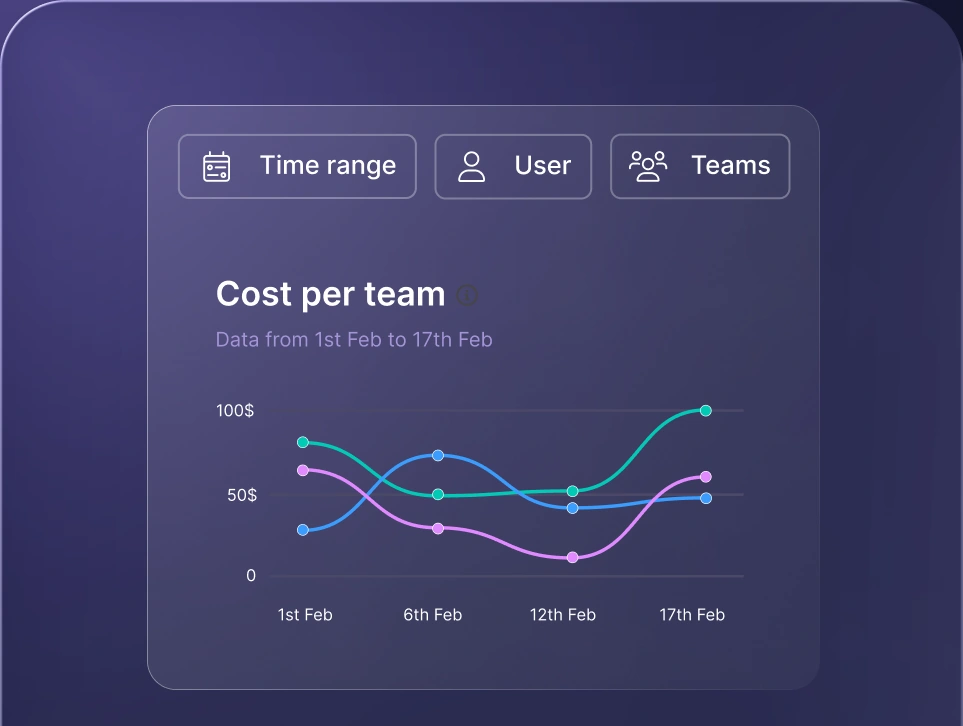
Monitor AI usage
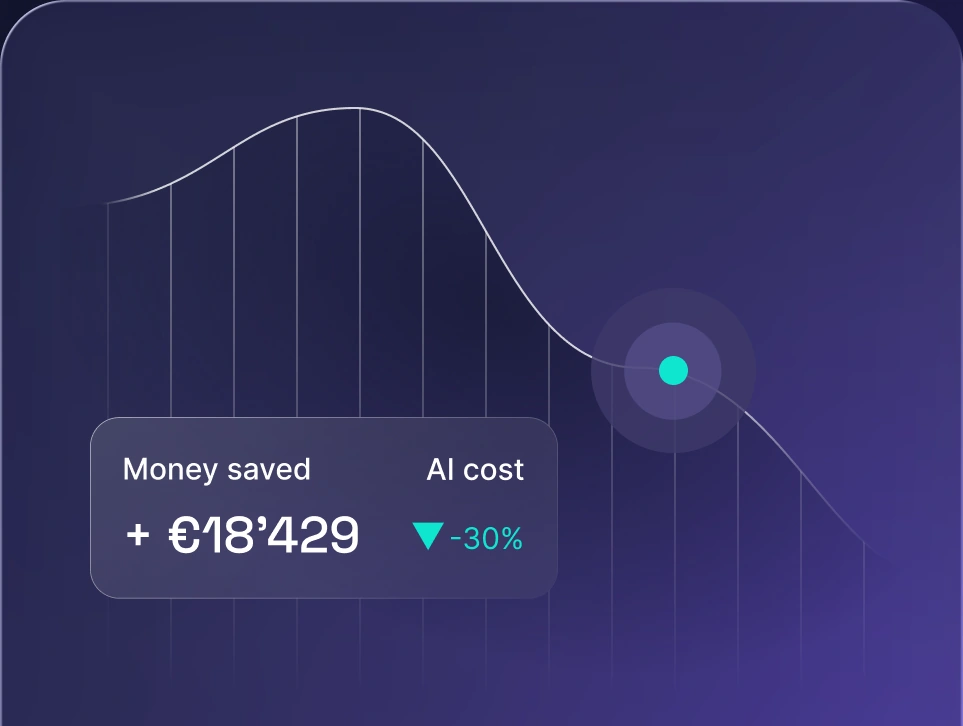
Control AI spend
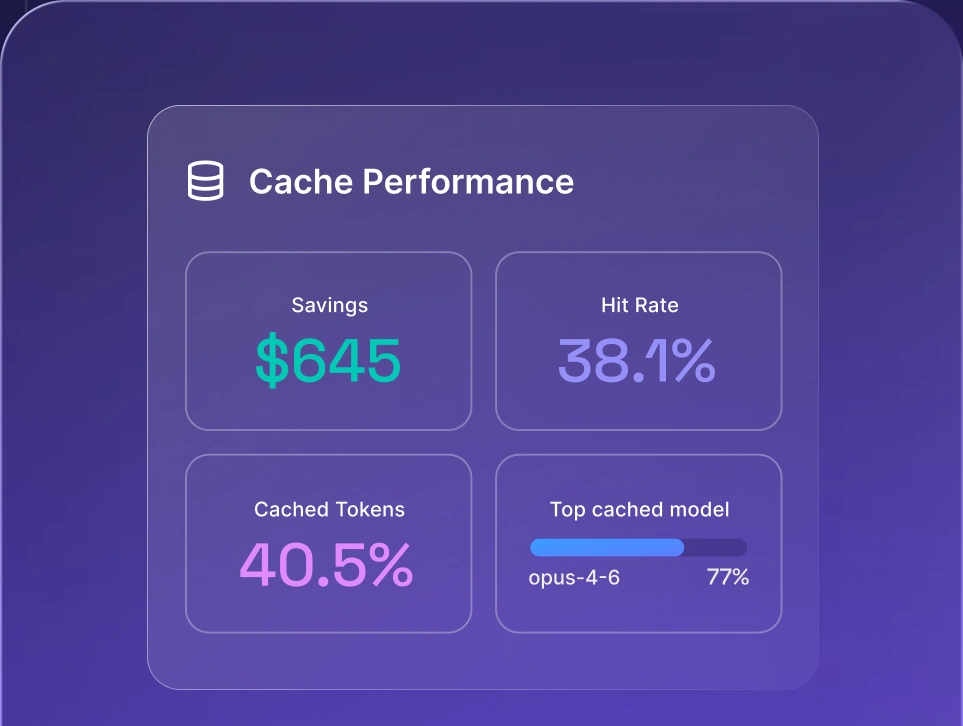
Optimize AI costs

2. Langfuse
The open source LLM engineering platform that became the default self-hosted answer to LangSmith.
Free tier, usage-based paid plans, free self-hosted core
Cloud or self-hosted
-
MIT-licensed core you can inspect, fork, and run anywhere
-
Covers tracing, prompts, datasets, and evals in one tool
-
Framework agnostic with broad OpenTelemetry support
-
Self-hosted deployments mean you own upgrades and scaling
-
Advanced capabilities sit behind paid cloud tiers
Langfuse is an open source LLM engineering platform with an MIT-licensed core, available as a managed cloud service or self-hosted on your own infrastructure. It's the most widely adopted open source LangSmith alternative, and its OpenTelemetry support keeps you free of any single agent framework.
Key features:
- Tracing. Nested agent traces capture every LLM call, tool call, and agent step.
- Prompt management. Prompt versioning and deployment live alongside your traces, so prompt iteration is tracked rather than scattered across branches.
- Evaluations. Run evaluations with LLM-as-a-judge scorers, human annotation, or custom metrics, including online evaluation on live traffic.
- Datasets. Build test sets from production traces and run regression tests against them.
- Integrations. SDKs for Python and JavaScript, plus OpenTelemetry and native support across the LangChain ecosystem.
Best for: teams that want self-hosted, framework agnostic observability.
Things to consider: running the self-hosted deployment means your team owns upgrades, scaling, and backups.
Pricing: a free tier on cloud, usage-based paid plans above it, and a self-hosted option with no license fee for the core.
3. Arize Phoenix
Open source tracing and evals built OpenTelemetry-first, from notebook to production.
Free and open source, commercial platform priced separately
Local, self-hosted, or cloud
-
OpenTelemetry and OpenInference instrumentation slots into existing stacks
-
Runs locally in a notebook for fast debugging
-
Library of prebuilt evaluators covers common failure modes
-
Broader platform features sit in the commercial Arize tier
-
Less focused on cost and usage tracking than gateway tools
Phoenix is Arize AI's open source observability and evaluation tool, built on OpenTelemetry and OpenInference instrumentation. You can run it locally while debugging, then move the same instrumentation to a self-hosted deployment without rewriting your tracing layer.
Key features:
- Tracing. OpenTelemetry-native agent traces that slot into existing observability stacks and help you avoid vendor lock in.
- Evals. Prebuilt evaluators for hallucination, relevance, and correctness, plus custom metrics you define.
- Datasets and experiments. Version test sets and compare evaluation results across runs.
- Local or self-hosted runs. Start in a notebook, then self-host when you move to production.
Arize also offers a commercial platform, Arize AX, for teams that need managed infrastructure and enterprise support.
Best for: teams already standardized on OpenTelemetry.
Things to consider: the open source project concentrates on tracing and evals, so managed infrastructure and broader platform capabilities come through the commercial tier.
Pricing: Phoenix is free and open source with self hosting at no license cost. Arize's commercial platform is priced separately.
4. Braintrust
The evaluation platform built for teams whose release decisions hang on evaluation scores.
Free tier, usage-based paid plans, custom enterprise contract
Cloud, hybrid options available
-
Experiment loop sits at the center rather than beside tracing
-
Row-level score comparison makes regressions obvious
-
Prompt playground tests across models before code changes
-
Weaker fit for teams whose priority is cost visibility across providers
-
Commercial only, no open source option
Braintrust is an evaluation-first platform where the experiment loop is the product and production logging is built around it. Teams reach for it when shipping decisions depend on measured quality rather than intuition.
Key features:
- Experiments. Compare prompt and model versions against the same dataset and see score deltas per row.
- Datasets. Curate test cases from production data and grow them as edge cases appear.
- Scorers. Use built-in scorers, LLM as a judge, or code-based custom metrics.
- Prompt playground. Testing prompts across models and parameters happens before anything reaches your codebase.
- Production logging. Capture live traces and promote interesting ones straight into datasets.
Braintrust is a commercial product, and it describes enterprise deployment options including hybrid setups on its official site.
Best for: teams where systematic evals drive release decisions.
Things to consider: the platform is strongest on evaluation workflows, so teams whose priority is cost and usage visibility across providers often add a gateway alongside it.
Pricing: a free tier for small projects, usage-based paid plans, and custom pricing for enterprise contracts.
5. Comet Opik
Apache 2.0 tracing and LLM-as-a-judge evals in one open source tool.
Free self-hosted, free tier and usage-based paid plan on cloud
Cloud or self-hosted
-
Pairs full tracing with a strong evaluation layer in one tool
-
Apache 2.0 license with no feature-gated core
-
Online evals score live production traffic
-
Newer than some options, so check your framework integration
-
Smaller community than Langfuse or MLflow
Opik is Comet's open source platform, licensed under Apache 2.0 and available self-hosted or as a managed cloud service. Pairing tracing with a strong evaluation layer makes it a practical single tool for teams that want both without running two platforms.
Key features:
- Tracing. Full trace data for LLM calls, agent steps, and tool calls, with framework integrations across the LangChain ecosystem and beyond.
- LLM-as-a-judge evaluations. Prebuilt and custom judges score outputs offline and in production, including online evals on live traffic.
- Dashboards. Track cost, latency, and evaluation feedback across projects, with custom dashboards for the metrics your team watches most.
Best for: teams wanting open source evals alongside tracing.
Things to consider: Opik is younger than several options here, so confirm the integration you need is covered before you commit.
Pricing: free and open source when self-hosted, with a free tier and usage-based paid plan on Comet's cloud.
6. Weights & Biases Weave
LLM tracing and evals that live next to the experiment tracking your ML team already runs.
Free tier, usage-based paid plans, custom enterprise pricing
Cloud, enterprise options available
-
Tight integration with existing W&B experiment tracking
-
Scorers defined in code fit engineering workflows
-
Links LLM traces to training runs and model registry
-
Value depends heavily on already using W&B
-
Less compelling as a standalone observability platform
Weave is W&B's toolkit for tracing and evaluating LLM apps, designed to sit alongside the experiment tracking ML teams already run there. Keeping LLM tracing in the same place as your model training history removes a context switch.
Key features:
- Tracing. Capture every LLM call and agent step with inputs, outputs, and token usage.
- Evaluations and scorers. Define scorers in code, run evaluations across datasets, and compare evaluation results between versions.
- Connection to the wider W&B platform. Link LLM traces to the training runs, model registry, and artifacts already in your workspace.
Best for: ML teams already using W&B.
Things to consider: the value compounds if you're on W&B already and is less obvious if you aren't.
Pricing: a free tier for personal use, with usage-based paid plans and custom enterprise pricing.
7. Helicone
Proxy-based observability that's running within the hour, no SDK rewrite needed.
Free tier, usage-based paid plans, free self-hosted
Cloud or self-hosted
-
Setup takes one environment variable, no code restructuring
-
Caching cuts both latency and model spend
-
Works across providers without per-SDK instrumentation
-
Deep agent traces need extra instrumentation
-
Proxy sits in your request path, which some teams avoid
Helicone is an open source, proxy-based observability tool. You set it up by changing the base URL of your requests, so one environment variable gets you logging across every provider you call.
Key features:
- Request logging. Every LLM call is captured with full request and response bodies.
- Cost tracking. Spend breaks down by model, user, and custom properties.
- Caching. Cache repeated requests at the proxy to cut both latency and model spend.
- Prompt management. Prompt versioning lets you test changes without redeploying.
Best for: fast setup with minimal code changes.
Things to consider: proxy-based capture suits request-level observability well, and deep agent traces across multi-step workflows may need additional instrumentation.
Pricing: a free tier, usage-based paid plans, and a self-hosted open source option.
8. MLflow
The open source ML lifecycle platform that brought GenAI tracing into the tool your models already live in.
Free and open source, managed options via cloud vendors
Self-hosted or managed
-
Vendor-neutral governance as a Linux Foundation project
-
One platform spanning classical ML and GenAI work
-
Prompt registry sits beside the model registry you already run
-
GenAI features are newer than the core lifecycle tooling
-
Self-hosted operation requires platform ownership
MLflow is an open source ML lifecycle platform with GenAI features, bringing LLM tracing and evaluation into the same tool teams use for model versioning and experiment tracking. As a Linux Foundation project, its governance sits outside any single vendor.
Key features:
- MLflow Tracing. OpenTelemetry-compatible agent traces with automatic instrumentation for major frameworks.
- GenAI evaluation. Run evaluations with built-in and custom scorers, including LLM-as-a-judge and human feedback.
- Prompt registry. Prompt versioning follows the same version control discipline as your model registry.
Best for: teams already managing models in MLflow.
Things to consider: the GenAI features are newer than the core ML lifecycle tooling, so check coverage for your specific framework.
Pricing: free and open source, with self hosting on your own infrastructure. Managed versions are available through cloud vendors.
9. Datadog LLM Observability
LLM traces correlated with the APM and infrastructure data you already monitor.
Usage-based, priced per LLM observability session
Cloud
-
Correlates LLM calls with services, containers, and queries
-
Fits existing Datadog monitoring and alerting workflows
-
Built-in quality, safety, and drift detection checks
-
Economics assume you're already a Datadog customer
-
Less depth on prompt iteration than dedicated LLM tools
Datadog LLM Observability is part of the wider Datadog platform, so your LLM traces sit next to application and infrastructure monitoring instead of in a separate tool. For organizations with an existing Datadog contract, that correlation is the main argument.
Key features:
- Tracing of LLM chains. End-to-end agent traces covering prompts, tool calls, and model responses.
- Quality and safety evaluations. Built-in checks for quality, drift detection, and safety signals on production traffic.
- Correlation with APM and infrastructure data. Tie a slow LLM call to the service, container, or database query behind it.
Best for: organizations already monitoring with Datadog.
Things to consider: both pricing and value assume you're already on the platform, so it rarely stands alone as a purchase.
Pricing: usage-based, priced per LLM observability session and billed alongside the rest of your Datadog usage.
LangSmith alternatives compared side by side
Here's how the nine LangSmith alternatives stack up on focus, licensing, fit, and cost:
Tool | Primary focus | Open source | Best for | Pricing |
|---|---|---|---|---|
nexos.ai | AI gateway with observability | No | Multi-model teams | Custom Enterprise |
Langfuse | Tracing, prompts, evals | Yes (core) | Self-hosted observability | Free tier; usage-based; self-host |
Arize Phoenix | OpenTelemetry tracing, evals | Yes | OpenTelemetry stacks | Free; commercial tier separate |
Braintrust | Evals and experiments | No | Eval-driven teams | Free tier; usage-based; custom |
Comet Opik | Tracing and evals | Yes | Open source evals | Free tier; usage-based; self-host |
W&B Weave | Tracing and evals | SDK | Existing W&B users | Free tier; usage-based; custom |
Helicone | Proxy-based logging | Yes | Quick setup | Free tier; usage-based; self-host |
MLflow | ML and GenAI lifecycle | Yes | Existing MLflow users | Free; self-hosted |
Datadog LLM Observability | APM-linked LLM monitoring | No | Existing Datadog users | Usage-based per session |
nexos.ai is the strongest LangSmith alternative when your priority is unified access, observability, and governance across many models and users rather than dataset-heavy experimentation. The open source options win on data control, and the eval-first platforms win when evaluation scores gate every release.
LangSmith alternatives by use case
The right choice depends less on the feature matrix than on the pressure you're under: budget, eval rigor, code transparency, or speed of setup. Each pressure narrows the shortlist differently.
Cheaper alternatives to LangSmith
Cost varies far more by pricing model than by vendor. Per-seat pricing punishes teams that want unlimited users and cross functional collaboration. Per-trace or per-event pricing punishes high-volume production traffic. Usage-based pricing tracks real consumption but makes forecasting harder. Self hosting removes license cost entirely and shifts spend to infrastructure, engineering time, and maintenance, which is cheaper only if you already run that infrastructure well.
Four levers reduce observability spend without reducing visibility:
- Trace sampling. Capture every trace in development and a representative sample in production.
- Data retention settings. Keep full trace data for recent windows and aggregate older periods.
- Caching repeated LLM calls. Identical requests shouldn't cost twice.
- Routing simple tasks to smaller models. Classification and extraction rarely need a frontier model.
The last two levers matter most, because they cut model spend rather than monitoring spend. At the gateway level, LLM caching and smart routing attack the larger line item on the invoice, and broader AI cost management practices keep those savings from eroding as usage grows.
Alternatives to LangSmith for LLM evals
If your team ships on evidence, evaluation depth outranks everything else on the list. The best alternatives to LangSmith for LLM evals are Braintrust, Arize Phoenix, Langfuse, Comet Opik, and W&B Weave, each of which supports dataset-based experiments, scoring, and AI evaluation on production traffic.
Four methods cover most LLM evaluation work:
- LLM as a judge. A model scores outputs against your criteria, which scales well and needs calibration against human judgment.
- Human review. Human annotation stays the reference standard for subjective quality, tone, and correctness.
- Reference-based scoring. Compare outputs against known-good answers where a ground truth exists.
- Regression tests on datasets. Run every prompt or model change against a fixed dataset and block releases that lose points.
Before any of that, side-by-side model comparison is a fast qualitative check. Running the same prompt across models to compare AI models side by side tells you in minutes whether a formal eval is even worth building, and it surfaces obvious failure modes like AI hallucination early.
Open source alternatives to LangSmith
Five options on this list are open source: Langfuse with an MIT-licensed core, Arize Phoenix, Comet Opik under Apache 2.0, Helicone, and MLflow. Each publishes its license and source, and each supports self hosting on your own infrastructure.
The trade-off is consistent across all of them. Self hosting gives you data control, code you can inspect, and freedom from vendor lock in. In exchange, you own upgrades, scaling, security patching, and uptime. That's a fair deal for teams with platform engineers and a poor one for teams without.
Before committing, check each project's GitHub repository. Commit frequency, open issue response times, release cadence, and documentation quality tell you more about long-term viability than the feature list on the website.
LangSmith alternatives for startups
For early teams, the best LangSmith alternatives for startups are the ones you can wire up this afternoon. Optimize for four things:
- Quick setup. Proxy-based tools like Helicone need one environment variable, and SDK-based tools should take under an hour.
- Generous starter tiers or self hosting. A usable free tier or a self-hosted deployment keeps observability off the burn rate.
- Low migration effort. OpenTelemetry support and framework agnostic SDKs mean your instrumentation survives your next architecture change.
- Room to grow into governance later. Check that SSO, roles, and audit logs exist on a higher tier before you need them.
Most teams grow into this in three stages: start with lightweight tracing so you can debug, add evaluation workflows once output quality starts gating releases, then layer in access controls as headcount and model count grow. Keeping an eye on how to reduce AI costs for work from the start means the governance layer arrives before the bill does.
How to choose the right LangSmith alternative
Match the tool to the problem you actually have:
- Choose nexos.ai if you need unified access to 200+ models, cost visibility, and governance across teams from one control point, with observability built into the gateway layer.
- Choose Langfuse if you want open source tracing, prompt management, and evals you can self-host and inspect.
- Choose Arize Phoenix if your stack is already OpenTelemetry-native and you want evals in the same instrumentation layer.
- Choose Braintrust if evaluation results decide what ships and you want the experiment loop at the center.
- Choose Comet Opik if you want open source tracing and LLM-as-a-judge evals in a single Apache 2.0 tool.
- Choose W&B Weave if your ML team already lives in Weights & Biases and you want LLM traces next to training runs.
- Choose Helicone if you want request logging, cost tracking, and caching running within the hour.
- Choose MLflow if your models are already managed in MLflow and you want GenAI tracing in the same lifecycle.
- Choose Datadog LLM Observability if you already monitor with Datadog and want LLM traces correlated with APM data.
Most teams end up with two tools rather than one: a gateway or observability platform for the operational layer, and an eval platform for the quality layer. If the operational layer is your gap, nexos.ai brings 200+ models, LLM observability, and governance controls together behind one API. The best AI gateway for your team is the one that covers every model you run, every user who needs access, and every dollar you spend.