Table of contents
What are Grok 4 benchmarks?
Grok 4 is xAI's frontier AI model, one of the large language models (LLMs) trained at massive scale with heavy reinforcement learning to push reasoning, coding, and tool use well past its predecessors. xAI leaned hard on reinforcement learning with verifiable rewards and raw compute at scale, and the reinforcement learning payoff shows up across the benchmarks.
Grok 4 benchmarks are the standardized tests that measure how this model performs on hard, repeatable tasks, so you can compare it fairly against every other model in the field. Think of a benchmark as a fixed exam: the same questions, the same rules, and a score that tells you how often Grok 4's response lands the right answer, the correct answer to a fixed question.
A useful LLM benchmark tells you what the test measures, whether the model got tool use during the run, and whether the challenge is still hard enough to separate the leading models from the pack. Keep that lens on as you read, because a Grok 4 score with tools and a Grok 4 score without tools describe two very different things.
Grok 4 key benchmark results
Grok 4 posted strong results across multiple benchmark categories, setting new state of the art scores on several at launch. The benchmarks below are organized by category. For each test, we cover what it measures, Grok 4's score, how it compares to top competitors, and what the result means for business users in practice.
Frontier reasoning benchmarks
Frontier reasoning measures whether a model can solve genuinely novel, expert-level problems rather than replay memorized patterns. For business users, a strong score here signals a model that can act as a research collaborator on hard, ambiguous work, for example a novel proof or a cross-disciplinary analysis. These are among the hardest benchmarks in the field, built to stay unsolved as models improve.
Humanity's Last Exam (HLE). This exam consists of 2,500 PhD-level questions across many domains, designed to be the final closed-ended academic benchmark before models surpass the humans who write them. Grok 4 Heavy scored 50.7% on the text only subset with tools, the first model to cross 50% on this exam at launch. Frontier models have climbed higher since, so treat 50.7% as a launch record. It's no longer the ceiling.
Without native tool use, meaning no native tool access at all, Grok 4 scored 26.9%, still ahead of Gemini 2.5 Pro (25.4%) and o3 (21.0%). What this means for you: when Grok 4 gets the right tool use, including native tool use like web search, it can act as a credible research partner on graduate-level problems across wildly different fields, pulling fresh facts from the web with a live search instead of guessing from stale memory.
Main takeaway: with the right tools, Grok 4 is a credible research partner on graduate-level work, though its no-tool score shows how much of that strength depends on tool access.
Artificial Analysis Intelligence Index. This composite score blends performance across many capabilities into a single intelligence measure, so it reflects broad reasoning capabilities rather than one narrow skill. At launch, Grok 4 scored 73, leading o3 (70), Gemini 2.5 Pro (70), DeepSeek R1 (68), and Claude 4 Opus (64). Because it aggregates so many tasks, a Grok 4 lead here reflected broad, non-stop strength across the board, well beyond a single lucky test. That 73 was a launch high, and while the field moves fast, it remains a top-tier score on this index.
Main takeaway: Grok 4 launched at the front of the pack on aggregate intelligence, but if you need the current leader, check where the newer versions land before you commit.
Abstract reasoning benchmarks
Abstract reasoning strips away domain knowledge and asks the model to infer a hidden rule from a few worked examples, then solve a new problem it has never seen. ARC-AGI is a clear example of a test built to resist memorization. Strong scores signal fluid intelligence, the ability to generalize instead of memorize.
ARC-AGI V2. ARC-AGI tests fluid intelligence and the model's ability to solve novel problems, and it's considered one of the hardest AI benchmarks there is. Grok 4 scored 15.9%, nearly double Claude Opus 4's roughly 8.6%, and a jump of about 8 points over the previous high point. In practical terms, ARC-AGI is a generalization stress test, and Grok 4's lead here suggests it handles unfamiliar problems better than the other models it beat.
Main takeaway: the absolute score is still low, so ARC-AGI is a signal of relative strength on novel problems. No model has solved general reasoning (yet).
Graduate science benchmarks
Graduate science measures whether a model can reason like a domain expert across physics, chemistry, and biology. A confident wrong answer here is more dangerous than no answer, so the test rewards genuine capabilities.
GPQA Diamond. This benchmark tests graduate-level physics and quantitative analysis with questions validated to resist a quick web search. Grok 4 scored 88%, an all-time high that beat Gemini 2.5 Pro's previous record of 84%. For R&D and due diligence work, that Grok 4 score suggests a model you can lean on for technical detail, though a human should still verify high-stakes output.
Main takeaway: strong enough to trust as a technical analyst on graduate-level science, with human review kept in the loop for anything consequential.
Math benchmarks
Competition math resists memorization because every answer is provably right or wrong and there's no partial credit. Strong scores mean the model can chain multiple reasoning steps without drifting.
AIME 2024. AIME tests contest-level mathematics drawn from high school competitions, where small logical slips compound into wrong answers. Grok 4 scored 94%, joint highest with the leading models. That level of quantitative reliability from Grok 4 matters most for finance, analytics, and engineering tasks.
Main takeaway: That level of quantitative reliability makes Grok 4 a strong pick for finance, analytics, and engineering work where a single arithmetic slip is costly.
USAMO 2025. This advanced mathematics competition benchmark goes a step past AIME in difficulty. Grok 4 scored 61.9%, leading the field.
Main takeaway: On the hardest structured math, Grok 4 stays near the front of the pack rather than cracking under pressure, so you can trust it with multi-step proofs and heavy quantitative reasoning.
MMLU-Pro. This test measures massive multitask language understanding at a professional level across dozens of subjects. Grok 4 scored 87%, joint highest, confirming broad, dependable knowledge across a wide class of topics.
Main takeaway: Broad, dependable knowledge across a wide class of topics means Grok 4 holds up whether your questions are technical, analytical, or general.
For math-heavy work in finance, analytics, and engineering, Grok 4 is a reliable pick that holds its accuracy from contest problems all the way up to professional-level subjects.
Coding benchmarks
Coding benchmarks measure whether a model can write, fix, and reason about code the way a working engineer would. The best coding tests use fresh problems so a model can't lean on memorized answers.
LiveCodeBench. LiveCodeBench uses recent programming challenges that weren't in the training data, so a high score reflects real coding skill rather than recall. Grok 4 scored 79.4% on this real-world coding benchmark.
Main takeaway: For teams shipping code against new libraries and APIs, that score means Grok 4 can hold its own on problems it has never seen, not just ones it memorized.
SWE-Bench. This benchmark hands a model real software engineering tasks: read a repository, understand it, and submit a patch that passes the project's own tests. Grok 4 scored around 75% on SWE-Bench, and Grok 4 Code, the specialized coding model variant, performs competitively with Claude Opus 4 and o3 on agentic bug-fixing.
Main takeaway: Grok 4 Code lands in the same class as the models most teams already trust, so it's a real option for hands-on engineering support and agentic bug-fixing, not just a benchmark contender.
Agentic and real-world benchmarks
These benchmarks test whether a model can take action and follow through: ranking in live head-to-head arenas and running a simulated business over hundreds of rounds.
LMArena rankings. LMArena ranks models on real user votes across different arenas. Grok 4 posted a mixed but telling picture across arenas.
- Search Arena. grok-4-fast-search ranked number 1 with 1163 Elo, a clear lead on live search tasks. Search Arena scores each model on real web search queries, and topping it means Grok 4 is the strongest model for search-driven work like research, fact-finding, and live web search on the open web.
- Text Arena. Grok 4 debuted at 3rd place overall at launch, near the top of a crowded field, though the ranking shifted as more models accumulated votes.
- WebDev Arena. Grok 4 sat at 12th position, a good reminder that progress is uneven. No single model wins every arena.
Main takeaway: Grok 4 owns live search but sits mid-pack on web development, a reminder to check the specific arena that matches your use case rather than a single overall rank. Grok's tie to X also shows up in how these results spread: xAI posted the scores, independent testers reran them, and the debate played out in public posts across the platform, with the xAI team weighing in and developers probing the scores through the xAI API. That open back-and-forth is healthy, because a benchmark that only lives in a vendor's own post deserves more scrutiny than one others can reproduce.
Vending-Bench. This test simulates running a small business over 300 rounds, measuring whether a model can plan ahead, hold that plan, price, and reinvest across a long horizon. Grok 4 posted the strongest run in its comparison group in this specific evaluation, and the numbers below show the gap.
Note that the human baseline reflects a single run, while model figures are averages across five runs. Also, these figures come from a particular Vending-Bench run rather than a standard public leaderboard, so read them as directional.
- Grok 4. Net worth of $4,694.15 and 4,569 units sold, the top result here.
- Claude Opus 4. Net worth of $2,077.41 and 1,412 units sold, less than half of Grok 4's haul.
- Humans. Net worth of $844.05 and 344 units sold. The gap between Grok 4 and humans on this test is a reminder of how fast this field is moving, though humans still win plenty of real-world benchmarks that machines can't touch yet.
Main takeaway: promising for long-horizon autonomous tasks, but the internal-run caveat above means you should treat these figures as directional. The final numbers aren't settled.
Across all the benchmarks here, the pattern holds: Grok 4 leads or ties at the very top of most benchmarks, with a few arenas where it trails. Grok 4 fits the profile of a genuine frontier model making real progress across the board.
Grok 4 vs Grok 4 Heavy: benchmark differences
Grok 4 and Grok 4 Heavy run on the same underlying system. The difference is what happens at inference time, not what the model knows.
Grok 4 (standard). One strong reasoning pass. The model thinks through the problem once, fast, cost-effective, and built for everyday tasks.
Grok 4 Heavy. Multiple agents spin up in parallel, each working the problem independently. Once they're done, the agents compare notes and converge on a final answer. Standard Grok 4 skips this step entirely.
That parallel approach, layered on top of the same reinforcement learning foundation, is exactly why Heavy pulls ahead on the hardest tests. On Humanity's Last Exam, Grok 4 Heavy reached 50.7% with tools, the launch score that first pushed a model past 50%, while standard Grok 4 lands lower on the same exam. More compute and multiple agents buy you accuracy on brutal problems, at a higher price and slower speed.
Here's how the two stack up side by side.
Dimension | Grok 4 (standard) | Grok 4 Heavy |
|---|---|---|
Reasoning approach | Single reasoning pass | Multiple agents in parallel, then converge |
Speed | Faster | Slower |
Compute load | Lighter | Heavier |
Best for | High-volume, everyday tasks | The hardest, highest-stakes problems |
Humanity's Last Exam (with tools) | Lower than Heavy | 50.7%, first model past 50% |
When to choose which?
- Choose Grok 4 when you're running high-volume, everyday work. It's the pragmatic pick, fast and cost-effective, and it handles the vast majority of tasks without the extra compute bill.
- Choose Grok 4 Heavy when a single wrong answer is expensive, like a knotty research question or a high-stakes analysis you can't get wrong. Heavy earns its keep because it solves what standard passes miss. What separates the two is how much compute you're willing to spend to squeeze out the last few points, not raw knowledge.
Grok 4 benchmark comparison with competitors
Grok 4 stacks up against the models you're actually choosing between, and what those gaps mean for your workflows. Below we compare Grok 4 against three frontier rivals, so you can see where Grok 4 wins and where it doesn't, keeping in mind which model fits the scenario, from small teams to larger ones.
Grok 4 vs Claude 4 Opus
On paper, Grok 4 leads Claude 4 Opus on the headline reasoning benchmarks, and the gap isn't subtle.
Dimension | Grok 4 | Claude 4 Opus |
|---|---|---|
Artificial Analysis Intelligence Index | 73 | 64 |
ARC-AGI V2 | 15.9% | ~8.6% |
Context window | 256K tokens | Large, competitive window |
Standout strength | Abstract reasoning, math, tool use | Careful writing, coding polish, low hallucination |
Takeaway. Grok 4 wins on raw intelligence and abstract reasoning, but Claude Opus still shines on careful, high-stakes writing and dependable coding, so pick Grok 4 for reasoning-heavy work and Claude for polish and reliability.
Beyond the scores, weigh the context window, pricing, and speed. Grok 4's 256K context handles big documents, its faster responses suit teams that iterate quickly instead of waiting on the system, and it handles structured outputs cleanly. Claude Opus tends to feel more measured, which many teams prefer for client-facing output where a single wrong detail carries real cost, right down to the last detail. If you're weighing the two big incumbents alongside Grok 4, our Claude vs ChatGPT breakdown digs into that rivalry in depth.
Grok 4 vs GPT-4 and o3
Against OpenAI's lineup, Grok 4 posts a clear lead on frontier reasoning while o3 holds its own in specific niches, and the posted gaps are worth a close look.
Dimension | Grok 4 | o3 |
|---|---|---|
Humanity's Last Exam (no tools) | 26.9% | 21.0% |
Artificial Analysis Intelligence Index | 73 | 70 |
Coding | Strong, competitive on agentic tasks | Strong, reliable engineering support |
Efficiency | Fast with parallel compute on Heavy | Well-calibrated, steady across tasks |
Takeaway. Grok 4 leads on the toughest reasoning and math tests, while o3 stays a dependable, well-calibrated pick for steady coding and general work.
For coding tasks, both models land in the top tier, and the right choice often comes down to your existing stack and pricing, with a single benchmark rarely settling it. o3's strength is consistency: its responses rarely surprise you, which is its own kind of value when you're shipping to production.
Grok 4 vs Gemini 2.5 Pro
Grok 4 and Gemini 2.5 Pro go head to head across the posted benchmarks, and the deciding factor is often architecture, with raw scores taking a back seat. Where they split is the shape of the work each one handles best.
Dimension | Grok 4 | Gemini 2.5 Pro |
|---|---|---|
Context window | 256K tokens | 1M tokens |
Reasoning benchmarks | Strong, a launch leader | Strong, close behind on reasoning |
Speed | Faster on most tasks | Competitive, varies by task |
Best fit | Reasoning, math, fast iteration | Huge documents, long-context synthesis, top-end reasoning |
Takeaway. Grok 4 leads on reasoning and speed, but Gemini 2.5 Pro's 1M token context wins when you're reasoning across enormous documents, so match the model to the shape of your work.
If your work lives in massive files like legal bundles and entire codebases, Gemini 2.5 Pro's context is hard to beat. If you're chasing reasoning quality and quick turnaround, Grok 4 pulls ahead. Neither is universally best, which is exactly why running both against your own tasks beats trusting any single leaderboard.
What Grok 4 benchmarks mean for business AI deployment
Benchmarks give you a starting point, never the final call. Read these Grok 4 results through the lens of a real deployment, where cost, fit, and reliability decide the winner.
Performance vs cost considerations
The most intelligent model on a leaderboard rarely lines up with the smartest choice for your budget, and Grok 4 is no exception. Grok 4 Heavy's parallel compute buys the top scores it posts but costs more and runs slower, so reserve it for tasks where accuracy pays for itself. For high-volume work at scale, standard Grok 4 gives you strong performance at a far friendlier price point, without the compute bill of Heavy.
Model selection framework
Pick your model in three moves. First, list the tasks that actually matter to you. Second, find the benchmarks that mirror those tasks, ignoring the ones that don't. Third, stop guessing and run a short pilot with your real prompts and data, because real-world success beats a leaderboard, and the tasks you actually need to solve are the only benchmark that counts in the end. A model that tops a leaderboard but can't solve problems in your own workflow is the wrong model.
Use case recommendations
Match the model to the job. Defaulting to the highest score is how teams pick wrong. These are the spots where Grok 4 fits best.
- Reasoning-heavy work. For example, Grok 4 leads on abstract reasoning and math, making it a strong pick for analysis, research, and solving complex reasoning problems.
- Coding support. Grok 4 Code holds its own against the best on complex tasks and agentic coding tasks, so it's a strong pick for engineering teams.
- Long-document synthesis. If you routinely feed the model enormous files, weigh a larger-context rival like Gemini before you commit, especially if your work already lives in a document-heavy system.
- Live research and search. Grok 4's top Search Arena result makes it a strong pick when your work depends on live web search and up-to-the-minute answers pulled straight from the open web.
Limitations to consider
No benchmark is a promise of production performance. Grok 4's tool use scores depend on the model getting the right tools during the run, and a score without tools tells a different story. Treat every Grok 4 benchmark as a signal, then test Grok 4 against your own data before you scale, keeping the common LLM challenges every team hits firmly in view.
How to evaluate AI model benchmarks for your organization
Scores are easy to quote and easy to misread. This section gives you a practical way to interpret any benchmark, so you make model decisions with clear thinking.
Understanding benchmark relevance
Not all benchmarks matter equally for every use case, and treating them as interchangeable is a fast way to pick the wrong model.
- Identify which benchmarks align with your needs. Then weight those heavily and set the rest aside.
- Domain-specific evaluation beats a generic leaderboard every time, because your work is specific and a general score is not.
Look beyond standardized benchmarks
Public benchmarks are a floor, not a ceiling. Your own testing matters more than any published number, for a few reasons.
- Run your own tests. Your prompts, your data, and your edge cases, for example, reveal things no public leaderboard can.
- Build an evaluation framework. Define what success looks like for your specific use cases up front, then score models against that yardstick. Success on your workflow is the only success that pays the bills.
- Keep humans in the loop. Pair automated scores with review by humans, because humans catch the subtle failures a metric misses when a model responds.
Red flags and considerations
A few warning signs separate a meaningful benchmark from a misleading one. Watch for these before you trust a score.
- Benchmark saturation. When every leading model clusters near the top, small point gaps stop meaning anything, so don't upgrade on noise.
- Benchmark vs production reliability. A high score posted on a leaderboard doesn't guarantee steady behavior on messy real-world inputs, where prompts and data are far less tidy.
- Tool use in benchmarks vs real applications. A model given browsing or code execution can't be compared fairly with a no-tool run, so always check the conditions behind a score.
How nexos.ai can help in managing multiple AI and LLM models for your business
Chasing the best model is a moving target, because a new benchmark leader and fresh progress show up every few months. With the nexos.ai all-in-one AI platform, you run every model from a single AI Workspace for multiple LLMs, so your team always works with the right AI model for the job.
Unified model management
Stop juggling separate tools for every model you want to try. A single control center unlocks four things.
- Compare AI models in one place. Put Grok 4 next to Claude 4, GPT, and Gemini and compare AI models on your own real tasks.
- Route every task to the right model. Let Smart Routing send each request to the model best suited to it, so you never have to guess which one to open.
- Switch models without the headache. Swap between the leading models freely, with no infrastructure to rip out or rebuild.
- Test the newest models fast. Try Grok 4 alongside Claude 4, GPT, and Gemini the moment they land, and keep your edge as the field moves.
Observability and performance monitoring
Benchmark promises are one thing, and real-world performance is another. Closing that gap takes visibility.
- See real performance, not just claims. With LLM observability, you track how each model actually performs on your work.
- Control spend across models. Watch cost by model and task, so you spend on results and stop paying for hype.
- Score quality your way. Define the metrics that matter for your use cases and measure them against them.
- Catch performance drift early. Spot degradation before it reaches your customers, and act before it costs you.

Run every AI model in one Gateway
One secure, lightweight layer to access, route, and manage 200+ models.
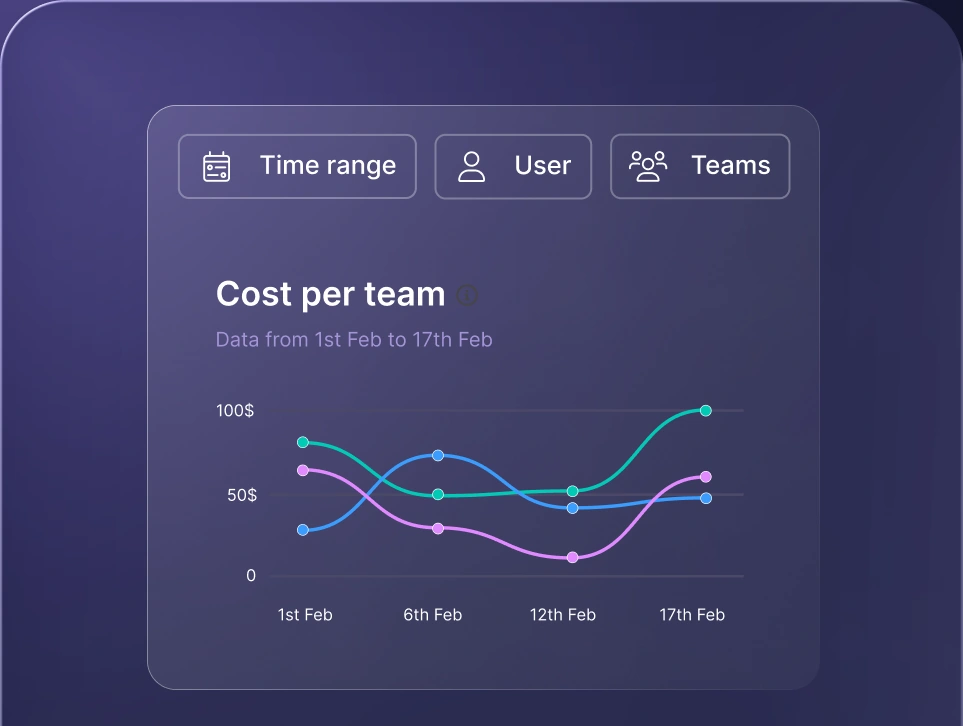
Monitor AI usage
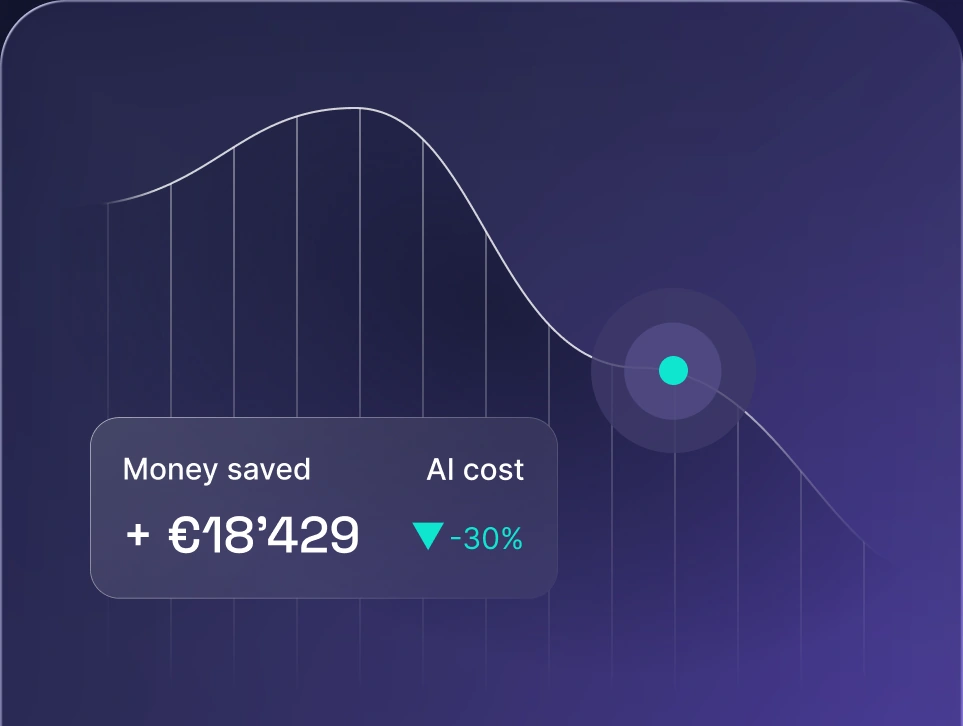
Control AI spend
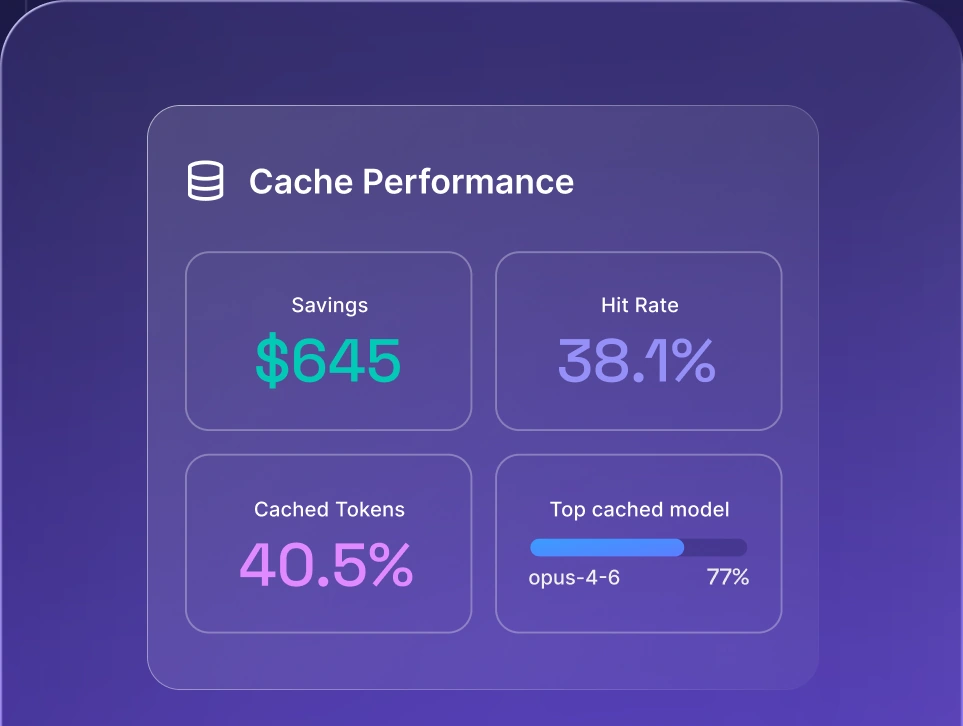
Optimize AI costs

Governance and compliance
Power without control is a liability. Staying in control gets harder as your model lineup grows.
- Set who uses what. With AI governance, you decide which teams reach which models and shape every response, with zero guesswork.
- Track usage and spend by model. Keep a clear view of who's using what and what it costs.
- Meet compliance across every model. Hold the same standards no matter how many models you run.
- Manage the next transition smoothly. When a model with better benchmarks arrives, you adopt it without breaking your workflow.
With the right platform, the next benchmark leader is an opportunity, not a fire drill. Whether it's the next Grok 4 or something after it, you stay in charge of your own work no matter which model tops the charts.