Table of contents
Key takeaways
- nexos.ai is the best Langfuse alternative for gateway-level LLM observability; LangSmith for LangChain/LangGraph apps; Arize Phoenix for OpenTelemetry-native tracing.
- Evaluate alternatives on 8 criteria: tracing depth, evaluations, prompt management, instrumentation standard, deployment/license, pricing, governance, and operational ownership.
- MLflow, Laminar, and Helicone are open source (Apache 2.0) and self-hostable; Arize Phoenix is source-available (Elastic License 2.0) and free to self-host.
- Braintrust, Arize Phoenix, W&B Weave, and Laminar lead for AI agent evaluation.
- Migrating off Langfuse takes 6 steps: audit, export, map, re-instrument, run in parallel, then move evals and alerts last.
What is Langfuse?
Langfuse is an open-source LLM engineering platform for tracing, prompt management, evaluations, and cost and latency metrics in LLM apps. It tracks how a large language model behaves in production. LLM observability records what happens inside every LLM call and agent step so teams can debug, measure quality, and control cost.
Here's the core Langfuse feature set:
- Tracing and sessions. Every step of a request is logged and grouped into sessions.
- Prompt management. Versioned prompts update without an app redeploy.
- Evaluations. Outputs get scored by LLM-as-a-judge or human annotation.
- Datasets. Test sets come from real traffic.
- Cost and latency dashboards. Spend and slowdowns show up per request.
The open-source Langfuse core is free to self-host. Langfuse Cloud adds managed plans from $29/mo, with unlimited users on paid plans.
When Langfuse is a good fit
Langfuse is a good fit when your team wants open-source tooling it can control, and these situations point that way:
- Self-hosting matters. The team wants an open-source tool it can self-host.
- Prompts drive the work. Prompt management is central to the workflow.
- Frameworks vary. The app needs framework-agnostic SDKs.
- Community counts. The team values an active community.
Switching tools costs time: re-instrumentation, data migration, and team retraining. Switch only when another tool clearly fits better.
When to consider a Langfuse alternative
Consider a Langfuse alternative when other LLM observability tools fit your framework, workflow, or hosting capacity better than Langfuse does. Common triggers include:
- LangChain-heavy apps. The app is built deeply on LangChain or LangGraph and needs native tooling.
- Eval-first workflows. Evaluation and experimentation are the main workflow.
- Product analytics. The team wants LLM traces next to product analytics.
- OpenTelemetry standard. The team wants to standardize on OpenTelemetry across its whole platform.
- Gateway-level control. The team needs monitoring, routing, and cost control at the gateway level across many large language models.
- Ops capacity. Self-hosting at production scale would take more ops capacity than the team has.Cost visibility. The team wants AI usage tracking per team, project, or model.
How to evaluate Langfuse alternatives
Evaluate Langfuse alternatives by comparing tracing depth, evaluation features, prompt tooling, instrumentation standard, deployment and license, pricing model, governance, and operational ownership.
- 1.Tracing depth. Look for support for multi-step agents, tool calls, and sessions. Deep agent traces and agent observability show each LLM call in context, which shortens debugging.
- 2.Evaluation features. Check LLM-as-a-judge, human annotation, datasets, and regression tests.
- 3.Prompt management. Look for versioning, playgrounds, and deployment controls.
- 4.Instrumentation standard. Compare native SDKs with OpenTelemetry, plus framework and model provider support. A model-agnostic setup lets you swap LLM providers without re-instrumenting, and OpenTelemetry-compatible instrumentation helps avoid framework lock in.
- 5.Deployment and license. Check whether the tool is managed cloud, self-hosted, open source, or source-available. Compare self hosting options and any enterprise only features.
- 6.Pricing model. Pricing runs per seat, per trace or event, per data volume, or custom. Ask about the billing unit, usage limits, and enterprise contract minimums.
- 7.Governance. Check access control, data retention, redaction, and data residency.
- 8.Operational ownership. Decide who labels failures, owns eval datasets, and handles retention and alert triage. Assign an owner for each alert in your LLM monitoring setup.
PRO TIP: Instrument your app with OpenTelemetry-compatible SDKs where you can. Standard traces make it easier to test a second tool or switch later.
Best 10 Langfuse alternatives compared
The 10 Langfuse alternatives compared here are nexos.ai, LangSmith, Arize Phoenix, Braintrust, MLflow, W&B Weave, PostHog, Helicone, Laminar, and Traceloop. We reviewed each tool against the criteria above using its public documentation and pricing pages, and the quick-reference table below shows how they line up.
Tool | Good fit for | Open source | Self-hosting | Free plan? | Starting price |
|---|---|---|---|---|---|
nexos.ai | Unified AI access with monitoring | No | Managed service | No | Custom (Enterprise) |
LangSmith | LangChain apps | No | Enterprise plan | Yes | From $39/seat/mo |
Arize Phoenix | OpenTelemetry-native tracing | Source-available (ELv2) | Yes | Yes | Free |
Braintrust | Eval-driven development | No | Enterprise BYOC/self-hosted data plane | Yes | From $249/mo |
MLflow | Vendor-neutral AI engineering | Yes (Apache 2.0) | Yes | Yes | Free |
W&B Weave | ML research teams | Client SDK (Apache 2.0) | Enterprise plan | Yes | Custom |
PostHog | LLM analytics with product data | Yes (MIT core) | Yes, unsupported hobby deployment | Yes | From $0.00035/event |
Helicone | Proxy-based request logging | Yes (Apache 2.0) | Yes | Yes | From $79/mo |
Laminar | Open-source agent tracing | Yes (Apache 2.0) | Yes | Yes | From $30/mo |
Traceloop | OpenLLMetry instrumentation | OpenLLMetry instrumentation: Apache 2.0 | Enterprise on-prem deployment | Yes | Custom |
Our pick for the best Langfuse alternative is nexos.ai for gateway-level observability across many AI models.
1. nexos.ai: for unified AI access with built-in observability
All-in-one AI platform whose AI gateway unifies model access, governance, and cost control.
Custom Enterprise pricing, no free plan
Managed cloud, EU gateway option
-
Secure access to 200+ AI models through one gateway
-
Smart routing, caching, and fallbacks
-
Enterprise security and governance controls
-
Broader than teams that only need a basic API proxy
-
No self-hosting
nexos.ai is an all-in-one AI platform whose AI gateway provides unified access to 200+ leading AI models from providers like OpenAI, Anthropic, Google, Meta, and Mistral. LLM observability for gateway-level usage, cost, and request monitoring is built into the gateway, so you see usage and spend across models and projects in one place.
Key features:
- AI gateway. One access point to leading models.
- LLM observability dashboards. Gateway-level usage, cost, and request monitoring.
- Smart LLM routing. Routes each request to a suitable model, with fallbacks.
- LLM caching. Caches repeated calls to reduce spend. Virtual keys and audit logs add governance.
- AI agents. Agent Builder and Chat with side-by-side model comparison.
Trade-offs: nexos.ai is a closed platform with no open-source code, self-hosting, free plan, or free trial. Teams that need deep trace-level evaluation can pair it with a dedicated eval tool.
Price and plans: nexos.ai offers custom Enterprise pricing based on your company's AI usage and requirements, per its pricing page.
Who it's for: Engineering and platform teams that want one controlled access point for many AI models, with monitoring and cost visibility built in.

Run every AI model in one Gateway
One secure, lightweight layer to access, route, and manage 200+ models.
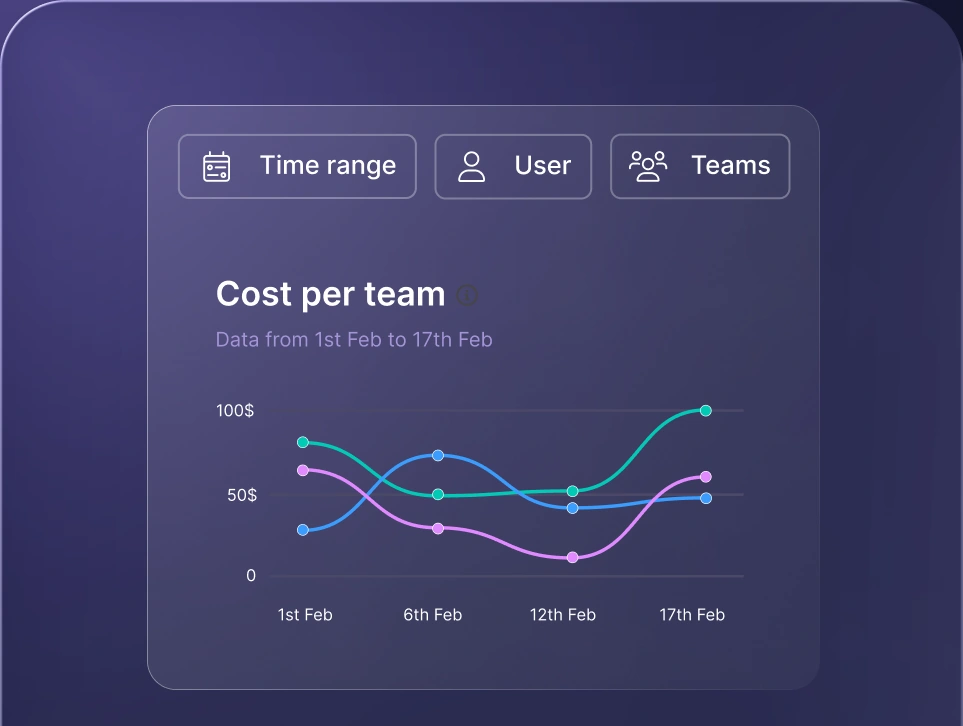
Monitor AI usage
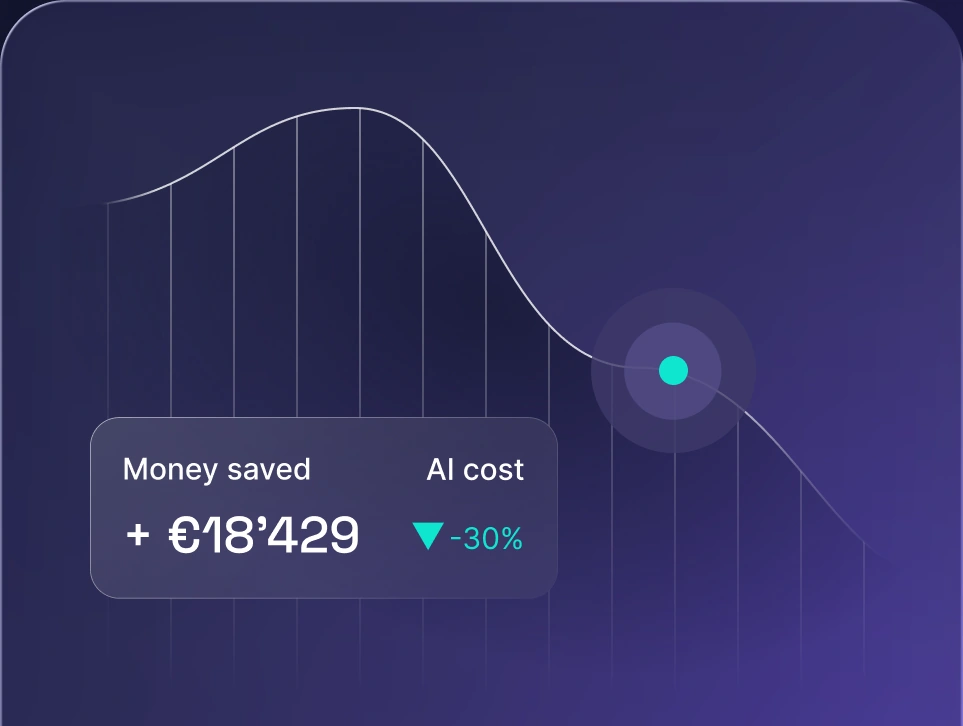
Control AI spend
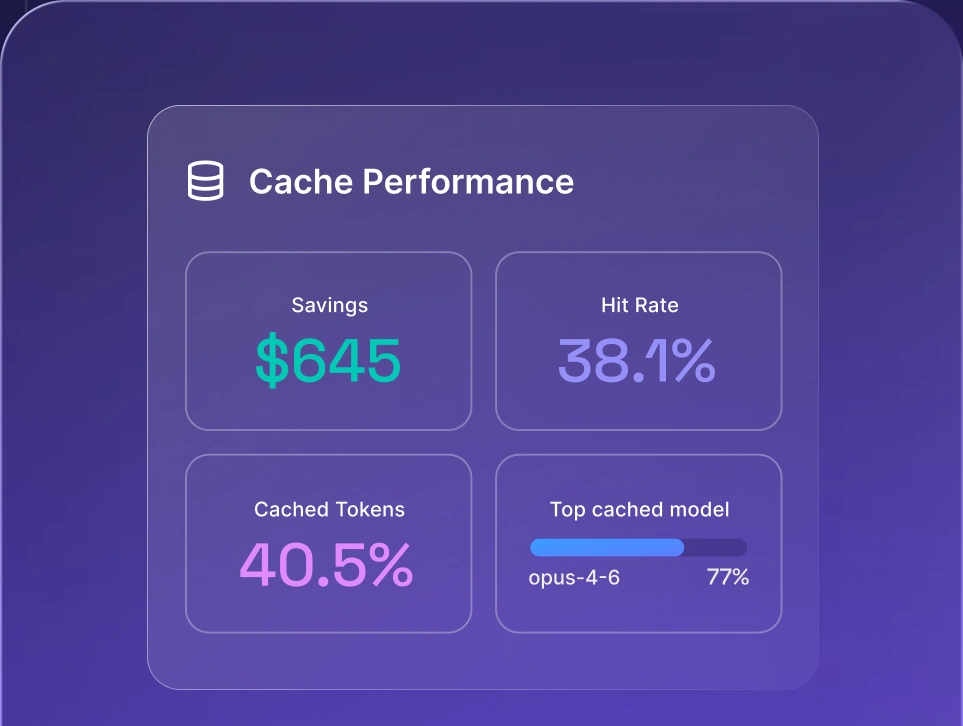
Optimize AI costs

2. LangSmith: for LangChain apps
Managed platform from the LangChain team for tracing, evals, and prompt management.
Free Developer plan, Plus $39/seat/mo
Cloud, self-hosted on Enterprise
-
Native LangChain and LangGraph tracing
-
Datasets, evals, and prompt playground
-
LLM Gateway with cost controls
-
Closed source with per-seat pricing
-
Self-hosting on Enterprise only
LangSmith is a managed platform from the LangChain team for tracing, prompt management, evaluations, and agent deployment tracking. For teams weighing LangChain alternatives, LangSmith's tracing comes from the LangChain team and supports LangChain and LangGraph natively.
Key features:
- Native tracing. LangChain and LangGraph traces work out of the box.
- Datasets and evaluations. You test changes before they ship.
- LLM Gateway. Cost controls, rate limits, model fallbacks, and sensitive-data redaction.
Trade-offs: LangSmith is closed source and uses per-seat pricing. Standard tiers carry data retention limits. Self-hosting is enterprise only.
Price and plans: Developer is free, Plus costs $39/seat/mo, and Enterprise is custom.
Who it's for: Teams building on LangChain or LangGraph that prefer a managed SaaS.
3. Arize Phoenix: for OpenTelemetry-native tracing
Source-available observability and evaluation tool built on OpenTelemetry and OpenInference.
Free Phoenix Cloud and self-hosting, Arize AX is a separate paid product
Cloud or self-hosted
-
Built on OpenTelemetry and OpenInference
-
Evals, datasets, and experiments
-
Free to self-host
-
Elastic License 2.0, not OSI open source
-
Focused on engineering diagnostics
Arize Phoenix is an observability and evaluation tool built on OpenTelemetry and OpenInference, with auto-instrumentation for common frameworks. Phoenix traces each agent run and each LLM call in one view, and you can add online evaluation to score live traffic.
Key features:
- Agent workflow tracing. You follow tool calls step by step.
- Evaluation metrics. Built-in scorers and LLM-as-a-judge templates.
Trade-offs: Phoenix uses the Elastic License 2.0, which makes it source-available, not OSI open source. Phoenix focuses on AI engineering diagnostics rather than product metrics. The broader Arize AX platform is a separate paid product.
Price and plans: Phoenix is free on Phoenix Cloud and to self-host. Arize AX is a separate paid product, priced on Arize's pricing page.
Who it's for: Teams standardizing on OpenTelemetry and ML engineers debugging complex agents.
4. Braintrust: for evaluation-driven development
Eval-first platform that combines tracing, datasets, and regression testing.
Free Starter plan, Pro $249/mo
Cloud, Enterprise BYOC data plane
-
Experiments and scoring
-
CI-style regression checks
-
Datasets and prompt playground
-
Closed source
-
Self-hosted data plane on Enterprise only
Braintrust combines tracing, evaluations, dataset management, prompt playgrounds, and testing for evaluation-driven development. Braintrust ties LLM evaluation to experiments, datasets, and production traces.
Key features:
- Experiments and scoring. Experiments compare scores across prompt and model changes.
- CI-style regression checks. You run evals on every change.
Trade-offs: Braintrust is closed source and centers on its evaluation suite rather than generic telemetry. Self-hosting is enterprise only, through BYOC or a self-hosted data plane, while the control plane stays Braintrust-managed.
Price and plans: Starter is free and Pro costs $249/mo. Both meter processed data, scores, and retention beyond the included amounts.
Who it's for: Product and AI teams that gate releases on evaluation results.
5. MLflow: for vendor-neutral AI engineering
Open-source platform under the Linux Foundation covering LLM tracing, evals, and an AI Gateway.
Free and open source (Apache 2.0)
Self-hosted, managed via cloud platforms
-
Apache 2.0 license
-
Classic ML and LLM workflows together
-
Built-in AI Gateway
-
Broad scope for lightweight tracing
-
You own the infrastructure
MLflow is an open-source (Apache 2.0) platform under the Linux Foundation that covers LLM tracing, evaluation, a prompt registry, and an AI Gateway, alongside classic ML lifecycle tools.
Key features:
- Prompt registry. Prompts get versions and optimization.
- AI Gateway. One endpoint for several LLM providers.
Trade-offs: The scope is broad, which can be more than a team needs for lightweight tracing. Self-hosting also means you own the infrastructure.
Price and plans: MLflow is free and open source. Managed MLflow is available through some cloud and data platforms, like Databricks.
Who it's for: Enterprises with existing ML platforms and teams that want one vendor-neutral stack.
6. W&B Weave: for ML research teams
LLM tracing and evaluation toolkit from Weights & Biases.
Free tier, paid pricing through CoreWeave Forge
Cloud, self-managed on Enterprise
-
Traces prompts, calls, and agent steps
-
Evals and scorers built in
-
Fits existing W&B workflows
-
Works best inside the W&B ecosystem
-
Pricing now runs through CoreWeave Forge
W&B Weave is the LLM tracing and evaluation toolkit from Weights & Biases, which traces prompts, model calls, and agent workflows, and adds guardrails and quality monitors.
Key features:
- Guardrails. Safety checks on live calls.
- Production monitors. Monitors flag quality drops on live traffic.
Trade-offs: Weave works best inside the Weights & Biases ecosystem. Confirm self-hosting and licensing terms in the docs for your setup.
Price and plans: Weave has a free tier, with paid pricing through CoreWeave Forge.
Who it's for: Research teams and ML engineers who already use Weights & Biases for experiment tracking.
7. PostHog: for LLM analytics tied to product data
Product analytics platform with LLM analytics tied to sessions and feature flags.
100K LLM events free, then $0.00035/event
Cloud, unsupported self-hosting
-
LLM data next to user behavior
-
Online LLM-as-a-judge evals and prompt versioning
-
Free monthly allowance
-
Product-analytics-first
-
Self-hosted deployments unsupported
PostHog is a product analytics platform with LLM analytics that connects LLM traces, cost, and latency to user sessions, feature flags, and product metrics.
Key features:
- LLM traces and generations. Shows each model response, and raw SQL queries cover custom analysis.
- Cost tracking. Ties spend to users.
- Evaluations and prompts. Online LLM-as-a-judge, code evaluators, datasets, experiments, annotation queues, prompt versioning, and a prompt playground.
- Feature flags and experiments. You test AI changes next to product metrics.
Trade-offs: PostHog is product-analytics-first. Its self-hosted deployments are officially unsupported, come with no paid support or guarantees, and include only free-plan features.
Price and plans: The free tier covers 100K LLM events a month. Usage-based pricing starts at $0.00035 per event and falls with volume.
Who it's for: Product and engineering teams at SaaS companies that want AI usage and user behavior on the same platform.
8. Helicone: for proxy-based request logging
Open-source LLM observability tool that logs requests through a proxy.
Free Hobby plan, Pro $79/mo
Cloud, self-hosted
-
Setup by changing the base URL
-
Request, cost, and latency logging
-
Apache 2.0 license
-
Ownership and maintenance status unclear
-
Limited multi-step agent evaluation
Helicone is an open-source LLM observability tool. You integrate it as a proxy by changing the API base URL, so it logs requests, cost, and latency without SDK-level changes. Proxy logging captures every request on the request path, while SDK-based tracing records the steps inside your code. Helicone announced a transition to maintenance mode after joining Mintlify in March 2026. Its public pages currently show conflicting ownership updates.
Key features:
- Request logging. Logs every request that passes through the proxy.
- Cost and usage analytics. Tracks cost and usage per request.
- Caching. Caches repeated requests.
- Prompts and sessions. Tracks users, sessions, and prompts.
Trade-offs: The gateway-style setup captures requests well, while multi-step agent evaluation may need extra tooling. An LLM gateway like this suits logging more than evals.
Price and plans: Hobby is free, Pro costs $79/mo, and Team costs $799/mo.
Who it's for: Teams that want logging running in minutes with minimal code changes.
9. Laminar: for open-source agent tracing
Open-source agent observability platform with tracing, evals, and self-hosting.
Free plan, paid plans from $30/mo
Cloud, self-hosted
-
Built for multi-step agents
-
Code-first evals SDK
-
Apache 2.0 license
-
Newer, smaller ecosystem
-
Free plan limited to 7-day data access and one seat
Laminar is an open-source (Apache 2.0) agent observability platform focused on tracing, evals, and self-hosting. Its agent traces suit long-running agents, including a coding agent that takes hundreds of steps, and raw SQL queries cover custom analysis.
Key features:
- Agent trace views. Shows long agent runs step by step.
- Code-first evals SDK. Evals live in your repo.
- Natural-language failure tracking. Laminar tracks failures described in plain language.
Trade-offs: Laminar is newer than most tools here, so check the size of its ecosystem and the depth of its integrations against your stack.
Price and plans: Laminar's free plan includes 1 GB of data, seven-day data access, one project, and one seat. Starter costs $30/mo and Pro costs $150/mo on the pricing page.
Who it's for: Startups and engineering teams building multi-step AI agents.
10. Traceloop: for OpenLLMetry instrumentation
Company behind OpenLLMetry, with open-source instrumentation and a hosted platform.
Free plan, Enterprise custom
Cloud, Enterprise on-prem
-
OpenLLMetry under Apache 2.0
-
Exports to your existing backends
-
Vendor-neutral traces
-
Free plan has 24-hour retention
-
Joining ServiceNow changes ownership
Traceloop is the company behind OpenLLMetry, an open-source set of OpenTelemetry instrumentations for LLM apps, plus a hosted platform. The Apache 2.0 license applies to OpenLLMetry instrumentation, not automatically to the whole Traceloop platform. Traceloop has also announced that it's joining ServiceNow, with its technology becoming part of AI Control Tower. Consider the ServiceNow announcement when assessing Traceloop's long-term roadmap.
Key features:
- OpenTelemetry-based instrumentation. OpenLLMetry covers many model providers and frameworks.
- Flexible export. Traces flow to the observability backends you already run.
Trade-offs: OpenLLMetry instrumentation is the core strength, and the hosted platform adds evaluators, prompt management, and Hub, its OpenTelemetry-based gateway.
Price and plans: OpenLLMetry is free. The Free Forever plan lists up to 50K spans/month, five seats, and 24-hour retention. Larger needs move to Enterprise.
Who it's for: Platform teams that want vendor-neutral traces sent to the observability stack they already run.
Also worth a look: Datadog LLM Observability, Opik by Comet, LangWatch, Lunary, and PromptLayer.
Langfuse alternatives feature comparison
Every tool captures LLM activity, but gateway request logs and instrumented application traces provide different levels of detail. Evaluations, prompts, cost tracking, and AI gateway support also vary.
Tool | Tracing | Evaluations | Prompt management | Cost tracking | AI gateway |
|---|---|---|---|---|---|
nexos.ai | Request-level | Not core | Not core | Yes | Yes |
LangSmith | Yes | Yes | Yes | Yes | Yes |
Arize Phoenix | Yes | Yes | Yes | Yes | No |
Braintrust | Yes | Yes | Yes | Yes | Yes |
MLflow | Yes | Yes | Yes | Yes | Yes |
W&B Weave | Yes | Yes | Yes | Yes | No |
PostHog | Yes | Yes | Yes | Yes | No |
Helicone | Yes | Limited | Yes | Yes | Yes |
Laminar | Yes | Yes | Limited | Yes | No |
Traceloop | Yes | Yes | Yes | Yes | Yes (Hub) |
AI gateway support varies. nexos.ai, LangSmith, Braintrust, MLflow, Helicone, and Traceloop (through Hub) offer one, and Langfuse's AI Gateway is in public beta. Basic gateway access differs from automatic best-model selection, which Langfuse still lists on its roadmap.
Evaluation capabilities differ across tools, including support for scorers, datasets, human review, and regression testing.
Langfuse alternatives by use case
The right Langfuse alternative pick depends on your framework, hosting rules, team size, and main workflow.
Langfuse alternatives for LangChain apps
LangSmith is the pick for native LangChain and LangGraph tracing. Most other tools on this list also support LangChain through callbacks or OpenTelemetry.
- LangSmith: Native LangChain and LangGraph tracing, plus datasets, evaluations, and an LLM Gateway.
- Arize Phoenix: OpenTelemetry-based tracing with auto-instrumentation for common frameworks.
- Langfuse: Accepts OpenTelemetry-compatible traces, as LangSmith does.
Compatible instrumentation can send data to either platform, though vendor-specific attributes may need adjustment.
Self-hosted Langfuse alternatives
MLflow, Arize Phoenix, Laminar, and Helicone offer self-hosted platforms. OpenLLMetry provides open-source instrumentation that you can connect to a self-hosted observability backend.
- MLflow: Free and open source, with tracing, evaluation, and a prompt registry.
- Arize Phoenix: Free under the Elastic License 2.0.
- Laminar: Open source, with self-hosting that keeps trace data in your stack.
- Helicone: Open source and self-hostable, though its ownership and maintenance status is unclear.
Self-hosting carries ops costs, including storage, scaling, upgrades, and retention. LangSmith and Braintrust offer self-hosting only on their enterprise plans, and Braintrust's option is a self-hosted data plane.
Open-source Langfuse alternatives
Open-source options include MLflow, Laminar, Helicone, and OpenLLMetry instrumentation, and Arize Phoenix is source-available.
- MLflow: Apache 2.0, with tracing, evaluation, and an AI Gateway.
- Laminar: Apache 2.0, built for agent tracing.
- Helicone: Apache 2.0, with proxy-based request logging.
- OpenLLMetry: Apache 2.0 instrumentation, not the whole Traceloop platform.
- Arize Phoenix: Elastic License 2.0, which makes it source-available.
License type matters for commercial use because Phoenix's license restricts offering substantial functionality as a managed service.
Langfuse alternatives for enterprises
Our picks among the best Langfuse alternatives for enterprises are nexos.ai, LangSmith Enterprise, and MLflow. Enterprises need SSO, role-based access, data retention controls, audit logs, data residency, and vendor-neutral instrumentation.
- nexos.ai: Centralized, governed access to AI models, with an EU gateway route when data residency matters.
- MLflow: A vendor-neutral, open-source stack under the Linux Foundation.
- LangSmith Enterprise: Self-hosting and managed options for LangChain and LangGraph teams.
Check each vendor's public documentation for the specific controls you need.
Langfuse alternatives for SaaS companies
nexos.ai, PostHog, and Helicone suit SaaS companies that tie LLM behavior to customer usage.
- nexos.ai: Gateway-level cost visibility per project.
- PostHog: Links LLM traces to product analytics and user sessions.
- Helicone: Request, cost, and latency logging per project.
Pick the tool that matches the unit you bill by.
Langfuse alternatives for startups
Our picks among the best Langfuse alternatives for startups are Laminar, Arize Phoenix, MLflow, and Helicone, because free tiers and free self-hosting options can keep early software spend low.
- Laminar: A free plan, with paid plans from $30/mo.
- Arize Phoenix: Free on Phoenix Cloud and to self-host.
- MLflow: Free and open source.
- Helicone: A free Hobby plan, with Pro from $79/mo.
The cheapest Langfuse alternative depends on your workload and team size.
Langfuse alternatives for AI agent evaluation
AI evals alternatives for agent workflows include Braintrust, Arize Phoenix, W&B Weave, and Laminar.
- Braintrust: Experiments, scoring, and CI-style regression checks.
- Arize Phoenix: Agent workflow tracing, evaluation metrics, datasets, and experiments.
- W&B Weave: Tracing and evaluations for prompts, model calls, and agent workflows.
- Laminar: Agent trace views and a code-first evals SDK.
Agent evaluation needs four things:
- Tool-call spans: Each action a coding agent took.
- Multi-turn sessions: The whole conversation, not one reply.
- Golden datasets: Known good cases for any AI agents you test.
- Regression gates: Blocks on changes that fail your evals.
- A tool that covers all four gives you evaluation you can gate releases on.
How to migrate from Langfuse to another tool
Migrating from Langfuse takes six steps: audit, export, map, re-instrument, run both tools in parallel, and move evals and alerts last.
- 1.Audit what you use today. List the traces, prompts, datasets, evals, and dashboards you depend on.
- 2.Export your data. Export prompts, datasets, and traces through the Langfuse API or export options before you switch.
- 3.Map the data model. Match each Langfuse trace, span, and observation to the new tool's structure.
- 4.Re-instrument. Use OpenTelemetry where you can to reduce vendor-specific instrumentation changes.
- 5.Run both tools in parallel. Compare results for one or two sprints first.
- 6.Move eval datasets and alerts last. Rebuild them once traces flow reliably.
PRO TIP: Keep a small dataset of representative production inputs and expected outputs. Run it in both tools to compare evaluation results, then validate dashboard metrics separately.
How nexos.ai supports LLM observability
nexos.ai brings leading AI models into one platform behind a single AI gateway. nexos.ai covers observability and control through these features:
- LLM observability. Gateway-level usage, cost, and request monitoring across models.
- Smart routing. Smart LLM routing sends each request to the right model.
- Caching. LLM caching cuts repeated calls.
- API access. Developers connect through one endpoint.
- Agents and comparison. Your team builds AI agents and compares models side by side.
Teams that need deep trace-level evals can run a dedicated eval tool next to nexos.ai. Contact sales to see nexos.ai's observability features firsthand.


Run every AI model in one Gateway
One secure, lightweight layer to access, route, and manage 200+ models.
