Key takeaways
- Requesty is an LLM API gateway, one endpoint routing requests across many providers.
- Teams outgrow Requesty fast, wanting lower costs, more models, or self hosting.
- Routers and gateways differ, routers pick a model while gateways add governance.
- Judge Requesty alternatives on four things: cost, routing, model breadth, and control.
- nexos.ai leads the pack with 200+ AI models plus governance in one AI Workspace.
What is Requesty?
Requesty is an LLM API gateway that gives teams a single, OpenAI-compatible endpoint to route requests across many model providers. Instead of wiring up each provider by hand, you point your app at one endpoint and let the gateway route requests to the right models, with failover, centralized AI usage tracking, and policy controls baked in.
Its typical user is a team already running several LLM providers who wants simpler routing and reliability without stitching everything together themselves. The gateway sits between your product and the underlying models, so you swap models, watch spend, and keep requests flowing even when one provider stumbles.
Why teams look for a Requesty alternative
Every team's AI stack grows, and what fit last year can feel tight today. A Requesty alternative usually enters the picture when priorities shift toward cost, model breadth, governance, or control. These are objective buyer motivations, not a knock on Requesty.
Here are the most common reasons teams start shopping for a Requesty alternative.
- Pricing and usage fit. As request volume climbs, per-request economics change, and teams re-check whether their current pricing still matches how they actually use models.
- Broader model access. Some teams need broader model or multimodal access, from more LLM providers to image generation, speech to text, and document processing under one roof.
- Deeper governance and observability. Larger orgs want richer audit logs, cost tracking, usage tracking, and org-wide policy that basic setups don't cover.
- Self hosting and deployment control. Teams with strict data rules often prefer self hosting or specific deployment models, including air gapped deployments on their own infrastructure.
Cost pressure sits behind many of these moves, and frameworks like FrugalGPT show how smart routing across models can cut spend without gutting output quality. The point is simple: your needs move, so your gateway should keep up. If you’re comparing individual AI assistants rather than gateways and routing platforms, see our guide to Claude alternatives.
Router vs gateway: understanding the difference
"Router" and "gateway" get thrown around interchangeably, but they solve different problems. Knowing which one you actually need shapes every choice that follows: the tools you shortlist, what you pay for, and how much control you build in
A router focuses on model selection, cost and quality routing, and failover, looking at your request to pick the best of several models and rerouting if a provider fails. A gateway goes wider, adding centralized policy, access control, observability, and org-wide governance on top of raw routing. Many production teams combine both, using a router for smart model choice and a gateway as the control plane that governs every request.
The router-versus-gateway distinction shapes everything downstream. If you mostly need dynamic routing and automatic fallbacks, a router-first tool may be enough. If you need enterprise governance, cost attribution, and audit logs across multiple teams, a gateway earns its keep. Approaches like AI orchestration and a model-agnostic AI setup lean on both, so you're not locked to one provider or one pattern.
PRO TIP: Before shortlisting tools, decide whether your main need is smarter model routing, centralized governance, or both, because it narrows the field fast.
How to choose a Requesty alternative
The tools below overlap in confusing ways, so you need a repeatable rubric rather than a gut call. Score every option against the same six criteria, and the right fit gets obvious fast. Each criterion is its own checkpoint.
Total cost of ownership
List price per token is the smallest part of the bill. Real total cost of ownership folds in caching behavior, retries and fallbacks, per-request overhead, and the operational burden of keeping the whole thing running. A cheap per-token rate means little if retries triple your calls or your team babysits the setup.
Model effective cost per result, not raw token price. Semantic caching, smart routing to cheaper models for simple jobs, and clean cost optimization can move the real number far more than a headline rate. Weigh usage dashboards and cost tracking here too, since you can't control what you can't see.
Routing and reliability
Reliability lives or dies on routing. Check how each tool handles failover, retry logic, and region-aware routing when a provider goes dark. Advanced routing that shifts between models on cost, speed, or quality keeps you fast and cheap without manual babysitting.
Ask how requests behave under pressure. Do automatic fallbacks kick in cleanly? Does conditional routing send heavy jobs to stronger models and light jobs to cheap ones? Reliable route requests logic is the difference between a smooth first request and a paged engineer at 2 a.m.
Observability and governance
You can't govern what you can't measure. Strong tools give you request, latency, and error visibility, token usage and cost tracking, audit logs, access controls, and org-wide policy. Gateway-style tools tend to be strongest here, since governance is their whole reason to exist.
Look for real usage tracking and usage dashboards, not just raw logs. Features like AI governance and LLM observability turn a black box into a control panel you can actually run an org on.
Hosting model
Hosting shapes control. Managed SaaS gets you moving fast with zero infrastructure to babysit. Self hosting gives you full control and keeps data on your own network, which matters for strict workloads. A hybrid model splits the difference for teams that want both speed and control.
Match the hosting model to your data rules. If you need air gapped deployments or dedicated infrastructure on your own infrastructure, an open source gateway you can self host may fit better than pure SaaS.
Model and multimodal breadth
Breadth decides how much you can consolidate. LLM-only tools cover text, while broader platforms add image generation, speech to text, and document processing. The wider the model catalog, the more tools you can retire and fold into one stack.
Weigh how many models and providers each option unlocks. Broad model access across multiple large language models lets you swap models freely and compare providers without re-plumbing your app every time.
Security and compliance fit
Enterprise buyers check specifics. Look for SSO, RBAC, audit logs, data residency, and relevant certifications, described factually rather than dressed up in superlatives. EU data residency and clear compliance posture matter most for regulated teams.
Confirm claims against each vendor's own documentation. Security is a checklist, not a slogan, so verify SSO, RBAC, and audit logs directly rather than trusting marketing copy.
Best Requesty alternatives in 2026
This is a neutral shortlist, and the right fit depends entirely on the criteria above. Each option below gets the same treatment: what it is, who it fits best, and key considerations, all kept factual with no negative comparisons.
1. nexos.ai
nexos.ai is an all-in-one AI platform that gives teams unified access to leading models alongside centralized governance and observability in a single place. It combines an AI Gateway with a full AI Workspace for multiple LLMs, so you get enterprise-grade model routing and access control without losing the collaborative, day-to-day tools your team actually uses. Beyond Smart Routing, nexos.ai bundles a Compare Models feature so you can evaluate several models side by side.
- Considerations. It's a broad platform, so teams that only want a bare-bones router may find more than they need.
- Who it fits. Teams that want model flexibility, a unified API, and org-wide control without stitching separate tools together.
- Pricing. Usage-based access to 200+ leading AI models, so you scale spend with real usage rather than fixed seats.
- Why it fits. You get broad model access, Smart Routing, and governance in one platform, which is exactly where many teams land after outgrowing a pure gateway.

Run every AI model in one Gateway
One secure, lightweight layer to access, route, and manage 200+ models.
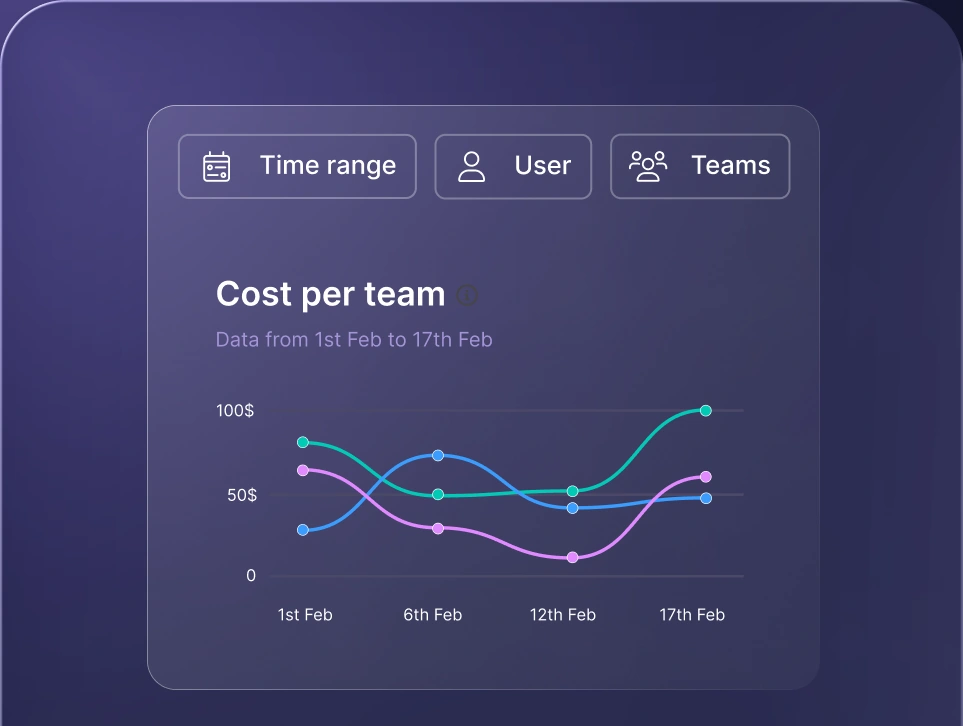
Monitor AI usage
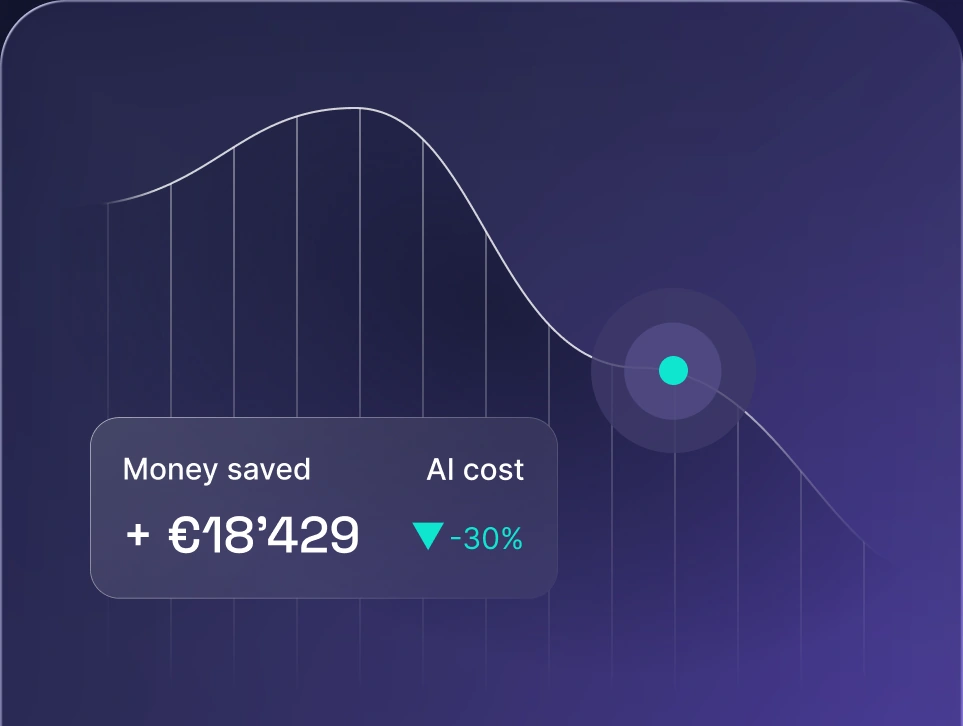
Control AI spend
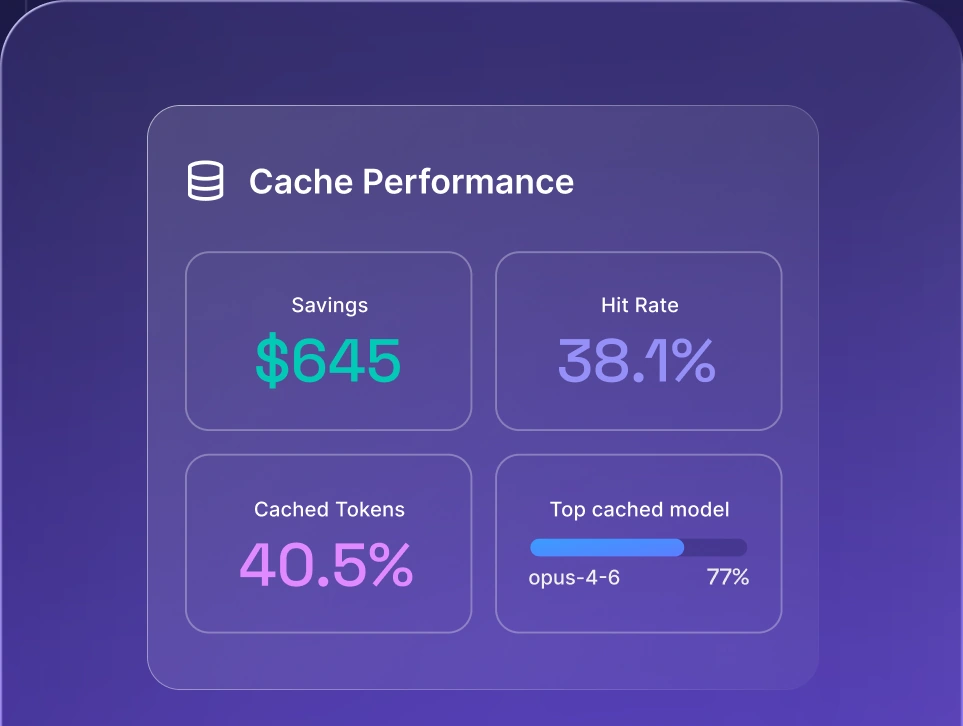
Optimize AI costs

2. OpenRouter
OpenRouter is a hosted, OpenAI-compatible router that gives developers access to many models through a single endpoint, with provider routing and failover built in. OpenRouter leans toward fast, broad model access rather than deep governance.
- Considerations. Observability and governance stay basic, so heavily regulated teams may need more.
- Who it fits. Developers who want quick, single API access to a huge model catalog with minimal setup.
- Pricing. Pay as you go across providers, so you only pay for what you route.
- Why it fits. If your main need is fast access to broad model coverage through one OpenAI-compatible API, OpenRouter is a clean, hosted swap.
3. Portkey
Portkey is an AI ops platform and gateway that pairs routing and fallbacks with strong observability and semantic caching. It's built for teams that want to watch, cache, and control model traffic closely.
- Considerations. It's more ops-focused, so very small teams may not use its full depth.
- Who it fits. Teams that prize observability and cost monitoring across many models.
- Pricing. Tiered plans with a free tier for early stages, then usage-based scaling.
- Why it fits. You get routing plus deep observability in one place, which suits teams that treat monitoring as a first-class need. See our nexos.ai vs Portkey AI comparison for a closer look.
4. LiteLLM
LiteLLM is an open source, OpenAI-compatible proxy and gateway that teams self host, with virtual keys, budgets, and logging. As an open source gateway, it hands you full control over how you route requests across models.
- Considerations. Self hosting means you own upkeep, updates, and scaling.
- Who it fits. Engineering teams that want an open source gateway and full control over their own infrastructure.
- Pricing. Free and open source, with cost shifting to the infrastructure you run it on.
- Why it fits. If self hosting and control top your list, LiteLLM gives you a lightweight OpenAI-compatible proxy with virtual keys and spend limits.
5. Kong AI Gateway
Kong AI Gateway is an edge and API gateway with AI traffic management, centralized governance, and policy controls layered on top of proven infrastructure. Teams already running Kong get AI routing without adopting a new stack.
- Considerations. It's infrastructure-heavy, so lighter teams may find it more than they need.
- Who it fits. Platform teams that want infrastructure-level control and centralized governance over AI traffic.
- Pricing. Open source core with paid enterprise tiers for advanced governance.
- Why it fits. Kong AI Gateway suits teams that treat AI traffic as part of broader API governance rather than a separate silo.
6. TrueFoundry
TrueFoundry is a platform with gateway and deployment capabilities for teams managing many models at scale – blending an LLM gateway with the deployment tooling to run models in production.
- Considerations. Its breadth suits larger teams more than solo builders.
- Who it fits. Teams deploying and managing many models at scale who want gateway and deployment in one platform.
- Pricing. Custom enterprise pricing based on scale and deployment needs.
- Why it fits. If you're running models in production and want deployment plus gateway together, TrueFoundry consolidates both. See our nexos.ai vs TrueFoundry comparison for details.
7. Unify
Unify is a data-driven router that uses live benchmarks to route across cost, speed, and quality. Instead of guessing, it leans on benchmark data to pick among models for each job.
- Considerations. It's router-first, so governance runs lighter than gateway-heavy tools.
- Who it fits. Teams that want benchmark-driven model selection and dynamic routing tuned to real performance.
- Pricing. Usage-based across the providers it routes to.
- Why it fits. If output quality per dollar drives your decision, Unify's benchmark-based routing is a sharp fit. See our nexos.ai vs Unify AI comparison for more.
Best Requesty alternatives compared at a glance
AI Gateway | Hosting | Observability & governance | Model breadth | Best fit |
|---|---|---|---|---|
nexos.ai | Managed | Centralized governance + observability | Leading models | Teams wanting model flexibility with org-wide control |
OpenRouter | Managed | Basic | Broad | Fast, simple multi-model access |
Portkey | Managed / self-host | Strong observability | Broad | Observability and cost monitoring |
LiteLLM | Self-host | Basic (self-managed) | Broad | Open-source, full control |
Kong AI Gateway | Managed / self-host | Strong governance | Broad | Infrastructure-level control |
TrueFoundry | Managed / self-host | Strong | Broad | Deploying and managing LLMs at scale |
Unify | Managed | Moderate | Broad | Benchmark-driven routing |
Takeaway. Managed platforms win on speed and governance, open source gateways win on control, and benchmark routers win on output quality per dollar, so match the row to your top priority.
Which Requesty alternative should you choose?
There's no single right answer, only the right fit for your needs. Map your top priority to a category, and the shortlist shrinks to one or two options. Here's a quick way to choose.
- Centralized control and unified access. If you want governance and observability alongside unified access to many models in one platform, consider nexos.ai.
- Simple hosted access. If you want fast, hosted access to broad model coverage with little setup, consider a hosted router.
- Self hosting and full control. If you need self hosting and full control over your own infrastructure, consider an open source gateway.
nexos.ai fits its specific case well, but it's one option among several, so let your criteria, not the loudest pitch, make the call.
How to migrate from Requesty to a new gateway
Switching gateways sounds like a major job because every live request runs through the gateway. A careful, staged move keeps risk low and applies to any alternative you pick. The goal is a smooth switch with no surprises for your users.
- Map current models to equivalents. List the models you use on Requesty and match them to the same or similar models on the new tool.
- Mirror request and response shapes. Keep your OpenAI-compatible payloads consistent so most of your code stays untouched.
- Canary a small slice of traffic. Route a small share of requests first, then compare latency, model costs, and output quality against your baseline.
- Ramp gradually. Once the canary looks clean, shift more traffic in stages until the new gateway carries production.
Watch one practical trap: layered tools can double-trigger caching or fallbacks, so confirm only one layer owns semantic caching and retries. Done right, migration is a series of small, reversible steps, not a risky big-bang switch.
PRO TIP: Start by routing a small slice of non-critical traffic through the new tool and compare results before moving production workloads.
Why nexos.ai can be a good alternative to Requesty
If you want broad model access and tight control in one place, nexos.ai is a strong potential alternative to Requesty. Rather than bolting a router onto a separate governance layer, you get both together, so your team moves fast without losing sight of spend, security, or policy.
The pull is consolidation. Unified access to 200+ leading models, Smart Routing, AI Chat, no-code Agents, and an Agent Builder live under one roof, backed by centralized governance and observability. For teams tired of duct-taping tools together, that single platform can turn a messy AI stack into a Limitless You setup where your team ships more with a lot less friction. Explore nexos.ai as one option for unified model access with real governance built in.