Table of contents
Key takeaways
- Kimi K3 is Moonshot AI's flagship model, an open model built for long horizon coding and knowledge work.
- Moonshot AI claims a 2.8T-parameter MoE design with a 1M-token context window and native multimodal capabilities.
- Full model weights were released on July 27, 2026, per Moonshot AI, roughly a month after GPT 5.6 Sol.
- You reach Kimi K3 through the Kimi API and Kimi apps, with model weights and technical details worth double-checking.
- Put Kimi K3 side by side with other models before you commit to one.
What is Kimi K3?
Kimi K3 is Moonshot AI's flagship large language model (LLM), marketed as an open model designed at large scale for long horizon coding, reasoning and knowledge work. In plain terms, Kimi K3 is a system you can prompt to write code, reason through problems, run tool calls, and handle knowledge work that stretches across many messages and a lot of context. Every specific figure here is a claim from Moonshot AI, not independently verified fact, so treat the numbers as a starting point. With that said, let's take a look at who's behind the model.
Who makes Kimi K3?
Moonshot AI is the company behind the Kimi models, and Kimi K3 is its newest flagship model. If you're new to the ecosystem, the family spans the Kimi app for everyday work and the Kimi API for developers who want to build on the model. Kimi is available through both a consumer application and a developer API, making it suitable for individual users as well as software teams.
Kimi K3 release date
According to Moonshot AI, the full open model weights for Kimi K3 released on July 27, 2026, with a technical report alongside launch. The model arrives roughly a month after OpenAI shipped its GPT 5.6 series on June 26, 2026, where GPT 5.6 Sol sits as the flagship tier next to the balanced Terra and the faster Luna. Moonshot AI markets Kimi K3 as the first open model in the 3-trillion-parameter class, so if that matters to your stack, confirm the exact license terms against the official source before you build on it.
PRO TIP: Release timelines for frontier models often slip. Always confirm availability on the official Moonshot AI channels before planning a rollout.
Kimi K3 specs at a glance
The fastest way to size up Kimi K3 is a quick spec sheet. Every figure below is attributed to Moonshot AI and should be verified against the official source, since the official setting for these numbers is the Kimi K3 launch material.
Spec | According to Moonshot AI |
|---|---|
Parameters | ~2.8 trillion (MoE) |
Experts activated | 16 of 896 |
Context window | 1M tokens |
Modality | Text plus native vision capabilities |
Architecture | Kimi Delta Attention, Attention Residuals |
Takeaway: on paper, Kimi K3 is a large, sparse, long context model with native vision, but these are vendor claims until you test it yourself.
Kimi K3 architecture explained
The architecture comes down to a few choices Moonshot AI made to get more capability without paying for it on every request. Kimi K3 is a model designed around sparsity, a custom attention approach, and residual techniques the company says deliver stable and efficient training. Moonshot AI reports roughly 2.5x scaling efficiency compared to Kimi K2, a self-reported figure worth confirming against the technical details in the report. These advances enable stable training at open model sizes, and inference efficiency likewise benefits from the same design. Let's break the pieces down one at a time.
Mixture-of-Experts and sparsity
Mixture-of-Experts, or MoE, means the model has many specialized sub-networks called experts, and it only switches on a small slice of them for any given request. Moonshot AI says it activates 16 of 896 experts at a time, so you get the knowledge of a huge model while paying for only a fraction of the compute.
That efficient foundation is the point of sparsity: more capability, less waste. Large expert parallel scales this design across hardware, and the stable LatentMoE framework is what keeps training on track. For you, that can mean stronger answers without the full cost of a dense model that size.
Kimi Delta Attention and Attention Residuals
Two proprietary pieces give the model its shape. Kimi Delta Attention is Moonshot AI's proprietary attention mechanism, designed to improve efficiency when processing long contexts. The block attention residuals backbone, or Attention Residuals, is the second piece, and together these advances enable stable training at greater model depth. Moonshot AI frames Kimi Delta Attention and the attention residuals backbone as the reason the model sustains scaling efficiency compared to its predecessor.
Context window and multimodal input
A 1M-token long context window is about enough to hold a small shelf of documents or a large codebase in the model's working memory at once. In practice, that means you can drop in long specs, entire repositories, or giant research threads and ask questions across all of it without constant re-pasting. Moonshot AI cites native vision capabilities and what it calls atomic visual perception capabilities, its own PerceptionBench measure of fine-grained visual tasks, so the model can read images alongside text.
Long context and multimodal input show up in real workflows all the time, from reviewing a full contract to reading a chart inside a report. Moonshot AI points to visual tasks like game development and CAD, where Kimi K3 can optimize game dev and design work directly from what it sees. For a closer look at how models handle images, audio, and more, read our guide to multimodal AI capabilities.
Kimi K3 benchmarks and where it excels
Raw benchmark scores rarely tell you what the model feels like to use, so the useful move is to read the pattern, not the numbers. According to Moonshot AI, Kimi K3 leads in software engineering and agentic tasks while trailing frontier leaders like GPT 5.6 Sol on some aggregate reasoning. The company says Kimi K3 demonstrates consistent gains on its internal evaluations and shows consistent advantages over other tested models on public benchmarks. Those consistent gains cluster in coding and agentic categories, where cleaner data recipes and the stable LatentMoE framework drive Kimi's sustained push across long runs.
Moonshot AI frames a broad improvement across the board, and that broad improvement, plus better data recipes, is what its internal evaluations point to as the reason for consistent advantages on public benchmarks. Remember that these figures are self-reported unless an independent party has verified them, so run the official evaluation script and the official harbor implementation before you trust the numbers.
Here's a quick snapshot of reported benchmark results.
Category | Standings reported by Moonshot AI | Benchmark results reported by Moonshot AI |
|---|---|---|
Coding | Reportedly strong | FrontierSWE: 81.2 vs GPT 5.6 Sol 71.3 |
Agentic tasks | Reportedly strong | JobBench: 52.9 vs GPT 5.6 Sol 46.5 |
Aggregate reasoning | Reportedly trails leaders | DeepSWE 67.5 vs GPT 5.6 Sol 73.0 |
Takeaway: the reported picture is a software engineering and agents specialist, but you should confirm it on your own evaluation suite before trusting it.
Kimi K3 on coding and agentic work
The model is built to sustain long-running coding workflows, and Moonshot AI leans hard on that story. Moonshot AI reports that Kimi K3 competes closely on LLM coding evaluations, landing near the top on Terminal-Bench 2.1, while frontier reasoning models like GPT 5.6 Sol still edge ahead on some aggregate reasoning. Practically, that positions Kimi K3 as a strong pick for the Claude Code harness and similar agentic setups, where it can navigate massive repositories with a context compaction strategy, keep solid context management, and handle tasks blending software engineering with terminal tools.
Through the official GitHub setup and the Claude Code harness alike, it holds up across long runs. When you compare, read the Claude model cards next to Moonshot AI's own numbers so you're weighing like for like. GPT 5.6 Sol, for its part, is reported strong on visual reasoning and the very hardest reasoning problems. Whether you drive Kimi K3 through the Claude Code harness, an in house benchmark, or your own evaluation suite, watch the pattern across your real tasks, not any single score.
Reasoning effort and tool calls
The model exposes a reasoning effort control, and Moonshot AI describes an official setting for maximum reasoning effort when a task needs deeper thinking. At maximum reasoning effort, it spends more compute per request, which can help on the hardest software engineering and visual reasoning problems. The model also handles tool calls natively, chaining tool calls across many messages so it can act with minimal human oversight, whether inside the Claude Code harness or your own runner. In the Claude Code harness, that means Kimi K3 can run multi-step builds with little hand-holding. Reasoning effort and tool calls together are what let the model sustain long horizon coding and other distinct production oriented workflows without constant babysitting.
PRO TIP: Treat benchmarks as a starting point, not a verdict. Run your own task-specific evaluation before choosing a model for production.
Kimi K3 pricing
Moonshot AI has published pricing for Kimi K3, and the numbers land it well under the frontier tier. Reported figures put Kimi K3 at roughly $3 per million input tokens and $15 per million output tokens, against GPT 5.6 Sol at $5 input and $30 output. That highly competitive token price puts Kimi K3 at close to half the cost of the most powerful proprietary models for comparable work, though you should still verify the current rates against the official pricing page. Here are the components to watch, all quoted per million tokens.
- Cache-hit input rate. What you pay for input the model can serve from cache, typically the cheapest tier.
- Cache-miss input rate. What you pay for fresh input that isn't cached, usually higher than the cache-hit rate.
- Output rate. What you pay for the tokens the model generates back to you.
None of this is guaranteed or final, so confirm the exact figures before you budget.
Run every AI model in one Gateway
One secure, lightweight layer to access, route, and manage 200+ models.
Monitor AI usage
Control AI spend
Optimize AI costs

How to access Kimi K3
You have a few practical ways to access Kimi K3, and the right one depends on whether you want a ready app or developer control. Here are the main paths Moonshot AI describes.
- Kimi app. The consumer-facing way to chat with Kimi K3 directly, no setup required.
- Kimi API. The developer route, where you select the model ID and call the model from your own code. Note any minimum top-up or account requirements reported by the source.
- Kimi Code in the terminal. A command-line path aimed at coding workflows, for people who live in terminal tools.
Whichever path you choose, the model offers broad hardware compatibility, so the same model runs across many setups. There's also a broader way to reach Kimi K3 if you already work across more than one model, which we'll cover at the end.
How Kimi K3 compares to other models
There's no single best model, only the best model for a given job, and that's the healthiest way to approach Kimi K3. Kimi K3 might shine on your coding work and lose to another model on something else entirely, and both can be true at once. Against the most capable model in someone else's stack, or the same model you already run, Kimi K3 wins some jobs and loses others. The right pick depends on your workload, budget, context needs, and how your data has to be handled. Weigh these criteria before you decide.
- Task performance. How well Kimi K3 does on your actual work, not a generic leaderboard.
- Cost per token. What each request costs at your real volume, input and output combined.
- Context window. Whether Kimi K3 can hold everything a task needs without splitting it up.
- Data-handling considerations. Where your data goes, how it's stored, and whether it's used for training.
The smartest move is to test rather than guess. Running the same prompt across several models and reading the answers next to each other tells you, in seconds, which model nails your task and which one wanders. Put Kimi K3 head to head against the Claude models, GPT 5.6 Sol, and other powerful proprietary models, then pick the winner per task instead of committing on faith. This is also where a model-agnostic AI approach pays off, since you're never locked into one vendor's roadmap.
Kimi K3 on nexos.ai
Kimi K3 is available on the nexos.ai platform, making it easier to evaluate and use alongside other leading AI models from a single API. Instead of committing to a single model provider, you run Kimi K3 alongside 200+ leading AI models in one place and let Smart Routing send each task to the right model. For example, you might route high-volume coding tasks to Kimi K3 while reserving premium reasoning models like GPT-5.6 Sol for more complex requests. You stop overpaying without giving up quality.
Here's what nexos.ai unlocks.
- Route the right model to the right job. Route coding, extraction, translation, or reasoning tasks to different models based on performance, cost, or latency.
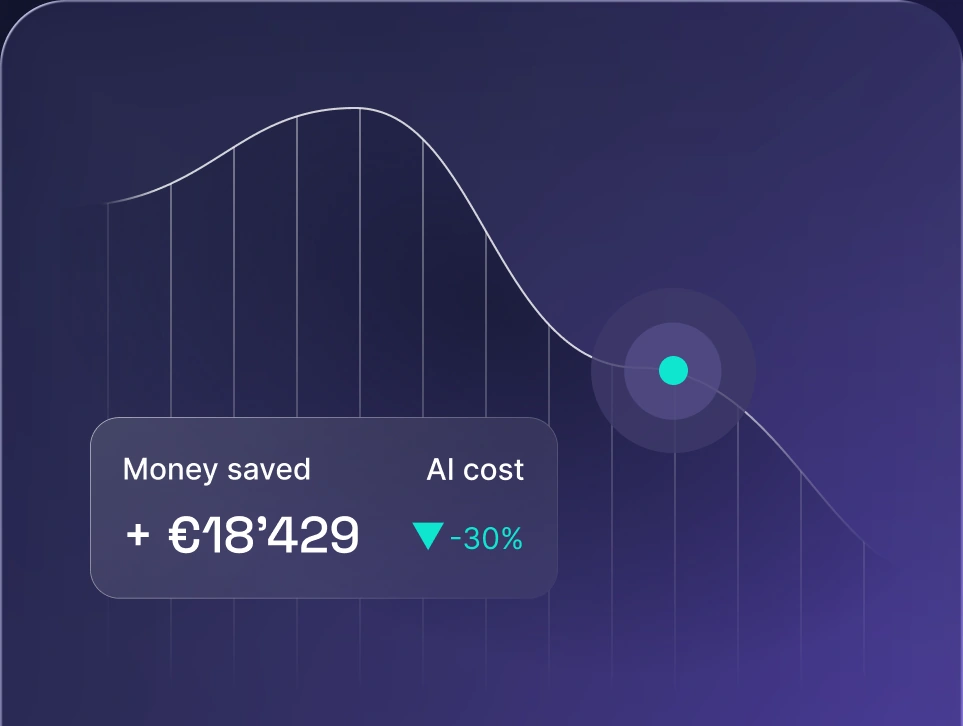
- Cut your AI spend. Open-weight models such as Kimi K3 can significantly reduce inference costs compared with premium closed models, making them a practical option for high-volume workloads.
- Trust the open model you run. Kimi K3 runs with Zero Data Retention through nexos.ai, so the gateway keeps no prompts or responses and supported providers don't use eligible requests for training.
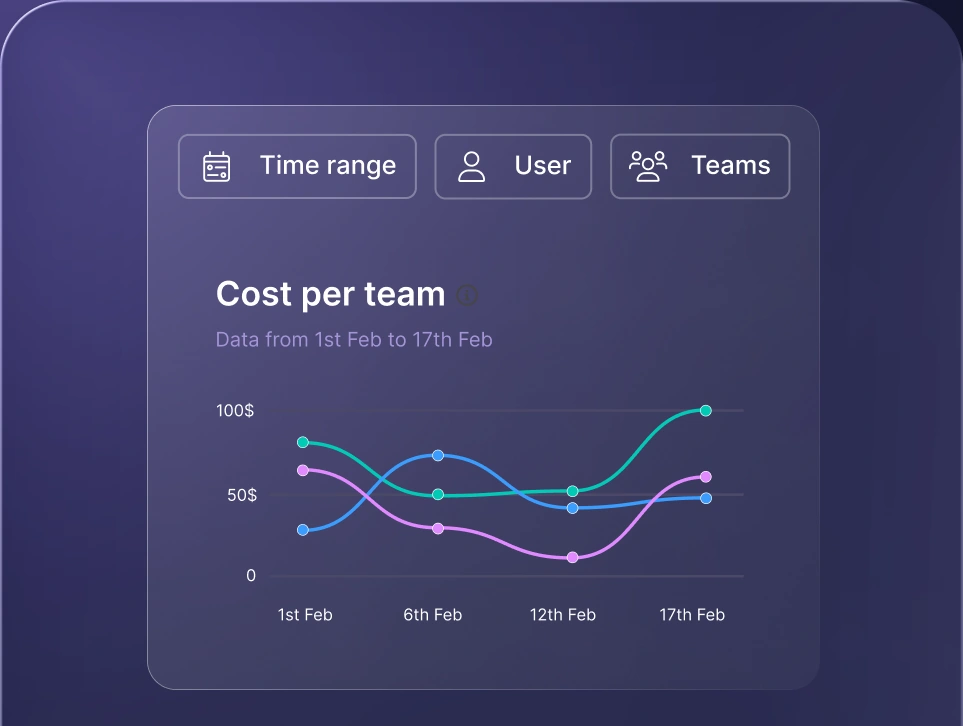
- See every request. Granular visibility down to the API key, per team and user, so you always know who's using which model and how much.
- Compare before you commit. Access Kimi K3 and other leading models through a single API, making it easy to evaluate performance and switch models without changing your integration.
Explore nexos.ai as your unified AI gateway and AI workspace for multiple LLMs, compare AI models side by side with Compare Models, and keep multi-model usage in check with AI governance controls.


Run every AI model in one Gateway
One secure, lightweight layer to access, route, and manage 200+ models.
