Table of contents
What is OpenClaw?
OpenClaw is a free and open source AI agent that runs on your own machine and executes tasks through shell commands, file access, and browser automation. Most engineers first heard about it as a self-hosted answer to Claude Code, the popular coding agent from Anthropic. It ships as a single binary you install locally, then point at a model provider so the agent can read your entire codebase, run code execution steps, and act on your local system. Peter Steinberger, the founder of PSPDFKit, spun up the first version as a weekend project, a WhatsApp relay wired to Claude, and it snowballed into an open-source phenomenon with tens of thousands of GitHub stars.
One process on your machine reads your inbox, sends emails, manages your calendar, runs terminal commands, and even checks you in for flights, all driven from a WhatsApp, iMessage, or Telegram message while you're away from your desk. For a developer who wants to fire off commands from their phone and skip the SaaS middleman, that appeal is obvious. Because it's self hosted, you keep full control over your data, your API keys, and where every agent runs.
OpenClaw leans on container isolation and filesystem isolation, including Apple containers on macOS, to keep an agent from touching the wrong part of your host system, but its security model gives the agent broad local access and then relies on you to fence it in. That works for a solo builder running one agent. For a small business running many agents across many laptops, the same design becomes a real security risk, because when every agent has broad rights and no central oversight exists, one careless agent can expose everything.
Why look for OpenClaw alternatives?
OpenClaw is a strong production tool for a single technical user, but the moment you hand it to a team, security cracks can appear. The reasons below are the ones small businesses and security conscious users raise most often when they start evaluating open source alternatives.
- Security vulnerabilities. Broad local access, hundreds of open security issues, and prompt injection risks that get scoped out of fixes leave a wide attack surface. Security researchers have flagged OpenClaw's security issues repeatedly, and a single compromised agent with full control of your file system is a serious problem.
- No enterprise governance. There's no built-in compliance control, no central access management, and no shared audit log. When an agent makes autonomous decisions on your behalf, you need a record, and OpenClaw doesn't give you one out of the box.
- Shadow AI risk. When your team installs a local agent without IT oversight, you get unmanaged AI usage spreading across the organization. Nobody knows which API calls are firing, which model provider holds the data, or what each agent can reach.
- Unstable release cadence. Frequent breaking changes make OpenClaw hard to rely on as a production tool. What works this week can break next week, which is rough for any business automation you depend on.
- No structured observability. There's no built-in monitoring for agent performance, model costs, or usage patterns. You can't see how your agents run, so you can't manage them.
- CLI-only setup. OpenClaw expects command-line comfort, container knowledge, and manual configuration. That shuts out non technical users and keeps the tool locked to your most technical people.
That gap is what sends teams looking at OpenClaw alternatives. None of this makes OpenClaw a bad agent project, it's just the wrong shape for a team that needs to see, secure, and steer every agent in one place. A single agent is easy to trust. A dozen ungoverned agents run by different people is where the risk multiplies, and no amount of local agent power fixes that.
What to look for in an OpenClaw alternative
Once you accept that a solo tool won't scale to a team, the list gets simpler. When you compare OpenClaw alternatives, weigh each one against the things a business needs, and look past raw agent power.
- Governance and audit trails. Look for a real audit log, access controls, and compliance features so every agent action is recorded and reviewable.
- Observability. You want visibility into agent performance, model costs, and usage patterns instead of a black box running on someone's laptop.
- Security architecture. Strong credential isolation, container level isolation, and a clear security architecture matter more than a long feature list. Maximum security should be the default, not something you hope a colleague remembered to configure.
- Multi LLM support. A tool tied to one model provider is a trap. Multiple model providers and multi LLM support let you switch when pricing, quality, or policy changes, so you're never locked to a single vendor the way Claude Code locks you to Anthropic.
- Ease of use. If only engineers can run it, adoption stalls. The best OpenClaw alternative for a team welcomes non technical users alongside the developers who want a CLI.
- Deployment flexibility. Whether you prefer a cloud service, a self hosted setup, self hosted local models on bare metal, or edge deployments, your tool should meet you where you are.
Keep this agent checklist handy as you read the next section – it's the fastest way to judge any agent tool on the market.
Best OpenClaw alternatives in 2026
The best OpenClaw alternatives fall into two camps. Some are open-source AI agent projects built for individual developers who want maximum control on their own hardware. Others are business platforms built for orchestration, governance, and observability across a whole team. We'll lead with the tool that solves the team problem, then cover the strongest developer-focused open source alternatives so you can match a tool to your primary need. All of these OpenClaw alternatives earn their place for different reasons.
nexos.ai: Best for business AI orchestration and governance
nexos.ai is the all-in-one AI platform that turns scattered, unmanaged AI usage into one governed AI Workspace your whole team can trust. Instead of every person running a local agent in the dark, you get a single control layer for every agent, every model, and every action. And that’s the point where OpenClaw stops and nexos.ai begins. nexos.ai treats every agent as part of one accountable squad rather than a distributed set of standalone tools.
With nexos.ai you get persistent memory across sessions and AI orchestration across 200+ leading AI models, so you never depend on a single model provider. Smart LLM Routing sends each request to the best model for the job, giving you multi LLM support without the guesswork. If a coder on your team loves Claude Code for one task and another model wins the next, you route to whichever performs best. You can build custom agents with no code, run multi step workflows, and put a whole crew of LLM agents to work without touching a command line. Your AI agents share one workspace, so nobody runs rogue AI agents in the dark. Governed AI agents stay accountable, and unmanaged AI agents don't.
Where OpenClaw leaves you in the dark, nexos.ai gives you a bit more light. Built-in LLM observability shows agent performance, API calls, and model costs in real time. Built-in AI governance delivers a full audit log, access management, and compliance controls so every autonomous decision is recorded and reviewable. That directly answers the AI security risks and shadow AI problems that come with unmanaged agents. Route every request through the AI Gateway and you get credential isolation, container isolation, central API keys, and one place to steer it all.
- Best for. Small businesses and teams that need governance and multi-LLM orchestration in one place.
- Governance. Full audit trails, access controls, and compliance built in.
- Observability. Real-time visibility into agent performance and model costs.
- No vendor lock-in. Switch between multiple model providers freely, no vendor dependency.
- Non-technical friendly. Built for non technical users, not just developers.
Takeaway: nexos.ai is the best OpenClaw alternative if you need multiple agents to run under one governed roof rather than scattered across laptops.

Run every AI model in one Gateway
One secure, lightweight layer to access, route, and manage 200+ models.
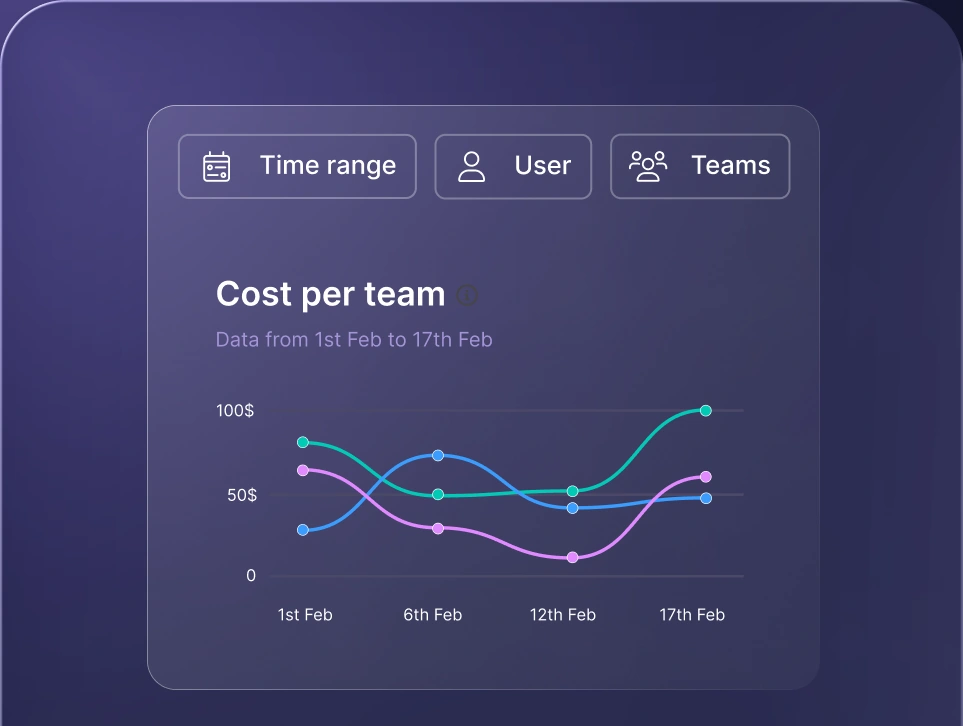
Monitor AI usage
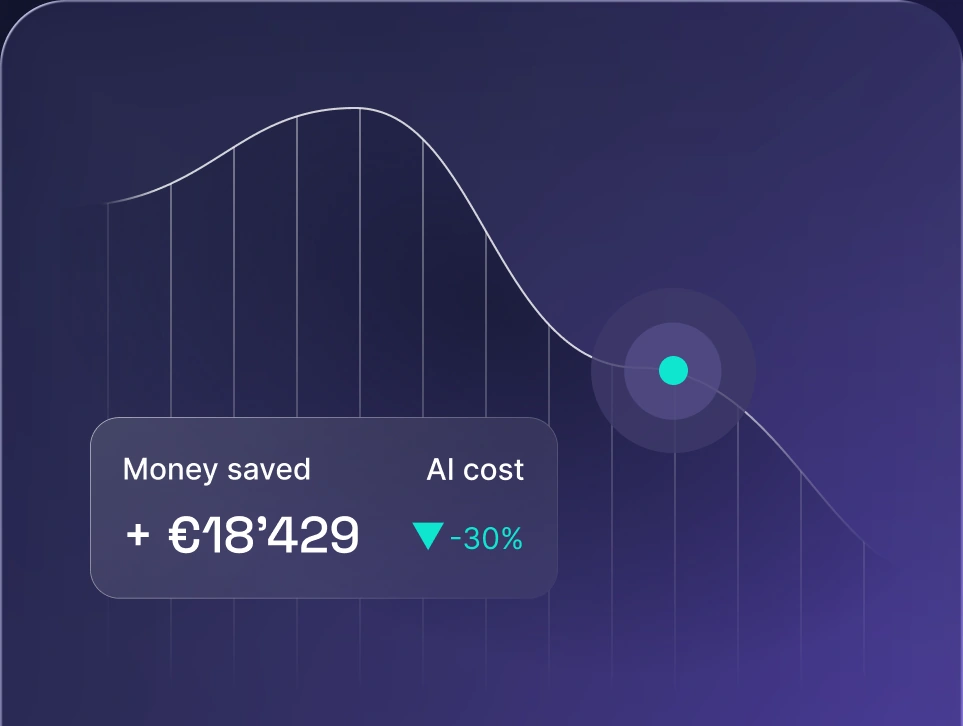
Control AI spend
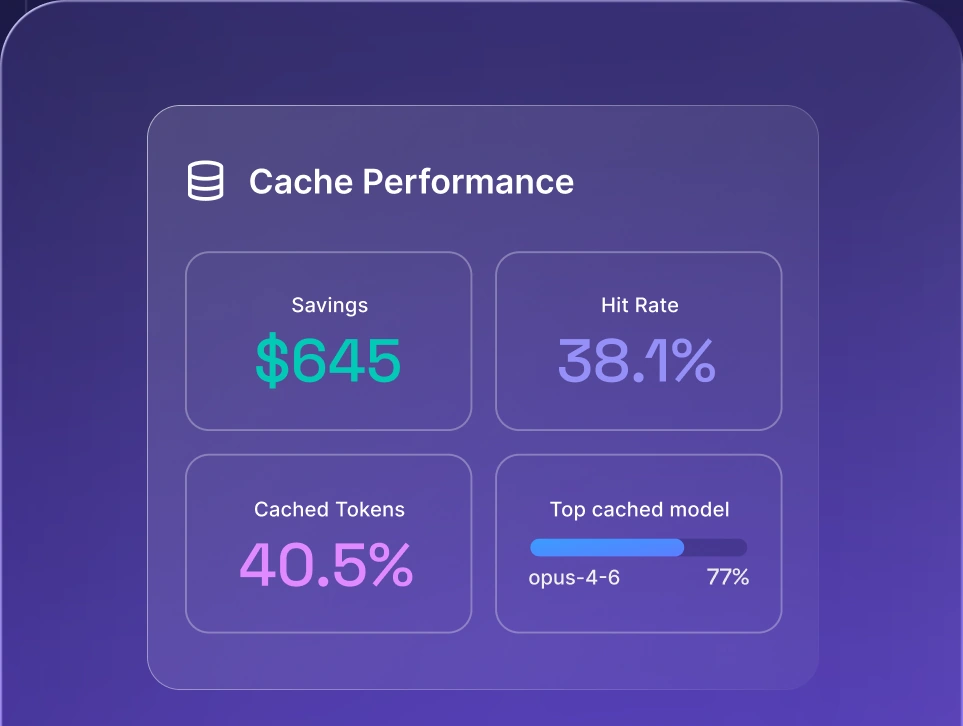
Optimize AI costs

Hermes Agent: Best for a self-hosted personal assistant
Hermes Agent is an open source AI agent aimed at people who want a private, self hosted personal assistant. It runs as a single binary, connects to local models or a cloud model provider, and handles recurring tasks like calendar integration, messaging integrations, and web search from one process on your own hardware.
Hermes Agent keeps things simple, which is both its strength and its ceiling. You get local access, persistent memory, and full control, though the ecosystem is smaller and the integrations fewer than a full platform. That persistent memory keeps context between sessions, which is handy for a solo user. For a security conscious solo user, Hermes Agent is a clean choice. For a team that needs an audit log and central governance over every agent, it isn't enough. Hermes Agent stays tidy for one user, but running multiple with no shared oversight quickly gets messy.
NanoClaw: Best for a lightweight single binary
NanoClaw strips the agent down to the essentials. It's a tiny single binary you drop onto any local system, wire to your API keys, and run with almost no setup. For developers who want a fast, no-friction agent for shell commands and quick code execution, NanoClaw is hard to beat, and its GitHub stars keep growing.
The trade-off is scope. NanoClaw offers maximum control and container isolation, though its container isolation is basic, with almost no observability, no audit log, and a smaller ecosystem of skills. It's a great single-agent pocketknife, but as a team platform it falls short, and running many NanoClaw agents leaves you with no visibility.
ZeroClaw: Best for maximum security and credential isolation
ZeroClaw is built for security conscious users who put maximum security first. It leans hard on container level isolation, filesystem isolation, Apple containers on Mac hardware, and strict credential isolation so an agent never touches your host system beyond its sandbox. Security researchers tend to like its tight security model.
That focus comes at a cost in convenience. ZeroClaw is happiest on bare metal or tightly controlled edge deployments, and its CLI-first setup shuts out non technical users. If maximum security is your primary need and you've got the skills to manage infrastructure, ZeroClaw earns a look. Just remember that a locked-down agent still needs central oversight once you run more than one agent.
Nanobot: Best for browser automation and browser control
Nanobot specializes in browser automation. It gives an agent reliable browser control to fill forms, scrape pages, and drive web apps, which makes it a strong production tool for repetitive web work. Nanobot pairs that with web search and basic messaging integrations.
Nanobot handles the browser well but leaves governance to you. There's no shared audit log and limited observability, so it fits a single power user more than a managed team. Treat this browser agent as a specialist rather than a platform. One Nanobot agent handles web work well, but it won't govern a fleet of agents for you.
OpenFang: Best for a rich skill ecosystem
OpenFang bets on extensibility. Its skill marketplace and broad skill ecosystem let you bolt on new abilities fast, from image generation to calendar integration to custom agents that can read your entire codebase for niche jobs. Developers who want to tinker will find a lot to love, and OpenFang's GitHub stars have climbed fast as a result.
OpenFang gives you range, but that range is only as safe as your own setup. It's free and open source, self hosted, and flexible, yet it still lacks the central governance and audit log a business needs to sleep at night. A flexible agent is only as safe as the person configuring that agent.
Moltworker (Cloudflare): Best for a cloud agent at the edge
Moltworker runs your agent as a cloud service on Cloudflare's edge network. Instead of a self hosted binary, you get a cloud agent that scales automatically and sits close to your users through edge deployments. For teams that would rather not manage infrastructure, that's a real draw.
Moltworker trades local control for cloud convenience. You give up bare-metal access to your file system and local files in exchange for scale, and governance still depends on how you wire it up. It suits web-native teams comfortable letting an agent live in the cloud. Governance of that cloud agent, though, is still on you, and so is any vendor dependency you take on.
SuperAGI: Best for multi-agent orchestration for developers
SuperAGI targets developers building multi-agent orchestration on their own stack. It coordinates several agents run in parallel, supports multiple model providers, and gives you code-level control over how agents plan and act. For engineering teams that want to build, SuperAGI is a serious toolkit, and its GitHub stars reflect a healthy developer following.
SuperAGI is powerful but developer-heavy. It expects you to assemble governance, observability, and security architecture yourself, which is fine for engineers and rough for everyone else. Great for builders who want to wire agents together. A business that wants agent governance handled for it should look elsewhere. You get the agent framework, and you build the guardrails around each agent yourself.
Here's how the top OpenClaw alternatives compare at a glance.
Tool | Best for | Governance and audit log | Multi LLM support | Non technical users |
|---|---|---|---|---|
nexos.ai | Business orchestration and governance | Yes, built in | Yes, 200+ models | Yes |
Hermes Agent | Self-hosted personal assistant | No | Limited | Partial |
NanoClaw | Lightweight single binary | No | Limited | No |
ZeroClaw | Maximum security | No | Limited | No |
Nanobot | Browser automation | No | Limited | Partial |
OpenFang | Skill ecosystem | No | Limited | No |
Moltworker | Cloud agent at the edge | Partial | Limited | Partial |
SuperAGI | Multi-agent orchestration | No | Yes | No |
Takeaway: the developer tools win on local control, and only nexos.ai delivers governance, observability, and multi-LLM support a team can run on.
How to choose the right OpenClaw alternative
The right choice depends on who's running the agent and what they need to prove to the business. Use this framework to match your situation to the right agent instead of guessing.
- If you need enterprise governance and multi-LLM orchestration, choose nexos.ai. When many people will run agents and you need an audit log, observability, compliance, and freedom from any single model provider, a governed platform beats a local binary. This is the path for a small business that has to answer for how AI is used.
- If you want a private, self-hosted personal assistant, choose Hermes Agent. For one security conscious user who values persistent memory, local access, and full control over a big feature list, a lean self hosted agent fits.
- If you want the smallest possible footprint, choose NanoClaw. When you just need a single binary for quick shell commands and code execution, and you don't want a heavy cloud tool like Claude Code, skip the platform overhead.
- If maximum security is non-negotiable, choose ZeroClaw. For workloads on bare metal or edge deployments where container isolation and credential isolation come first, ZeroClaw's security architecture leads.
- If browser automation is the whole job, choose Nanobot. When your work lives in the browser, this agent's browser control beats any general-purpose agent.
- If you live to extend and customize, choose OpenFang. A deep skill marketplace and skill ecosystem reward developers who want to build custom agents on top of the base agent.
- If you want a managed cloud agent, choose Moltworker. When you'd rather not manage infrastructure, a cloud service at the edge takes that weight off your team.
- If your engineers want to build multi-agent systems, choose SuperAGI. For developers who want code-level control of multi agent orchestration, this agent framework is a strong base.
A solo builder running one agent and a growing business governing many agents rarely need the same thing. Pick the agent that fits how you actually work today, then make sure it can scale as you add more agents tomorrow.
Why small businesses and teams choose nexos.ai over OpenClaw
For a solo developer, OpenClaw is a joy. For a small business, the story flips, because the very things that make OpenClaw fun on one laptop become liabilities across a team. Here's why teams pick nexos.ai when they need to replace OpenClaw with an agent platform they can actually govern. It's less about any single agent feature and more about running every agent under one accountable place.
- Unified orchestration. One layer runs all your AI agents and models, so every agent lives in a single AI Workspace instead of scattered installs. Governed AI agents beat ungoverned ones every time.
- Built-in governance. Compliance controls and a complete audit log turn every autonomous decision into a reviewable record, which is the answer to shadow AI.
- Real-time observability. You see agent performance, API calls, and model costs as they happen, so you manage AI instead of hoping it behaves.
- Shadow AI detection. nexos.ai surfaces unmanaged AI usage across the organization and pulls it into one governed place.
- No vendor lock-in. Switch between multiple model providers freely, so you never carry vendor dependency or get boxed in by one model provider.
nexos.ai matches OpenClaw's agent power and then goes further. It wraps that agent power in the governance, observability, and security architecture a team needs, giving you the maximum control OpenClaw promises without the maximum risk. You get a governed agent crew instead of a pile of unmanaged agents, and that's the difference between an experiment and a business you can trust.


Run every AI model in one Gateway
One secure, lightweight layer to access, route, and manage 200+ models.
