Key takeaways
- Keeps AI in bounds. AI governance keeps your AI development safe, compliant, and accountable across the entire lifecycle.
- A named owner every time. Strong AI governance gives every AI system a clear owner, so responsibility never goes missing.
- Proven blueprints exist. Governance frameworks like the NIST AI RMF and ISO/IEC 42001 give you a tested starting point instead of a blank page.
- Visibility at scale. AI governance tools add visibility, continuous monitoring, and audit trails across all your AI systems.
- New AI needs it too. Effective AI governance has to cover generative AI and agentic AI, not just traditional models.
What is AI governance?
AI governance is the set of policies, standards, processes, and controls that ensure AI technologies are developed and used safely, ethically, and in line with regulation. It spans the full AI lifecycle, from design and data through model development, validation, deployment, continuous monitoring, and retirement. Good AI governance turns vague intentions about responsible AI into concrete oversight mechanisms that anyone in your organization can point to. It gives you a legal framework and a practical operating model at the same time, so your AI development aligns with your organization's values and business objectives.
AI governance is the ongoing practice of directing, managing, and monitoring the use of AI so that every AI system stays accountable, compliant, and aligned with human oversight. As artificial intelligence spreads across teams, governance is how you make sure that AI serves your goals rather than surprises you.
AI governance encompasses the people, the process, and the technology that keep your AI systems trustworthy. In practice, AI governance keeps AI systems behaving predictably, so they earn trust rather than assume it. Because AI governance aims to make AI initiatives align with both regulation and your business objectives, it's far more than a compliance checkbox. Before you build a program, it helps to separate AI governance from two terms it often gets confused with.
AI governance vs. data governance vs. AI ethics
These three disciplines overlap, but they answer different questions. Understanding the distinction keeps your governance processes focused instead of duplicated.
- Data governance. This covers data quality, data integrity, and the rules for how training data is collected, stored, and used. Strong data quality and data integrity are the foundation the rest of your AI governance stands on.
- AI ethics. This defines the ethical development principles behind responsible AI, like fairness and the duty to avoid biased outcomes. Explore this further in our article on AI ethics and governance.
- AI governance. This is the operating system that turns data governance and AI ethics into enforceable oversight across the AI lifecycle.
The short version: data quality feeds the model, ethics sets the ethical development boundaries, and AI governance makes sure AI systems respect both, every single day. Follow this pattern and you protect trust and training data at once. Responsibly implementing AI governance depends on keeping artificial intelligence systems inside those lines.
The three pillars of AI governance
Most strong AI governance programs rest on three pillars that work together. Each pillar keeps a different part of your AI systems honest.
- People and accountability. Named owners, clear roles, and an escalation path so responsibility never goes missing.
- Process and policy. Documented AI governance policies, risk assessment routines, and review gates across development and deployment.
- Technology and controls. The AI governance tools that give you visibility, continuous monitoring, and audit trails at scale.
Building responsibly also means training AI models on clean data and building transparent systems your people can trust.
Why does AI governance matter?
AI governance matters because the stakes are real: compliance, trust, reliability, and both reputational and financial risk. The wider your use of AI, the more you need controls that keep AI systems inside safe limits. When AI adoption happens without oversight, a single unintended consequence can trigger legal exposure, lost customers, and damaged credibility. A few recent incidents show business leaders why conversations about AI governance are no longer optional.
- iTutorGroup (2023). The tutoring company agreed to pay $365,000 to settle an EEOC suit after its recruiting software automatically rejected older applicants, according to the EEOC.
- Air Canada chatbot (2024). A Canadian tribunal held Air Canada liable after its AI chatbot gave a customer inaccurate advice, according to the ruling in Moffatt v. Air Canada.
These are neutral background examples, not scare stories. In each case, weak AI governance around AI systems, not the AI systems themselves, is what turned a tool into a liability. They simply show that when AI-driven decisions go unchecked, accountability still lands on the organization, and unintended consequences become the organization's problem.
The scale of the challenge is real, too: McKinsey’s 2024 State of AI survey found that organizations increasingly recognize AI-related risks, especially inaccuracy, cybersecurity, and IP issues. Effective AI governance is how business leaders close that gap and turn shaky AI adoption into a confident approach. Put simply, with AI governance you can trust your AI. Without it, you're just hoping.
The accountability gap
The accountability gap is the space between deploying a transparent AI system and being able to say who answers for it. Many teams launch AI models quickly, then discover no one owns the outcomes when those AI models break. This gap widens with generative AI and agentic AI, where AI-driven decisions happen faster than any human can review them one by one. Closing this accountability gap is the core job of AI governance, and effective AI governance starts with the principles below.
AI governance principles
The core AI governance principles that underpin most programs are simple to state and hard to fake. Use them as the north star for every AI governance decision you make. Each principle keeps your AI use aligned with legal and ethical boundaries.
- Fairness and bias mitigation. Test AI models for biased outcomes and check the training data behind them, because poor data quality is where bias in artificial intelligence usually begins.
- Transparency and explainability. Make AI-driven decisions understandable, so transparency and explainability let you explain how and why a model reached a result.
- Privacy and data protection. Protect personal data throughout the AI lifecycle and honor regulatory requirements for how it's used.
- Accountability. Assign a named owner to every AI system, because collective responsibility with no individual owner is no responsibility at all.
- Safety and security. Build oversight mechanisms and human oversight into high risk AI systems so they behave predictably under pressure.
Together, transparency and explainability, fairness, privacy, accountability, and safety give you a durable foundation for responsible AI governance and responsible AI practices. Anchor every AI governance decision to these principles and your AI governance stays coherent as it grows.
AI governance frameworks
You don't have to invent AI governance from scratch. Several leading frameworks and standards already map the terrain, and each suits a different goal. The right one gives your AI development lifecycle a strong backbone. The comparison below shows how the main AI governance frameworks differ at a glance.
Before the table, a quick tour of the four most influential governance frameworks, each shaping how organizations govern their AI systems.
NIST AI Risk Management Framework
The NIST AI Risk Management Framework is a voluntary framework built around a risk management lifecycle: govern, map, measure, and manage. It's widely adopted by US-based risk teams because it's practical, flexible, and vendor-neutral. The framework helps you run structured risk assessment across the AI lifecycle without forcing a rigid certification path, which is why so many risk management teams start here.
ISO/IEC 42001
ISO/IEC 42001 is the first certifiable standard for an AI management system. It works like ISO 27001 for security, giving you a way to demonstrate maturity to auditors, partners, and regulators. Because it's certifiable, ISO/IEC 42001 is a strong choice when you need external proof that your AI governance processes are robust.
OECD AI Principles
The OECD AI Principles set high-level values for trustworthy AI, including transparency, accountability, and human oversight. They are principles rather than a legal framework, which makes them useful for aligning global policy and internal AI strategy. Many national AI regulations trace their language back to those principles.
The EU AI Act
The EU AI Act is the first comprehensive AI regulation with binding, risk-based obligations. The European Union's AI Act sorts AI systems into risk tiers and places the heaviest duties on high risk AI systems. If you sell into the EU market, the EU AI Act sets the compliance bar you must clear, and the AI Act shapes how AI regulations are written elsewhere.
Framework | Type | Scope | Best for |
|---|---|---|---|
NIST AI RMF | Voluntary framework | Risk management lifecycle | US-based risk teams |
ISO/IEC 42001 | Certifiable standard | AI management system | Demonstrating maturity |
OECD AI Principles | Principles | High-level values | Aligning global policy |
EU AI Act | Regulation | Risk-based obligations | EU market compliance |
Takeaway: pick a voluntary framework to structure your work, a certifiable standard to prove it, and treat the EU AI Act as the regulation you design toward.
How to build an AI governance framework
Frameworks tell you what good looks like. This playbook tells you how to build an effective AI governance framework in practice. Follow these six steps in order and you'll have an AI governance framework you can actually run.
The first step is always to see clearly what AI you already run.
1. Assess your current AI usage
You cannot govern what you cannot see. Start with a full inventory of existing AI systems, shadow tools, and vendor AI models, so nothing hides in the gaps. This is also where you surface shadow AI risks, the unsanctioned AI tools staff adopt without approval. A clear map of your use of AI is the baseline for every decision that follows, and it tells you which AI technologies and which stage of AI development already touch your business.
2. Define policies and acceptable use
Next, write the rules. Draft AI governance policies that spell out acceptable use, prohibited use, data handling, and human oversight requirements for both generative AI and traditional AI models. Keep the language plain enough that non-technical staff actually follow it. If you are starting from zero, our article on how to write an AI policy for companies gives you a template you can adapt.
3. Classify use cases by decision criticality
Not every AI system carries the same weight. Tie oversight to AI governance decision criticality by ranking use cases from low impact to high risk AI systems. A model that drafts internal notes needs light review. A model that influences hiring, lending, or safety needs deep human oversight and a formal risk assessment. Matching control to criticality keeps AI oversight proportionate rather than paralyzing.
4. Assign roles and ownership
Accountability only works when a real person owns it. Define a RACI-style ownership model that gives every AI system a named owner and an independent escalation path that does not report to the team building the model. Some organizations formalize this with an AI governance committee that reviews high-stakes AI models. The table below shows a compact starting point for roles and ownership.
Role | Responsibility |
|---|---|
Executive sponsor | Accountable for AI risk overall |
Governance lead | Owns policy and escalation |
System owner | Accountable for a specific AI system |
Legal / compliance | Regulatory alignment |
Security | Controls, monitoring, incident response |
Takeaway: an independent reporting line is what separates real accountability from a rubber stamp.
5. Implement controls
With owners in place, set up your controls. To begin with, access management, input and output filtering, logging, and approval gates for sensitive actions. A unified AI gateway lets you apply these oversight mechanisms consistently across every model instead of one tool at a time. Controls are where your AI governance policies stop being paper and start shaping how AI operates day to day.
6. Monitor, audit, and improve
Governance is never finished. Set up continuous monitoring so you catch drift, misuse, and new risks as they appear. Strong LLM observability and disciplined LLM monitoring give you the audit trails you need to prove control and improve over time. Review results regularly, then feed what you learn back into your policies and controls so your governance processes keep pace with development and deployment of new AI models and AI systems.
AI governance best practices
Beyond the build steps, a handful of AI governance best practices separate programs that hold up from those that quietly decay. These best practices are simple to adopt and easy to sustain. Treat these AI governance practices as ongoing habits, not one-time tasks.
- Keep a live AI inventory. Maintain a single, current record of every AI system, because AI governance decays the moment your map of your AI systems goes stale, and unlisted AI systems are exactly where risk hides.
- Tie oversight to risk level. Match the depth of review to decision criticality, so the riskiest AI systems get scrutiny and low-risk AI tools stay lightweight.
- Ensure an independent reporting line. Give oversight a path that does not report to the builders, so bad news travels up instead of getting buried.
- Maintain audit trails. Log AI-driven decisions and access so you can reconstruct what happened and satisfy regulatory requirements.
- Train staff on AI fluency. Build the skills and capabilities your people need to use AI responsibly, because tools alone never create responsible AI adoption.
Adopt these practices early and responsible AI use becomes routine rather than the exception. Mature AI governance treats your AI systems as assets to protect, not risks to fear.
AI governance tools and platforms
As your AI use grows, manual oversight stops scaling, and so does informal AI governance. AI governance tools and an AI governance platform give your AI governance the visibility and control that spreadsheets cannot. In plain terms, these AI governance tools handle inventory, access control, continuous monitoring, and audit logging, and they map directly to the AI governance framework above.
An AI governance platform centralizes the work so your governance processes live in one place instead of scattered across teams. Good AI governance tools also help you prove control to auditors.
What to look for in an AI governance platform
Not every AI governance platform is built the same. When you evaluate options, focus on the capabilities that make accountability something you can enforce day to day.
- Centralized inventory. See every AI system and every model in one view, so none of your AI systems operate in the dark.
- Access control. Decide who can use which AI models, with role-based permissions tied to your policies.
- Continuous monitoring. Watch usage, outputs, and cost in real time, with alerts when something drifts.
- Audit logging. Capture a complete trail of every AI decision to support risk assessment and regulatory compliance.
- Policy enforcement. Apply controls automatically, so governance practices hold even when people are busy.
The right AI governance platform makes your framework operational instead of theoretical, giving you controls that keep AI systems compliant as they scale.
Governance for generative and agentic AI
Generative AI and agentic AI raise the stakes because these AI systems act, not just answer. A generative AI model can leak sensitive data in an output, and an autonomous agent can chain actions faster than any reviewer can follow. Learn more in our overview of what is agentic AI. Governance here means tighter human oversight, stricter oversight mechanisms, and audit trails detailed enough to reconstruct every step an agent takes. Extend your controls to cover these AI systems before you scale them, not after.
How nexos.ai supports AI governance
AI governance works best when access, oversight, and audit live in one place. nexos.ai is an all-in-one AI platform that gives your teams unified, governed access to leading AI models in one place, so your AI governance covers every AI system your teams use. Instead of scattered AI tools with no oversight, you get centralized access control, continuous monitoring, and audit trails that help you operationalize the AI governance framework above. It's an enablement layer that makes accountability enforceable across your AI use, not a guarantee of absolute protection.
With nexos.ai, you can see every model your teams touch, apply consistent controls, and keep a complete record of AI-driven decisions, so accountable AI governance becomes something you can actually prove. Explore our AI governance features to see how centralized control works in practice, or route every model through a single, governed unified AI gateway that applies your policies everywhere. To bring governed AI access to your teams, contact our sales team and see the platform in action.

Run every AI model in one Gateway
One secure, lightweight layer to access, route, and manage 200+ models.
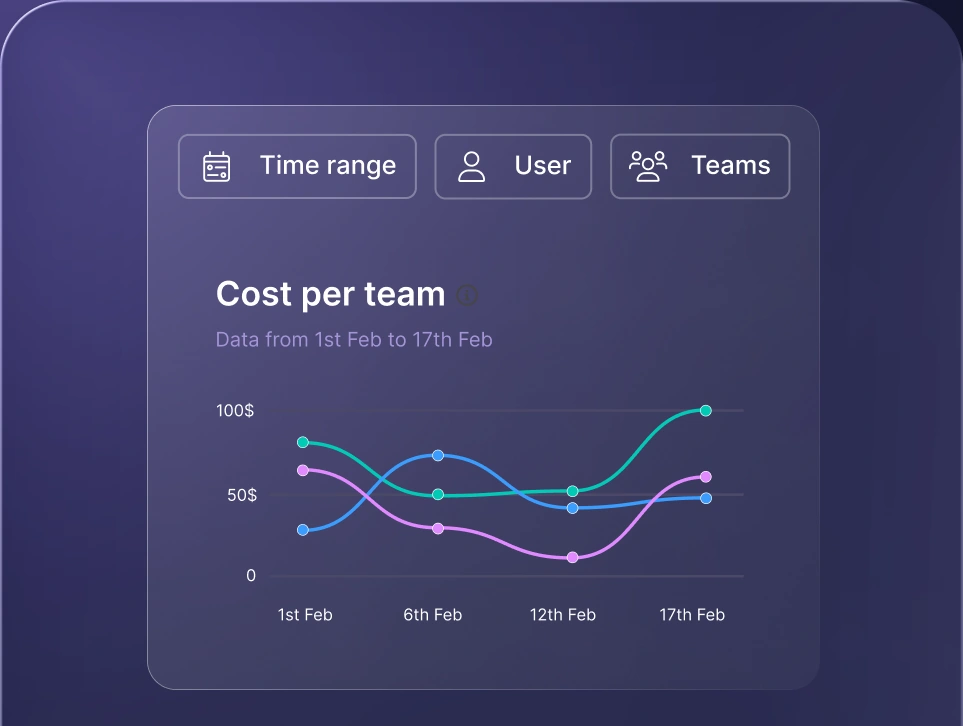
Monitor AI usage
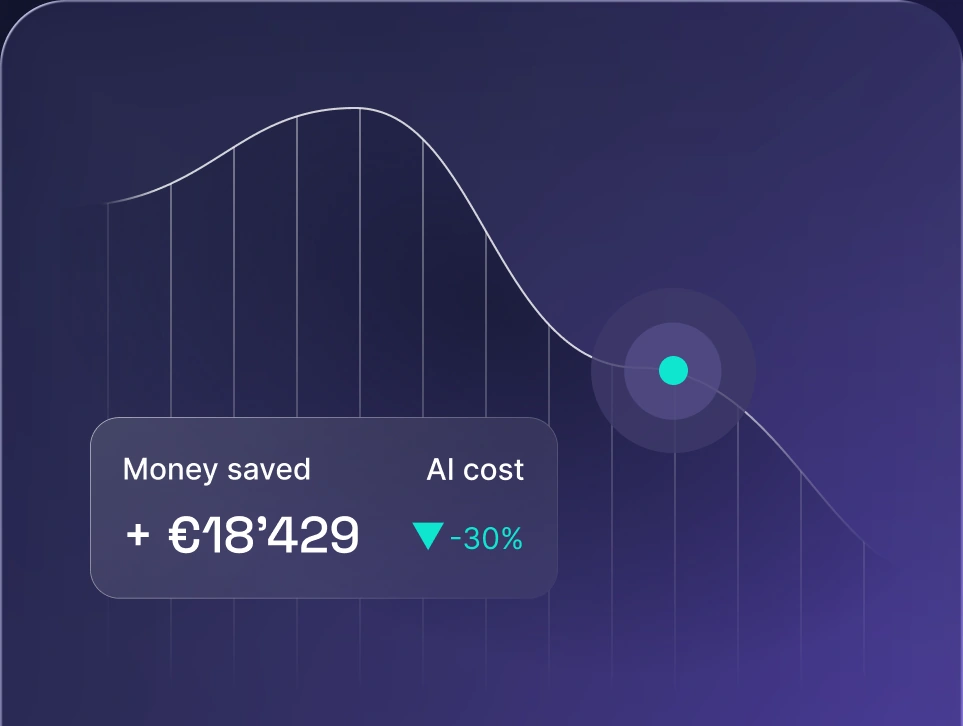
Control AI spend
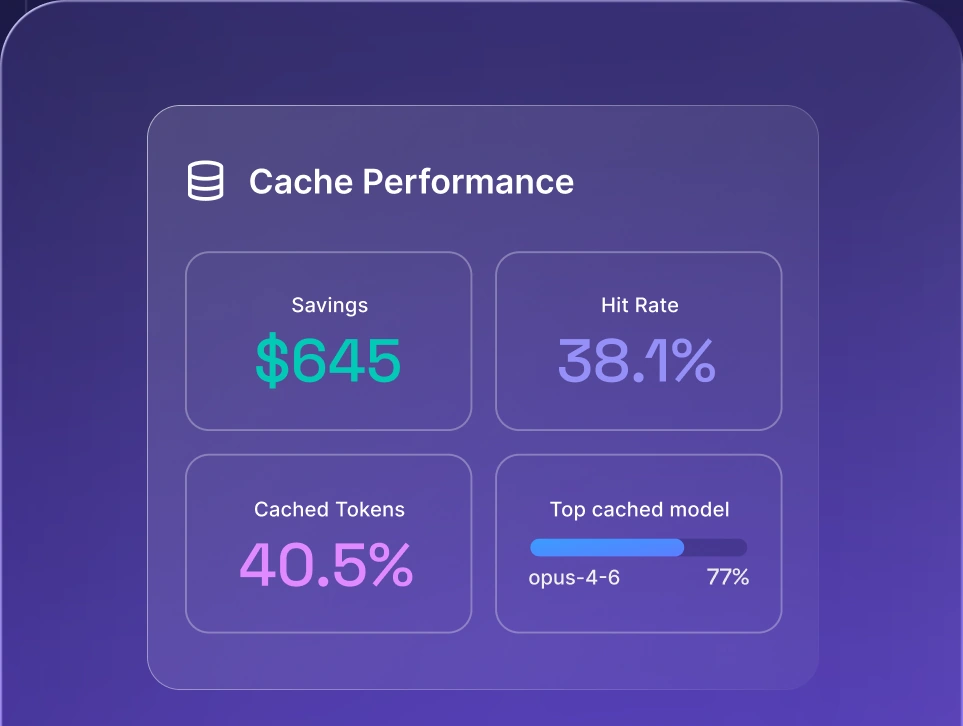
Optimize AI costs

AI governance skills and capabilities
Technology only takes you so far. Strong AI governance is a team sport, and the AI governance skills and capabilities your program needs are as much about people as platforms. A mature program blends risk expertise, legal knowledge, technical fluency, and ethics literacy so no blind spot goes unwatched.
- Risk and governance. People who can run risk assessment, classify decision criticality, and own oversight mechanisms.
- Legal and compliance. People who translate AI regulations and regulatory requirements into workable policy.
- Technical and data science. Engineers and data scientists who understand model development, the AI lifecycle, and how the models behind new AI technologies actually work.
- Ethics literacy. People who spot fairness gaps and biased outcomes before they reach users.
Is AI governance a good career? Increasingly, yes. As enterprise AI adoption grows, AI governance is becoming a defined career path with real demand, and roles now span policy, risk, and technical AI oversight. For organizations without this bench in-house, AI governance consulting is a practical option, and specialized AI governance consulting partners can help you stand up a program while you build internal capability. See how this fits broader enterprise AI adoption and the common AI adoption challenges teams face along the way.
AI governance and regulatory compliance
Good AI governance and regulatory compliance move together. When your AI governance processes are strong, compliance with data protection and AI regulation becomes a byproduct rather than a scramble, because well-governed AI systems already produce the evidence regulators want. At a high level, governance gives you the documentation, controls, and audit trails that regulators expect to see.
- Data protection. When AI processes personal data, GDPR and AI compliance obligations around lawful basis, transparency, and data subject rights apply, and your governance controls are how you meet them.
- AI-specific regulation. Rules like the EU AI Act add duties tied to risk tiers, so your framework should map controls to each level of decision criticality.
- Security and risk. Sound governance reduces AI security risks by pairing continuous monitoring with clear ownership and incident response.
Keep your program global and neutral, tie controls to risk, and AI governance keeps compliance steady as regulations and AI technologies keep evolving.